Table of Contents
Finding an Indian garment supplier is not difficult anymore.
You can search online, contact exporters, browse sourcing platforms, message suppliers on social media, or get factory names through referrals. Many suppliers will reply quickly. They may share product photos, offer a competitive price, and say they can handle your order.
But before sending advance payment, the real question is not only:
“Can this supplier make garments?”
The better question is:
“Can this supplier make my product with the right fabric, quality, fit, quantity, lead time, packing, and shipment follow-up?”
This is where many sourcing problems begin.
For overseas apparel buyers, the risk is higher because you are not physically present near the factory. You may not know who is actually producing the order, whether the fabric is available, whether the price is realistic, or whether production is being followed properly.
This guide explains what to check before paying an Indian garment manufacturer, exporter, buying house, or sourcing agent.
Quick Answer: What Should You Check Before Paying an Indian Garment Supplier?
Before paying a garment supplier, overseas buyers should check the supplier type, product experience, fabric clarity, price details, minimum order conditions, sampling process, production lead time, quality control method, payment terms, and whether local inspection or verification is allowed.
A reliable supplier should be able to explain how your order will be handled before taking payment. They should not only give a price. They should help you understand production risks, fabric issues, timelines, and quality control steps.
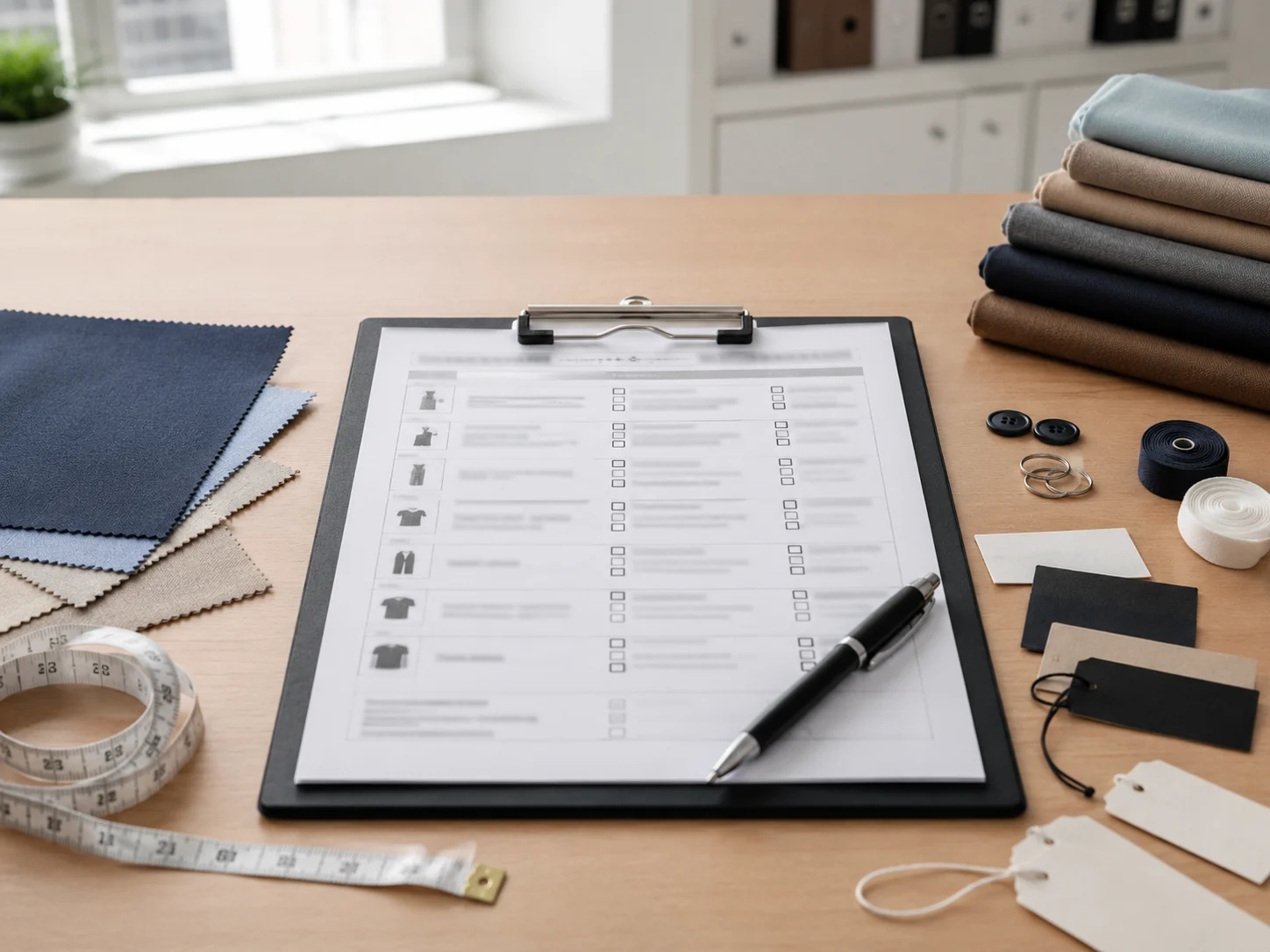
Supplier Verification Checklist Before Payment
| Area to Check | What the Buyer Should Confirm |
|---|---|
| Supplier type | Are they a factory, exporter, trader, buying house, or sourcing agent? |
| Product experience | Have they produced similar garments before? |
| Fabric | Is the GSM, composition, shrinkage, dyeing, and availability clear? |
| Price | What is included and excluded in the quotation? |
| Quantity | Does the minimum quantity match your actual order plan? |
| Sampling | Will the sample confirm fabric, fit, trims, measurements, and finishing? |
| Lead time | Is the timeline realistic from approval to shipment? |
| Quality control | Will there be inline inspection, final inspection, or buyer-side reporting? |
| Payment | Are company details, bank details, and terms confirmed in writing? |
| Verification | Is a factory visit, video call, or local inspection possible? |
In our experience, many sourcing problems do not start during shipment. They start before order confirmation, when fabric, price, quantity, sampling, and inspection terms are not clarified properly.
1. First, Understand Who You Are Really Dealing With
Not every company that says “manufacturer” owns a complete garment factory.
Some suppliers are direct factories. Some are exporters who coordinate with partner factories. Some are traders. Some are buying offices that manage sourcing, production follow-up, and inspection for overseas buyers.
None of these models are automatically wrong. But as a buyer, you should know who is responsible for each part of your order.
For example, one supplier may handle cutting and stitching in-house but outsource dyeing, printing, embroidery, washing, ironing, or packing. Another supplier may not own production but may still manage the order through approved partner units.
The problem starts when the buyer does not know this clearly before payment.
Before confirming an order, ask the supplier to explain their setup. Who sources the fabric? Who makes the sample? Where will bulk production happen? Which processes are handled outside? Who will check the goods before shipment?
A transparent supplier will explain this clearly. A risky supplier may avoid details or give very general answers.
2. Check Whether They Have Experience With Your Product
A supplier can be good and still be wrong for your product.
A factory that makes basic cotton T-shirts may not be suitable for washed oversized T-shirts. A woven shirt exporter may not be the right option for knitted garments. A low-cost supplier may struggle with premium finishing, tight measurements, special trims, or private-label packing.
This is why overseas buyers should not ask only:
“Can you make this?”
Most suppliers will say yes.
A better question is:
“Have you recently produced this type of garment, and what should we be careful about?”
That question gives you a better idea of the supplier’s real experience.
If you are sourcing knitted garments from India, the supplier should understand fabric GSM, shrinkage, dyeing, compacting, stitching quality, neck rib quality, print placement, and washing behavior. If you are sourcing fashion garments, they should understand fit, finishing, trims, styling details, and production consistency.
The right supplier should be able to speak about your product in detail, not only quote a price.
3. Do Not Trust the Garment Price Until Fabric Is Clear
In apparel sourcing, many price changes and production delays start with fabric.
A supplier may give a quick garment price before checking fabric availability, yarn quality, GSM, dyeing minimums, shrinkage, or lead time. Later, the buyer may hear that the fabric is not available, the color needs special dyeing, or the approved sample fabric cannot be used for bulk production.
This is a common problem in garment sourcing.
Before accepting the price, make sure the supplier has clarified the fabric properly. The discussion should include fabric composition, GSM, color, shrinkage, dyeing process, swatch or lab dip approval, and whether the fabric is suitable for printing, embroidery, washing, or special finishing.
For knitted garments, this step is especially important. Fabric quality affects measurement, fit, shrinkage, hand feel, print result, washing effect, and final garment appearance.
A serious garment supplier will not treat fabric as a small detail. They will discuss fabric before pushing for order confirmation.
4. Compare What Is Included in the Price
Many buyers compare suppliers only by unit price.
That can be misleading.
One supplier may quote a lower price because they are using lighter fabric, basic trims, simple packing, or ex-factory terms. Another supplier may include better fabric, labels, export packing, documentation, inspection support, and FOB delivery.
On paper, the cheaper supplier may look better. In reality, both suppliers may not be quoting the same thing.
Before choosing the lowest price, ask what is included.
The quotation should clearly mention fabric quality, GSM, trims, printing or embroidery, washing, labels, hang tags, packing method, carton details, sampling charges, delivery terms, testing if required, and shipment terms.
A proper price comparison should be based on the same product specification.
This is one reason many overseas buyers use a buying office in India. A buying office can compare suppliers using the same fabric, trims, quantity, packing, and delivery terms, so the buyer understands the real cost difference instead of only seeing the cheapest number.
5. Be Careful With Minimum Order Quantity Confusion
Minimum order quantity can sound simple, but in real production it can become confusing.
A supplier may say they can do 500 pieces. But that may not mean 500 pieces across any number of colors, fabrics, prints, labels, and packing styles.
The real minimum may change once fabric dyeing, trims, printing, embroidery, custom labels, or special packing is discussed.
Before sampling, ask the supplier to explain the minimum quantity based on your actual order plan.
For example, if you want three colors, two prints, and custom labels, ask whether the quoted quantity still works or whether any part of the order has a separate minimum.
This avoids a common problem: the sample gets approved, and only after that the buyer finds out that the fabric, color, or trim minimum is higher than expected.
6. Understand the Sampling Process Before Bulk Production
A sample is not just a photo-ready garment.
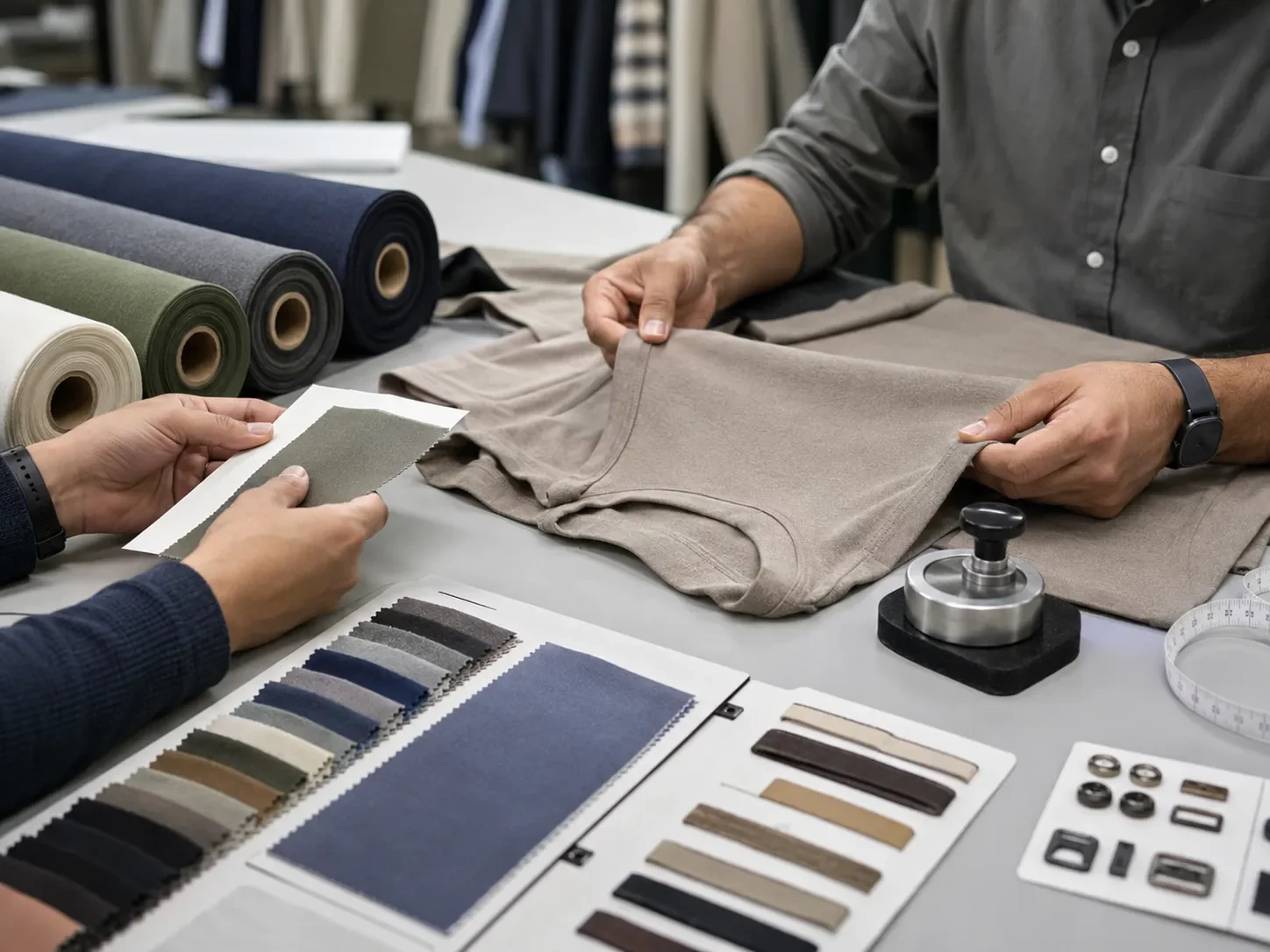
Sampling is where the buyer and supplier confirm fabric, fit, measurement, stitching, trims, print quality, washing effect, labeling, and packing direction.
Before starting sampling, understand how the supplier handles it.
Will the sample be made in actual fabric or available fabric? How long will it take? What happens if the first sample needs correction? Will there be a size set sample? Will there be a pre-production sample before bulk production?
These details matter because a weak sampling process usually creates problems later in bulk production.
A good supplier will use sampling to clarify the product. A poor supplier may treat sampling only as a way to get advance payment quickly.
7. Confirm Whether the Lead Time Is Realistic
Lead time should not be accepted blindly.
Some suppliers agree to the buyer’s requested delivery date even when production is already full or fabric is not ready. This creates pressure later. The result can be delayed production, rushed stitching, poor finishing, late inspection, or shipment stress.
Before confirming the order, ask when production can actually start.
The supplier should explain the timeline for fabric booking, lab dips or swatches, sampling, approvals, bulk fabric, cutting, stitching, printing or embroidery, washing if needed, finishing, packing, inspection, and shipment.
In garment exports from India, delays often happen before stitching even starts. Fabric approval, dyeing, trims, printing, embroidery, and washing can all affect delivery.
A reliable supplier will give a practical timeline, not only the timeline the buyer wants to hear.
8. Watch the Supplier’s Communication Before Payment
Communication before payment often shows how the supplier will communicate after payment.
Fast replies are good, but fast replies alone are not enough.
A reliable supplier gives clear answers, asks technical questions, confirms important details in writing, and explains possible risks. They do not simply say yes to everything.
Be careful when a supplier avoids details, gives unclear answers, changes information often, or pushes for quick payment before the order is properly discussed.
In apparel sourcing, good communication means more than politeness. It means the supplier can explain fabric, price, minimum quantities, sampling, production, quality, and delivery in a responsible way.
If the communication is confusing before payment, it will usually become more difficult during production.
9. Discuss Quality Control Before the Goods Are Ready
Many buyers talk about inspection only at the end of production.
That is too late.
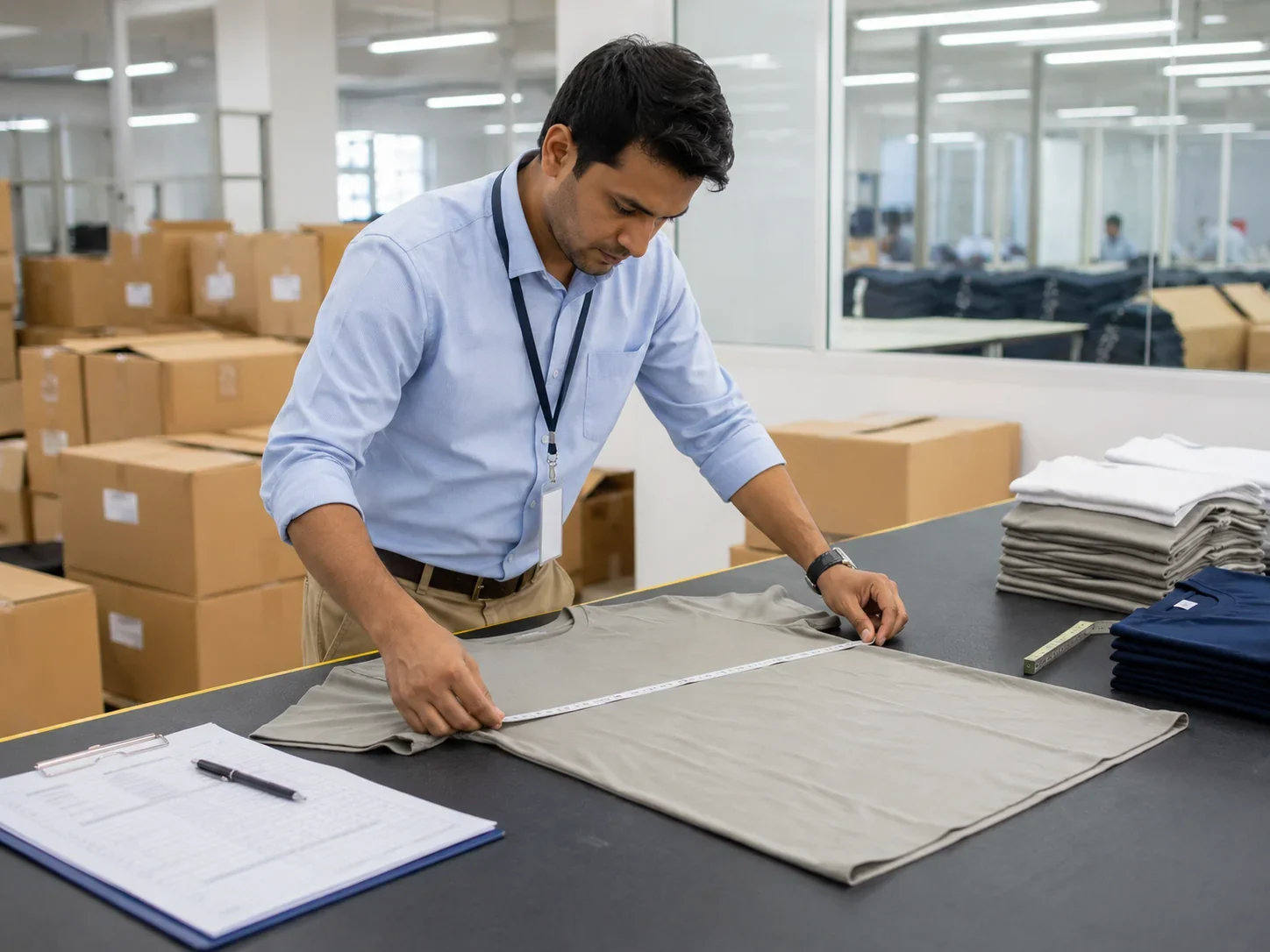
Quality control should be discussed before the order starts. The supplier should explain how fabric will be checked, how measurements will be controlled, how defects will be identified, and whether inline or final inspection is possible.
For overseas buyers, this is important because they cannot easily visit the production location.
If you are placing a garment order in India, ask whether inspection photos, measurement reports, production updates, or third-party inspection can be arranged. Also ask whether a local representative can visit during production if needed.
A supplier who is confident in their work should not be afraid of reasonable inspection.
10. Do Not Send Advance Payment Based Only on Photos or Chat
Advance payment is common in garment sourcing, especially for custom orders and new buyers.
But payment should not be made only because the supplier shared product photos or gave a low price in chat.
Before paying, make sure you have a written quotation, proforma invoice, clear company name, bank details matching the supplier, product specification, payment terms, delivery terms, sampling terms, and inspection agreement.
Also keep important confirmations in writing.
This protects both sides. If there is confusion later about fabric, price, quantity, delivery date, packing, or shipment terms, written records will help avoid disputes.
A serious supplier will not object to proper documentation.
11. Check Whether Local Verification Is Possible
If you are an overseas buyer, local verification can reduce a lot of risk.
This may include a factory visit, video call, production unit check, document review, sample review, inspection, or visit by a local sourcing representative.
A genuine supplier should usually be open to reasonable verification.
If a supplier avoids every form of checking and only asks for payment, slow down.
Local verification is not only about catching bad suppliers. It also helps buyers understand whether the supplier is suitable for the product, order size, quality level, and timeline.
12. Know Where a Buying Office Can Help
A buying office in India can work as the buyer’s local support team.
It can help with supplier search, supplier verification, price comparison, sampling follow-up, fabric and trim coordination, production updates, quality inspection, and shipment follow-up.
The main value is visibility.
When buyers are far from the production location, they often depend only on supplier updates. A buying office gives the buyer another layer of control.
It can help answer practical questions:
Is the supplier suitable for this product?
Is the price fair for the specification?
Is the fabric actually approved?
Has production started?
Are there quality problems?
Is the shipment on track?
For overseas apparel brands, importers, wholesalers, and sourcing teams, this support can reduce dependency on one supplier’s promises.
Common Red Flags Before Paying a Garment Supplier
A low price alone does not mean a supplier is bad. But buyers should be careful when several warning signs appear together.
Common red flags include unclear company details, no proper quotation, no fabric clarity, unrealistic lead time, pressure for urgent payment, refusal of inspection, vague answers about production, and prices that are much lower than other suppliers without a clear reason.
Another warning sign is when the supplier agrees to everything too quickly.
In garment sourcing, every product has some practical limitations. A supplier who explains limitations honestly is often safer than one who says yes to every request without checking.
Final Thought
Finding an Indian garment supplier is easy. Verifying the supplier before payment is the important part.
Before confirming a garment order in India, overseas buyers should check the supplier’s real setup, product experience, fabric sourcing, price details, minimum order conditions, sampling process, production timeline, quality control, payment terms, and inspection options.
These checks can prevent many common sourcing problems before they become expensive.
If you cannot visit India personally, a buying office or local sourcing representative can help verify suppliers, follow production, inspect quality, and protect your interests from the buyer’s side.
FAQ
You can verify an Indian garment supplier by checking their company details, supplier type, product experience, fabric clarity, quotation, minimum order conditions, sampling process, production capacity, payment terms, and inspection options. For higher-value orders, a factory visit or local verification is also useful.
Ask who will produce the order, where the fabric will come from, what is included in the price, how sampling works, what minimum quantities apply, when production can start, how quality will be checked, and whether inspection is allowed before shipment.
Fabric affects garment cost, quality, shrinkage, fit, dyeing, printing, washing, and delivery time. If fabric is not clarified before price confirmation, the buyer may face price changes, quantity issues, or production delays later.
Not always. A cheaper price may exclude better fabric, trims, packing, inspection, documentation, or delivery terms. Buyers should compare suppliers using the same product specification instead of choosing only by unit price.
Yes. A buying office in India can help overseas buyers verify suppliers, compare prices, coordinate samples, follow production, inspect quality, and monitor shipment progress from the buyer’s side.
For larger orders, repeat programs, or new suppliers, a factory visit or local verification is strongly recommended. If you cannot visit India personally, you can use a buying office, sourcing agent, or inspection partner to check the supplier locally.
The biggest risks are unclear fabric details, unrealistic pricing, production delays, poor communication, quality issues, unclear minimum quantities, and lack of inspection before shipment. Most of these risks can be reduced by proper supplier verification before payment.