Launching a clothing brand doesn’t always begin with a professionally designed tech pack.
In fact, many successful fashion brands, startup streetwear labels, and established apparel businesses begin product development with something much simpler – a physical garment they already own.
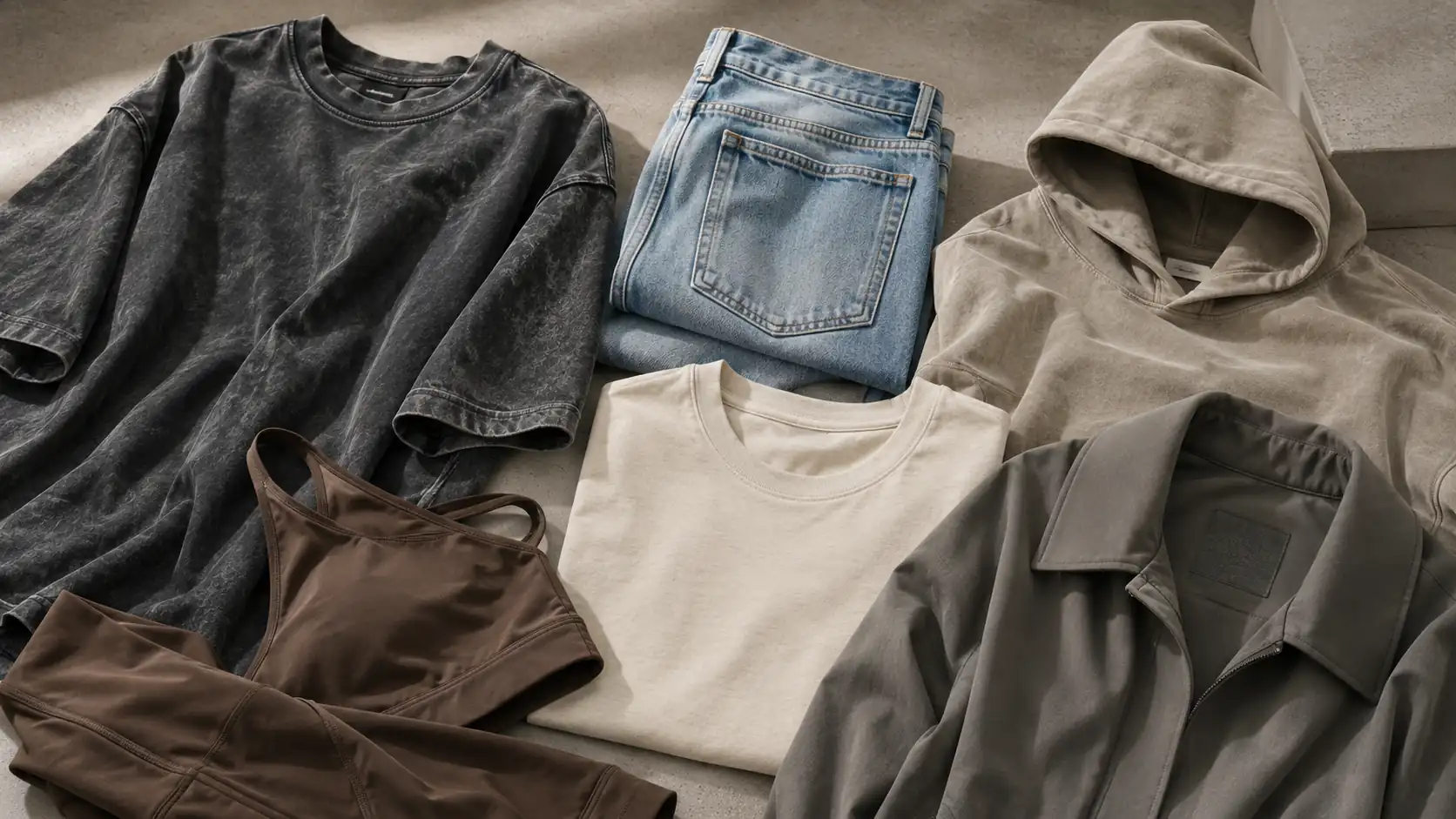
It might be a heavyweight oversized T-shirt with the perfect fit, a premium hoodie from a previous collection, a sweatshirt purchased for research, or a pair of joggers that represent exactly what they want to sell. Instead of spending weeks creating technical drawings and production specifications, many buyers ask a straightforward question:
“Can you manufacture this garment if I send you the sample?”
The answer is yes – but not in the way most people imagine.
Professional clothing manufacturers don’t simply duplicate garments. Instead, they use the sample as a technical reference to understand its construction, fabric, measurements, sewing methods, and overall quality before developing a customized version for the buyer’s own brand.
This process is known as sample-based garment development, and it has become one of the most practical solutions for startups, fashion entrepreneurs, apparel importers, wholesalers, and private label clothing brands looking to shorten product development timelines while maintaining high manufacturing standards.
In this guide, we’ll explain how the process works, what manufacturers can learn from a finished garment, when this approach makes sense, and where the legal boundaries exist.
Why Many Clothing Brands Don't Have a Tech Pack
Within the apparel industry, a tech pack is considered the blueprint of a garment. It contains measurements, construction details, sewing instructions, trim specifications, artwork placements, fabric information, grading rules, and packaging requirements.
While large fashion companies usually have dedicated technical designers to create these documents, many startups don’t.
Some entrepreneurs come from marketing or e-commerce backgrounds. Others are influencers launching their first clothing brand. Many importers simply purchase products they like from the market and want to build something similar under their own label.
It’s also common for brands to lose old tech packs after changing manufacturers or working with factories that never supplied proper documentation.
As a result, the physical garment itself becomes the most accurate source of technical information.
An experienced clothing manufacturer can study that garment and extract a surprising amount of manufacturing data. This allows product development to begin even when no technical drawings or specification sheets exist.
For many startup clothing brands, sending a physical sample is often faster and more effective than trying to explain hundreds of technical details through emails.
What Information Can a Manufacturer Learn from a Finished Garment?
To most people, a T-shirt or hoodie is simply a finished product.
To an experienced apparel product development team, it is a complete engineering document.
Every part of the garment reveals valuable information about how it was designed and manufactured.
The first area examined is the fabric. Experienced sourcing specialists evaluate the fibre composition, knitting structure, yarn characteristics, GSM, stretch behaviour, softness, finishing treatments, shrinkage behaviour, and overall fabric quality. If laboratory testing is required, fabric composition can also be verified scientifically.
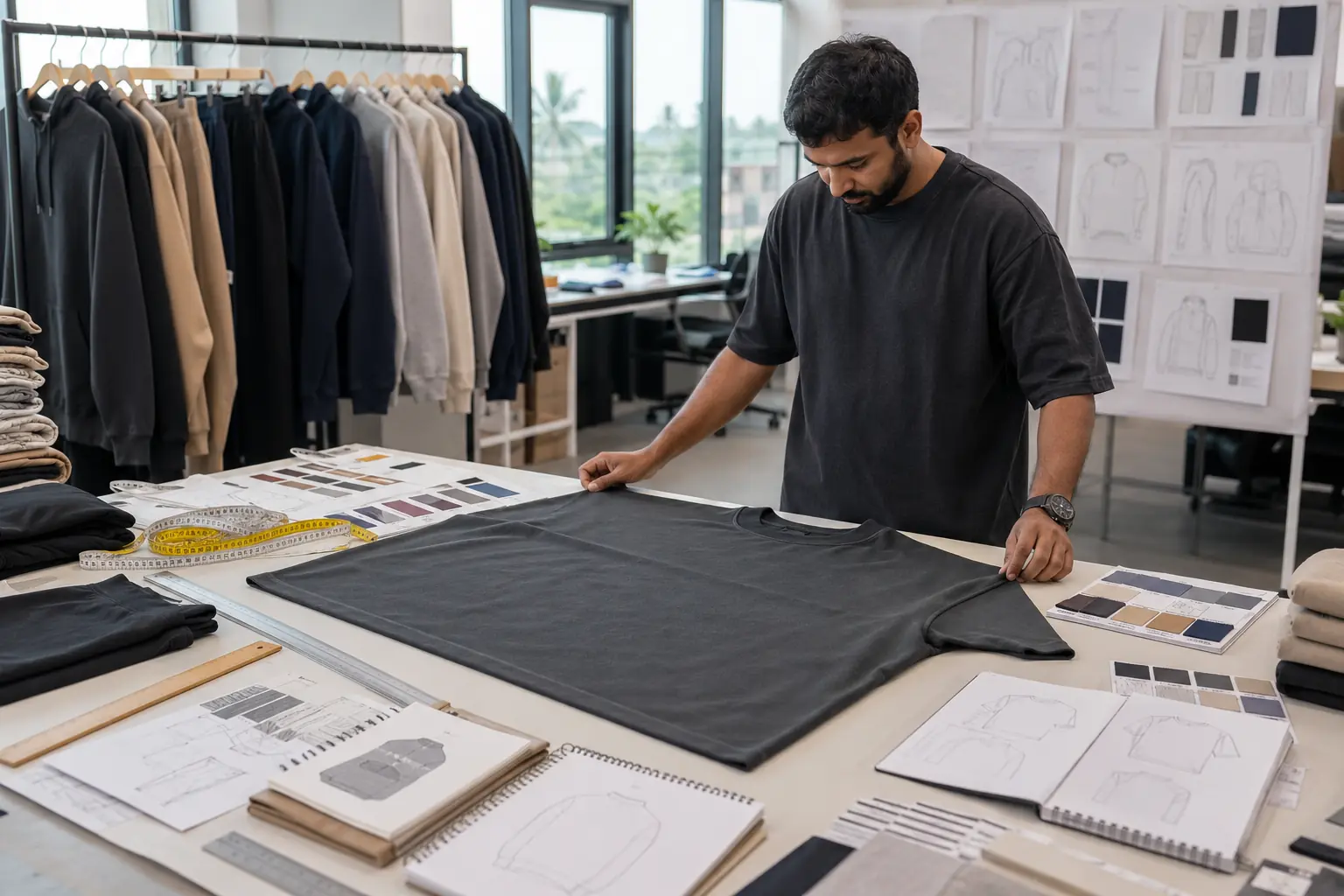
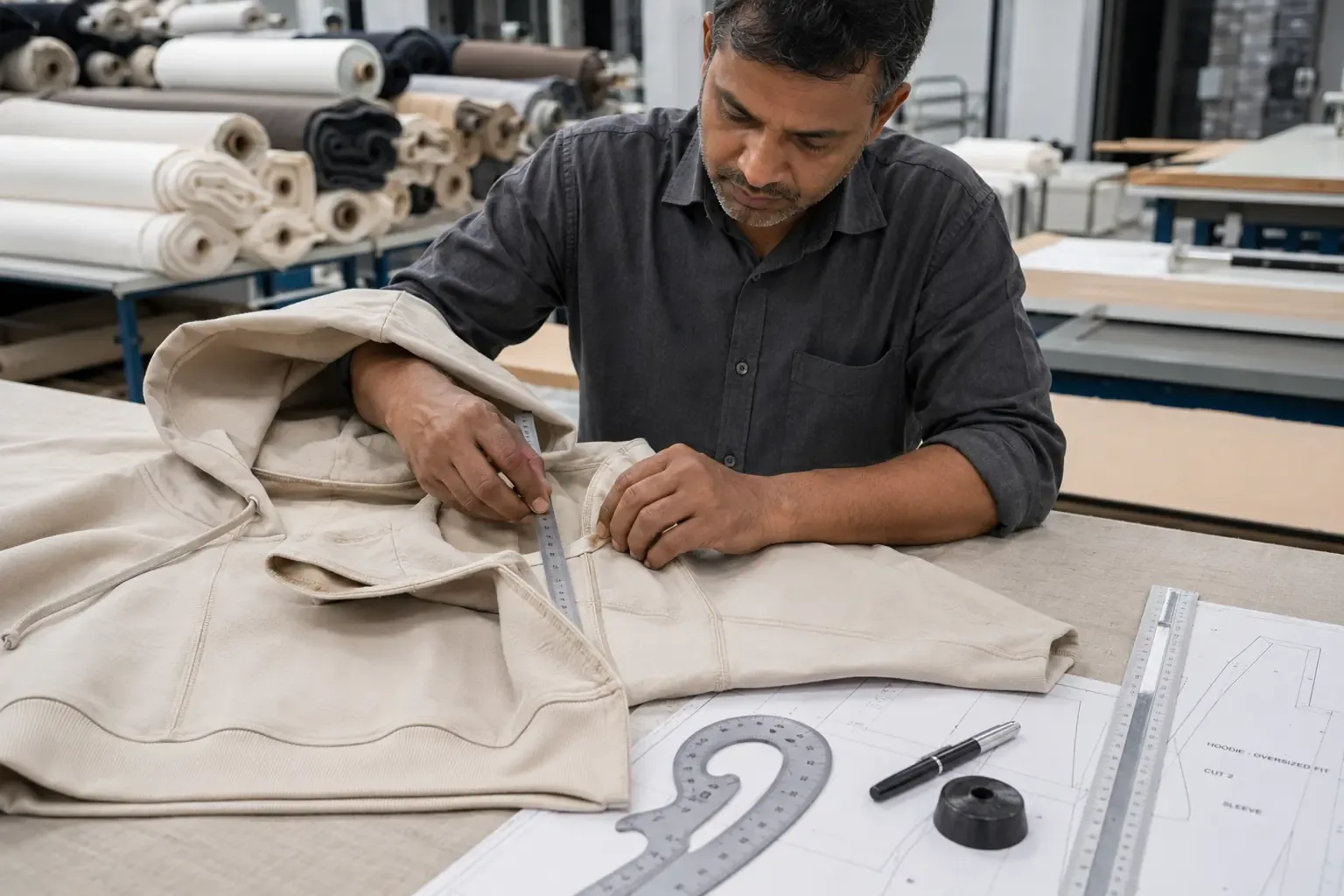
Next comes the garment construction. Every panel is measured carefully to understand the intended fit. Shoulder width, chest measurements, body length, sleeve dimensions, neck opening, rib height, cuff width, waistband construction, inseam, rise, and every critical measurement are documented before pattern development begins.
Construction quality is then analysed. Stitch density, seam allowances, thread type, overlock construction, cover stitching, bartacks, neck taping, reinforcement areas, binding methods, and sewing techniques all provide clues about the manufacturing process.
Decorative elements are also studied in detail. Printing methods, embroidery techniques, silicone logos, woven labels, heat transfers, rubber patches, hang tags, packaging materials, and finishing treatments can all be recreated using the buyer’s own branding.
What appears to be a simple garment actually contains hundreds of technical decisions that influence fit, comfort, durability, and production quality.
How Sample-Based Garment Development Works
Many buyers believe that manufacturers simply measure a garment and immediately begin production.
Professional apparel development is considerably more detailed.
The first step is understanding the buyer’s objectives. Sometimes the goal is to recreate the same oversized silhouette. Other times, the buyer only likes the fabric quality or overall construction while planning significant changes to the final product.
Once the objectives are clear, the development team begins analysing the sample and sourcing suitable fabrics that match the required quality level, target price, and intended market.
Pattern makers then develop production-ready patterns based on detailed measurements and construction analysis. Rather than simply tracing the garment, they rebuild the pattern to ensure it performs correctly during mass production.
After pattern development, the first prototype is manufactured.
This sample allows the buyer to review every aspect of the garment, including fit, drape, stitching quality, measurements, finishing, printing, embroidery, labels, and trims.
Only after receiving approval are grading, production planning, and bulk manufacturing initiated.
This systematic approach helps minimise production issues while ensuring consistency throughout the manufacturing process.
A Physical Sample Doesn't Mean the Final Product Must Be Identical
One of the biggest misconceptions about sample-based garment development is that the manufacturer is expected to produce an exact duplicate.
In reality, the physical sample serves only as a technical reference.
Many buyers love the fit of one garment but prefer a different fabric.
Others may want to increase the GSM, improve softness, replace cotton with organic cotton, switch from fleece to French Terry, or upgrade the trims.
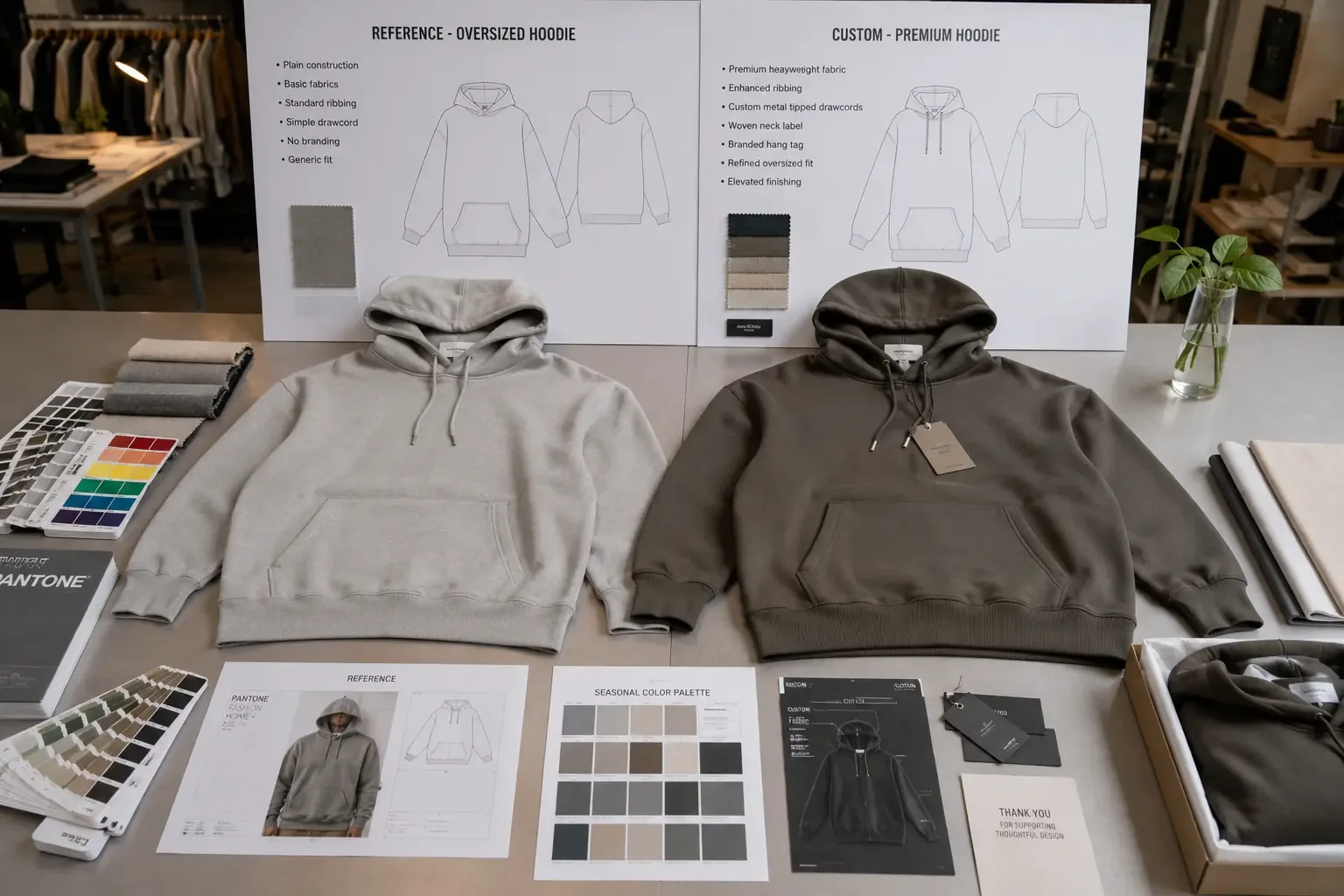
Some clients only wish to retain the body fit while changing the neckline, sleeve length, cuffs, pockets, drawcords, printing techniques, embroidery style, washing process, or packaging.
A single reference garment can become the foundation for an entirely original collection that reflects the buyer’s own vision rather than someone else’s product.
This flexibility is one of the reasons sample-based development has become increasingly popular among premium streetwear brands and private label clothing companies.
Sample-Based Development vs. Tech Packs
Both approaches are widely used in the apparel industry, and each has its advantages.
A professional tech pack provides detailed production instructions before sampling begins. It clearly communicates measurements, construction methods, artwork placement, trims, grading, labels, and packaging requirements.
A physical sample, however, communicates qualities that drawings never fully capture.
The weight of the fabric.
The softness after washing.
The drape of the garment.
The stretch characteristics.
The overall hand feel.
The perceived quality.
For this reason, many established fashion brands actually provide both a tech pack and a physical sample.
The tech pack defines the technical specifications, while the sample demonstrates the desired quality standard.
For startups without technical design experience, beginning with a physical sample is often the simplest and fastest way to communicate expectations to a manufacturer.
Understanding the Legal and Ethical Boundaries
This is one of the most important aspects of sample-based garment development.
There is a significant difference between using a garment as a manufacturing reference and producing counterfeit products.
At Texora Sourcing, physical samples are used to understand garment engineering – not to manufacture replicas.
Our development team studies construction methods, fabric quality, fit, sewing techniques, and finishing standards so we can build a new product for the buyer’s own brand.
We do not manufacture counterfeit garments, “first copy” products, or unauthorized reproductions of protected brands.
We will not reproduce registered logos, copyrighted graphics, trademarked branding, woven labels, branded packaging, or any intellectual property belonging to companies such as Nike, Adidas, USPA, Puma, Lacoste, Tommy Hilfiger, or any other protected brand.
Instead, all branding is replaced with the client’s own original identity.
The result is an original product inspired by technical quality rather than brand imitation.
This ethical approach protects both the buyer and the manufacturer while helping brands build genuine long-term value.
Common Mistakes Buyers Make When Sending Samples
Over the years, many clothing manufacturers have noticed similar mistakes during sample development.
One common issue is sending garments that have been worn and washed repeatedly. Washing naturally changes fabric weight, shrinkage, softness, and measurements, making it difficult to determine the original manufacturing specifications.
Another mistake is sending only photographs instead of physical samples. Images can show the appearance of a garment but cannot accurately communicate fabric construction, GSM, sewing quality, or finishing details.
Some buyers also forget to explain what they actually like about the sample. Is it the fabric? The oversized fit? The construction quality? The neckline? The stitching? Clear communication allows the development team to focus on the features that matter most.
Finally, some buyers mistakenly assume that manufacturers will reproduce branded products exactly as they appear. Professional manufacturers should always refuse requests involving counterfeit production or trademark infringement.
Why Startup Clothing Brands Prefer This Development Method
For emerging brands, time and development costs are major concerns.
Creating patterns from scratch, preparing technical documents, and repeatedly correcting samples can delay a product launch by several months.
Using an existing garment as a development reference simplifies communication and reduces uncertainty.
Instead of describing hundreds of technical details, founders can send a garment that already represents the quality they want to achieve.
This allows manufacturers to focus on refinement rather than interpretation.
As a result, startups often receive better first samples, shorter development timelines, and a smoother production process.
How Texora Sourcing Supports Sample-Based Apparel Development
At Texora Sourcing, we believe every successful garment begins with understanding the buyer’s vision – not simply following production instructions.
Whether you provide a premium T-shirt, heavyweight hoodie, sweatshirt, joggers, polo shirt, or another knitted garment, our product development team carefully analyses every technical aspect before manufacturing begins.
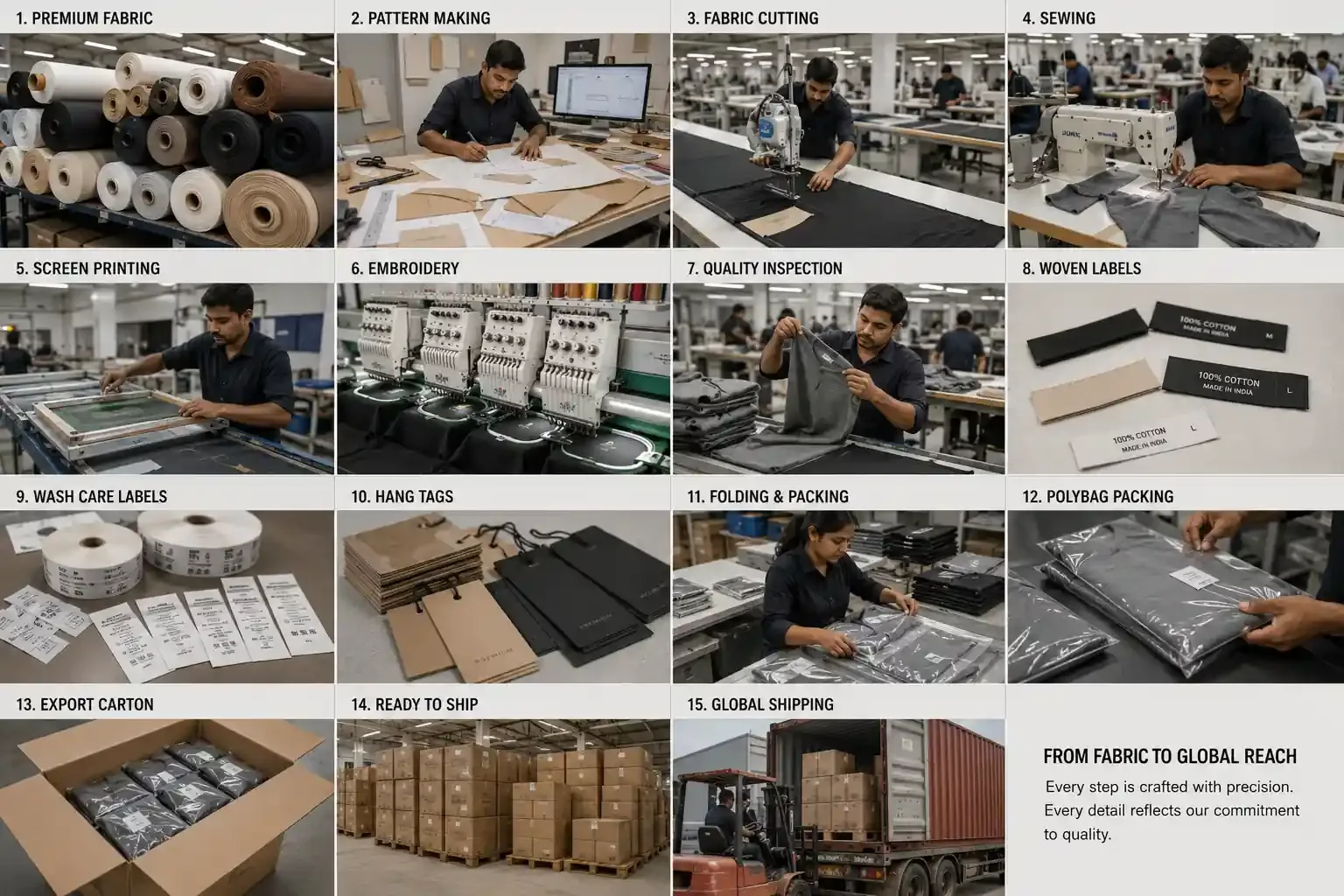
We manage the complete process, including fabric sourcing, trim development, pattern making, grading, sample development, printing, embroidery, sewing, washing, quality inspections, customized woven labels, wash care labels, hang tags, barcode stickers, and custom polybag packaging.
More importantly, we help buyers improve their products – not merely recreate them.
If a fabric can be softer, we’ll recommend it. If construction can be stronger, we’ll suggest improvements. If production efficiency can reduce costs without sacrificing quality, we’ll explain the available options.
Our goal is to transform a single reference garment into a production-ready product that represents your brand, your quality standards, and your long-term business goals.
A physical sample is not simply something to copy.
When placed in the hands of an experienced apparel manufacturer, it becomes the starting point for engineering an original product that combines proven construction, thoughtful improvements, ethical manufacturing practices, and complete private label customization. That’s why sample-based garment development continues to be one of the smartest ways for startups and growing clothing brands to bring high-quality apparel to market efficiently and confidently.
FAQ
Yes. If you have a physical sample, our product development team can analyze the garment's construction, measurements, fabric, stitching, trims, and finishing to create a production-ready version for your brand. A tech pack is helpful, but it isn't always required for starting development.
We can closely match the fit, construction, fabric quality, and overall appearance of your reference sample wherever technically feasible. However, we always recommend customizing the product with your own branding, labels, artwork, packaging, and design modifications to create a unique product for your brand.
No.
Texora Sourcing does not manufacture counterfeit products, replicas, or first-copy garments. We do not reproduce registered logos, trademarks, copyrighted graphics, or branded packaging from companies such as Nike, Adidas, USPA, Puma, or any other protected brands.
Reference garments are used only to understand the construction, fit, and manufacturing quality—not to copy protected branding.
We can develop a wide range of knitted garments, including:
- Oversized T-shirts
- Regular fit T-shirts
- Polo shirts
- Hoodies
- Sweatshirts
- Joggers
- Sweatpants
- Shorts
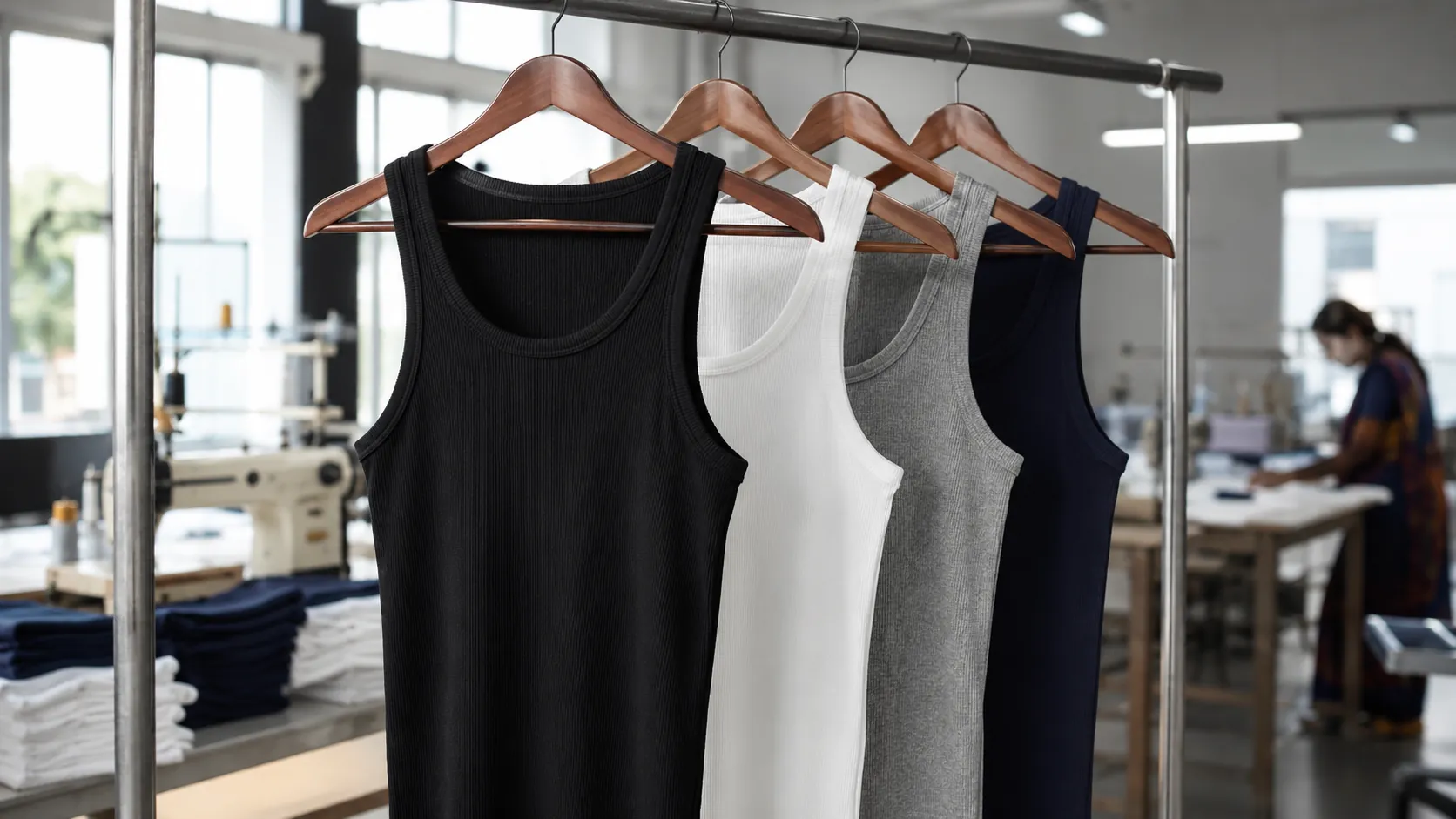
- Tank tops
- Loungewear
- Activewear
If your product is knitwear, we can usually develop it from a physical sample.
Absolutely.
Many buyers send us a garment because they like its fit but want a different fabric, higher GSM, organic cotton, different colors, improved trims, or custom branding. The sample serves as a starting point, and we can modify almost every aspect of the product according to your requirements.
If the original fabric cannot be sourced, we'll recommend the closest available alternative based on composition, GSM, texture, performance, and budget. Our goal is to achieve the same look, feel, and quality while ensuring reliable sourcing for bulk production.
Both have advantages.
A tech pack provides precise production specifications, while a physical sample demonstrates the actual fit, fabric, and construction quality. Many established brands provide both because they complement each other.
For startups without technical documentation, a physical sample is often the easiest way to begin product development.
Yes.
We offer complete private label apparel manufacturing, including custom woven labels, neck labels, wash care labels, hang tags, barcode stickers, size stickers, branded polybags, printing, embroidery, and customized packaging. Your final product will carry your own brand identity.
Sample-based development reduces communication errors, speeds up product development, and allows founders to build their first collection without creating detailed technical documentation. It is one of the most practical approaches for startups launching private label clothing brands.