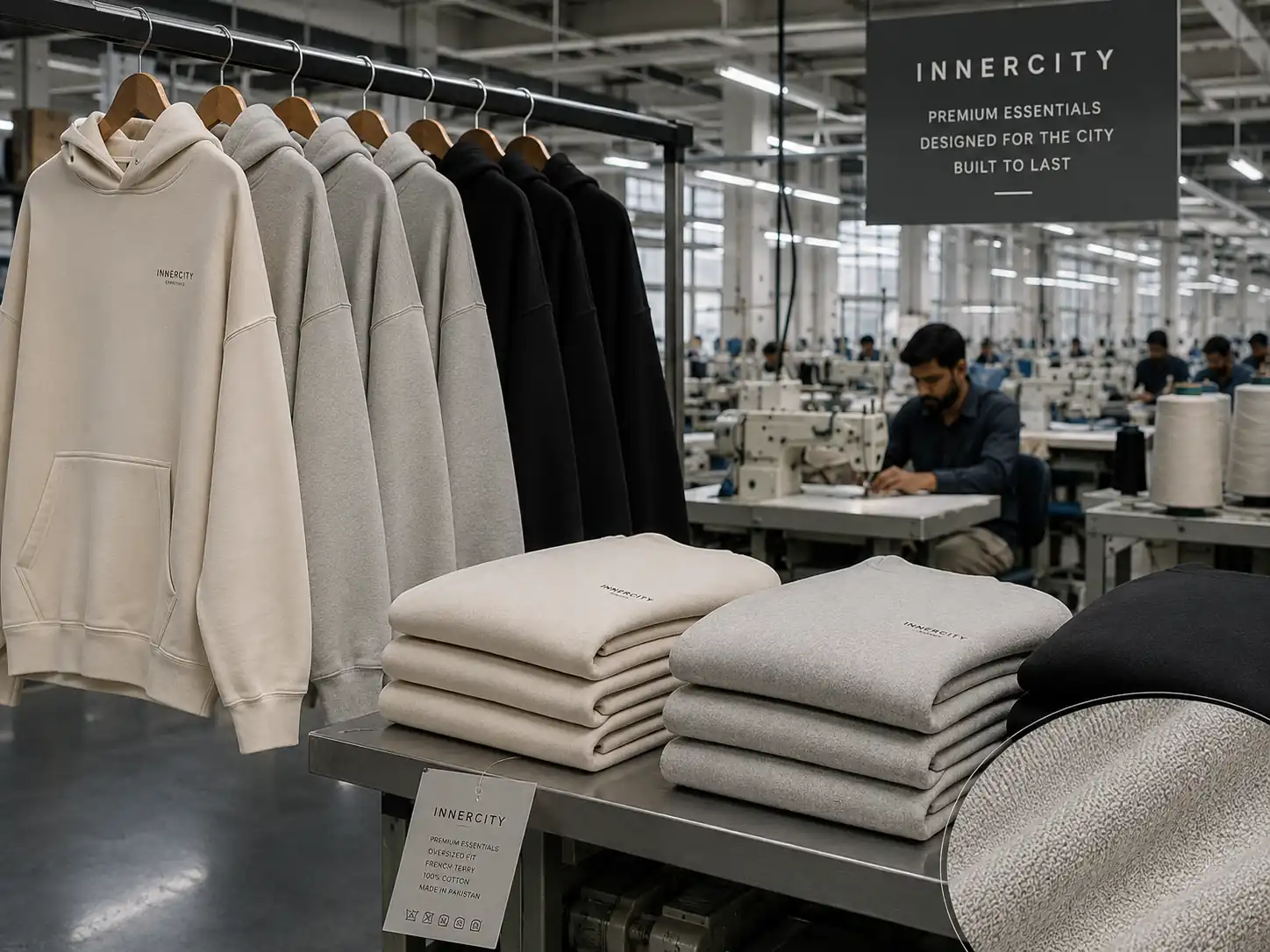
The global apparel industry has seen massive growth in hoodie demand over the last few years, especially with the rise of oversized fashion, premium streetwear, athleisure, and private label clothing brands. Hoodies are no longer considered just casual basics – they have become one of the most important product categories for modern fashion brands.
From heavyweight oversized hoodies to premium French Terry pullovers, brands today are searching for a reliable hoodie manufacturer in India that can deliver quality, customization, scalability, and export support.
India has emerged as one of the leading destinations for hoodie manufacturing due to its strong textile ecosystem, cotton availability, skilled workforce, and advanced knitwear infrastructure. Among India’s manufacturing hubs, Tiruppur is especially recognized for premium knitwear and export-quality hoodie production.
In this guide, we’ll explore how hoodies are manufactured, the best fabrics used in production, customization options for private label brands, and why India has become a preferred sourcing destination for global apparel businesses.
Why India Is a Leading Hoodie Manufacturing Hub
India is one of the world’s largest apparel manufacturing countries, supplying knitwear products to brands across the USA, Europe, Australia, and the Middle East.
One of the major reasons brands prefer hoodie manufacturers in India is the country’s vertically integrated production ecosystem. In manufacturing hubs like Tiruppur, the entire production process – from yarn sourcing and knitting to dyeing, printing, stitching, and export packing – can be managed efficiently within a single network.
This provides several advantages for apparel brands:
- Competitive production pricing
- Faster sampling and development
- Access to premium cotton fabrics
- Flexible customization
- Strong export infrastructure
- Skilled garment workforce
India is also highly preferred for private label clothing manufacturing because manufacturers can support both startup brands and large-scale bulk production programs.
Types of Hoodies Manufactured for Global Brands
Modern hoodie production goes far beyond standard pullovers. A professional hoodie manufacturer in India typically produces multiple styles depending on the brand’s positioning, target market, and pricing category.
Oversized Hoodies
Oversized hoodies are one of the fastest-growing categories in streetwear and contemporary fashion. These hoodies are designed with:
- Relaxed silhouettes
- Drop shoulders
- Wide ribbing
- Structured drape
- Heavyweight fabrics
Oversized fits are especially popular among streetwear labels and luxury basics brands.
Heavyweight Hoodies
Heavyweight hoodies are manufactured using thicker fabrics that provide a premium and structured feel. Most heavyweight hoodies are produced between:
- 320 GSM
- 350 GSM
- 400 GSM
Heavyweight hoodies are commonly used for:
- Streetwear collections
- Winter apparel
- Luxury merchandise
- Premium fashion brands
French Terry Hoodies
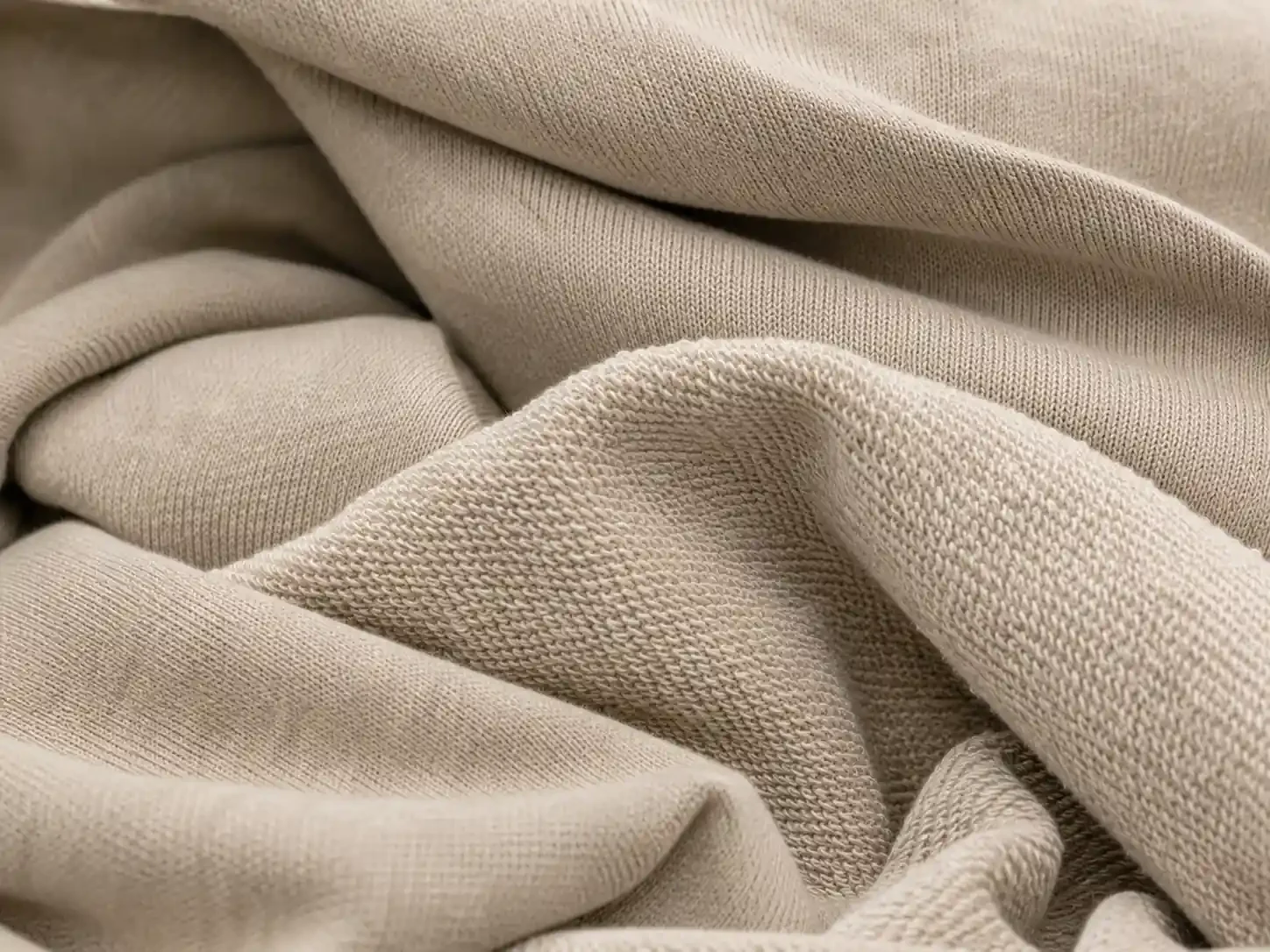
French Terry is one of the most preferred fabrics for premium hoodie manufacturing because it offers comfort, breathability, and durability.
Loopknit French Terry hoodies are widely used for:
- Premium casualwear
- Athleisure
- Minimal streetwear
- Mid-weight oversized hoodies
Fleece Hoodies
Brushed fleece hoodies provide additional warmth and softness, making them ideal for colder climates and winter collections.
Fleece hoodies are commonly produced for:
- Sportswear
- Winterwear
- Heavyweight hoodies
- Outdoor apparel
Zip-Up Hoodies
Zip-up hoodies continue to remain popular for activewear and layering collections. Many brands customize zip hoodies using:
- Metal zippers
- Branded pullers
- Embroidery
- Silicone logos
- Custom drawcords
Best Fabrics Used in Hoodie Manufacturing
Fabric quality plays a major role in the overall feel, structure, durability, and performance of hoodies. Professional manufacturers carefully select fabric compositions based on the intended product category.
French Terry Fabric
French Terry fabric features a smooth outer surface with looped yarns inside. It offers:
- Breathability
- Soft texture
- Durability
- Excellent drape
French Terry is widely preferred for oversized hoodies and premium streetwear.
Brushed Fleece Fabric
Fleece fabrics are brushed internally to create a soft and warm texture. They are commonly used for winter hoodies and heavyweight styles.
Popular fleece GSM ranges include:
- 300 GSM
- 320 GSM
- 350 GSM
- 400 GSM
100% Cotton Hoodies
Many premium brands prefer 100% cotton hoodies because of their natural feel and breathability. Compact cotton and combed cotton yarns are often used to improve:
- Smoothness
- Fabric durability
- Shrinkage control
- Surface appearance
Cotton Polyester Blends
Cotton-poly blends are widely used for commercial hoodie production because they improve:
- Shape retention
- Durability
- Cost efficiency
- Color fastness
These blends are frequently used in sportswear and promotional apparel.
How Hoodies Are Manufactured
The hoodie manufacturing process involves multiple stages that require technical precision and quality control.
1. Yarn Selection
The process starts with selecting yarn based on:
- GSM requirements
- Fabric texture
- Product category
- Print compatibility
Compact cotton yarns are commonly preferred for premium hoodie production.
2. Fabric Knitting
The yarn is knitted into fabrics such as:
- French Terry
- Fleece
- Single jersey
- Rib fabrics
Loopknit structures are often used for premium hoodies because they provide better texture and durability.
3. Dyeing & Fabric Processing
The fabric undergoes dyeing and finishing treatments including:
- Bio wash
- Silicone wash
- Enzyme wash
- Softening processes
These treatments improve softness, appearance, and fabric stability.
4. Pattern Development & Sampling
Patterns are developed based on the required fit and silhouette, including:
- Oversized fits
- Relaxed cuts
- Cropped silhouettes
- Streetwear proportions
Sampling is a critical stage because it allows brands to approve fit, fabric feel, and construction details before bulk production.
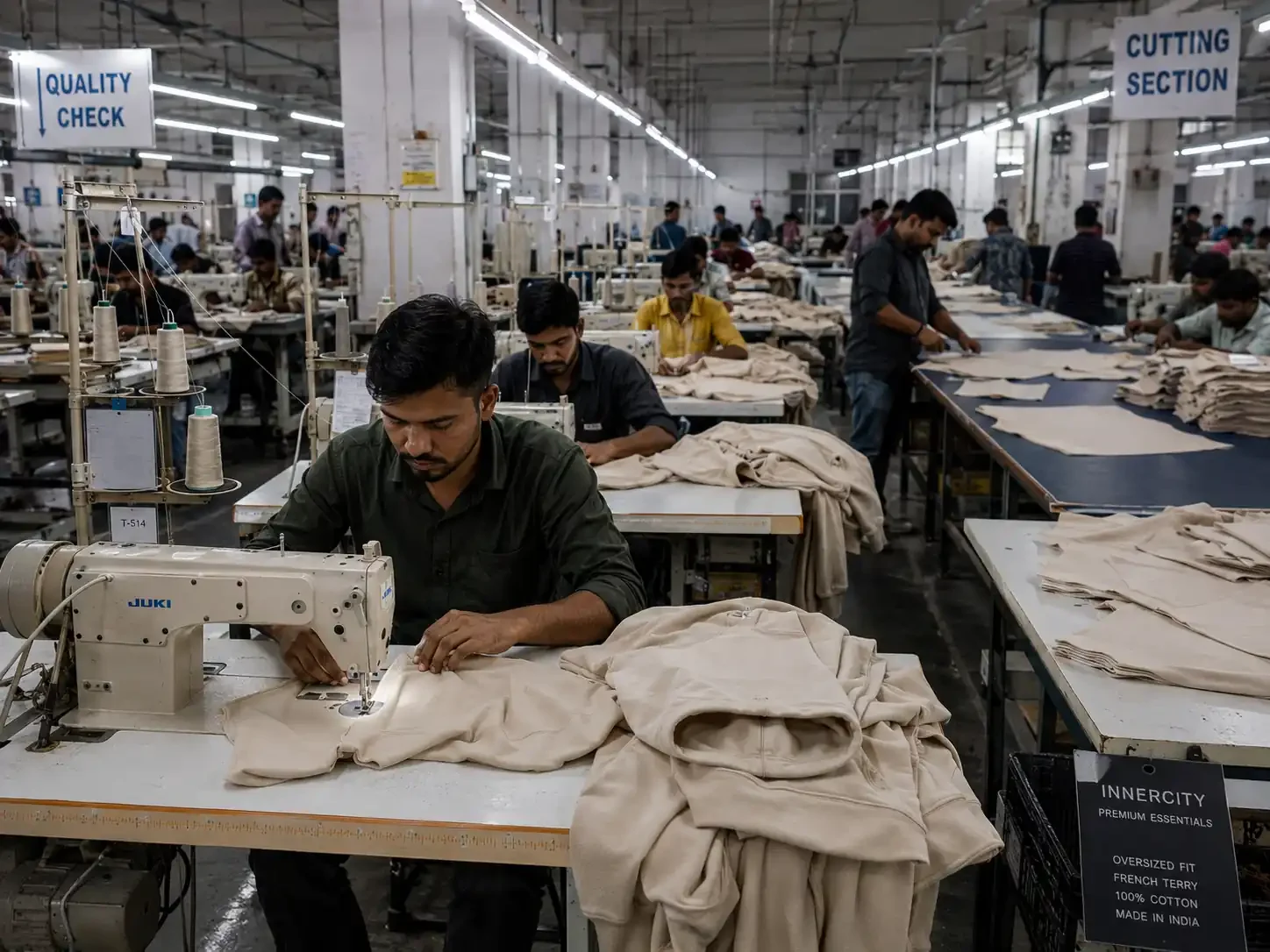
5. Cutting & Stitching
Fabric panels are cut and stitched using industrial garment machinery. Premium hoodies often use:
- Reinforced seams
- Double-needle stitching
- Heavy rib construction
- Structured hood panels
High-quality stitching directly impacts durability and garment appearance.
6. Printing & Embellishments
Modern hoodie manufacturers support multiple customization methods including:
- Screen printing
- Puff printing
- Embroidery
- DTG printing
- Silicone branding
- Heat transfers
Streetwear brands frequently combine multiple embellishment techniques to create premium products.
7. Quality Inspection
Before export packing, hoodies undergo strict quality inspections for:
- Measurements
- Fabric defects
- Stitch quality
- Color consistency
- Print placement
- Shrinkage control
Export-quality inspection standards are essential for international markets.
Customization Options for Private Label Hoodies
Private label clothing brands require strong customization capabilities to differentiate themselves in competitive markets.
Professional hoodie manufacturers in India often support:
- Custom neck labels
- Woven labels
- Hang tags
- Puff print graphics
- Embroidery
- Silicone logos
- Custom packaging
- Branded drawcords
- Zip customization
- Washed finishes
These details help brands create premium product identities and improve customer perception.
Why Oversized & Heavyweight Hoodies Are Trending
Oversized and heavyweight hoodies have become major fashion categories because consumers increasingly prefer:
- Relaxed silhouettes
- Structured drape
- Premium fabric weight
- Luxury streetwear aesthetics
Many global brands now manufacture:
- 320 GSM oversized hoodies
- 400 GSM heavyweight hoodies
- Drop shoulder silhouettes
- Double-layer hood constructions
- Wide cuff and rib structures
This trend has significantly increased the demand for heavyweight hoodie manufacturers in India.
Sustainability in Hoodie Manufacturing
Sustainability has become increasingly important for global apparel brands and consumers.
Many manufacturers now support:
- Organic cotton fabrics
- Recycled polyester blends
- Low-impact dyeing
- Reduced water consumption
- Sustainable packaging
Certifications such as GOTS and OEKO-TEX are also becoming more important for export markets.
Brands focusing on sustainable hoodie production often prioritize transparency, ethical sourcing, and long-term product durability.
Why Tiruppur Is Preferred for Hoodie Manufacturing
Tiruppur is one of India’s largest knitwear manufacturing hubs and plays a major role in global apparel exports.
The city is known for:
- Advanced knitting facilities
- Dyeing infrastructure
- Skilled garment production
- Strong export ecosystem
- Sampling flexibility
- Access to cotton supply chains
Because of this integrated ecosystem, many global fashion brands source hoodies, oversized T-shirts, and premium knitwear from Tiruppur manufacturers.

Choosing the Right Hoodie Manufacturer
Before selecting a hoodie manufacturer, brands should evaluate:
- Fabric expertise
- Sampling quality
- Production capacity
- Communication efficiency
- Quality control systems
- Printing capabilities
- Export experience
- MOQ flexibility
Reliable manufacturers focus not only on production speed but also on maintaining consistent quality across bulk orders.
Final Thoughts
The global demand for premium hoodies, oversized silhouettes, and heavyweight streetwear continues to grow rapidly. Apparel brands today require manufacturing partners that can support customization, quality consistency, and scalable production.
India has established itself as a major destination for hoodie manufacturing due to its strong textile infrastructure, skilled workforce, and advanced knitwear ecosystem. From oversized hoodies and heavyweight fleece garments to premium French Terry styles, experienced hoodie manufacturers in India can support both emerging and established clothing brands with high-quality production and export solutions.
For brands looking to develop custom hoodies with reliable manufacturing support, choosing the right production partner plays a major role in product quality, brand positioning, and long-term business growth.
FAQs
French Terry and brushed fleece are among the most preferred fabrics for premium hoodie manufacturing.
Heavyweight hoodies are commonly produced between 320 GSM and 400 GSM.
Yes, many manufacturers in India specialize in oversized and streetwear hoodie production.
Screen printing, puff printing, embroidery, DTG printing, and silicone branding are widely used.
MOQ depends on the fabric type, customization level, and production setup.
Tiruppur is a major knitwear hub with strong expertise in fabric knitting, dyeing, garment production, and apparel exports.