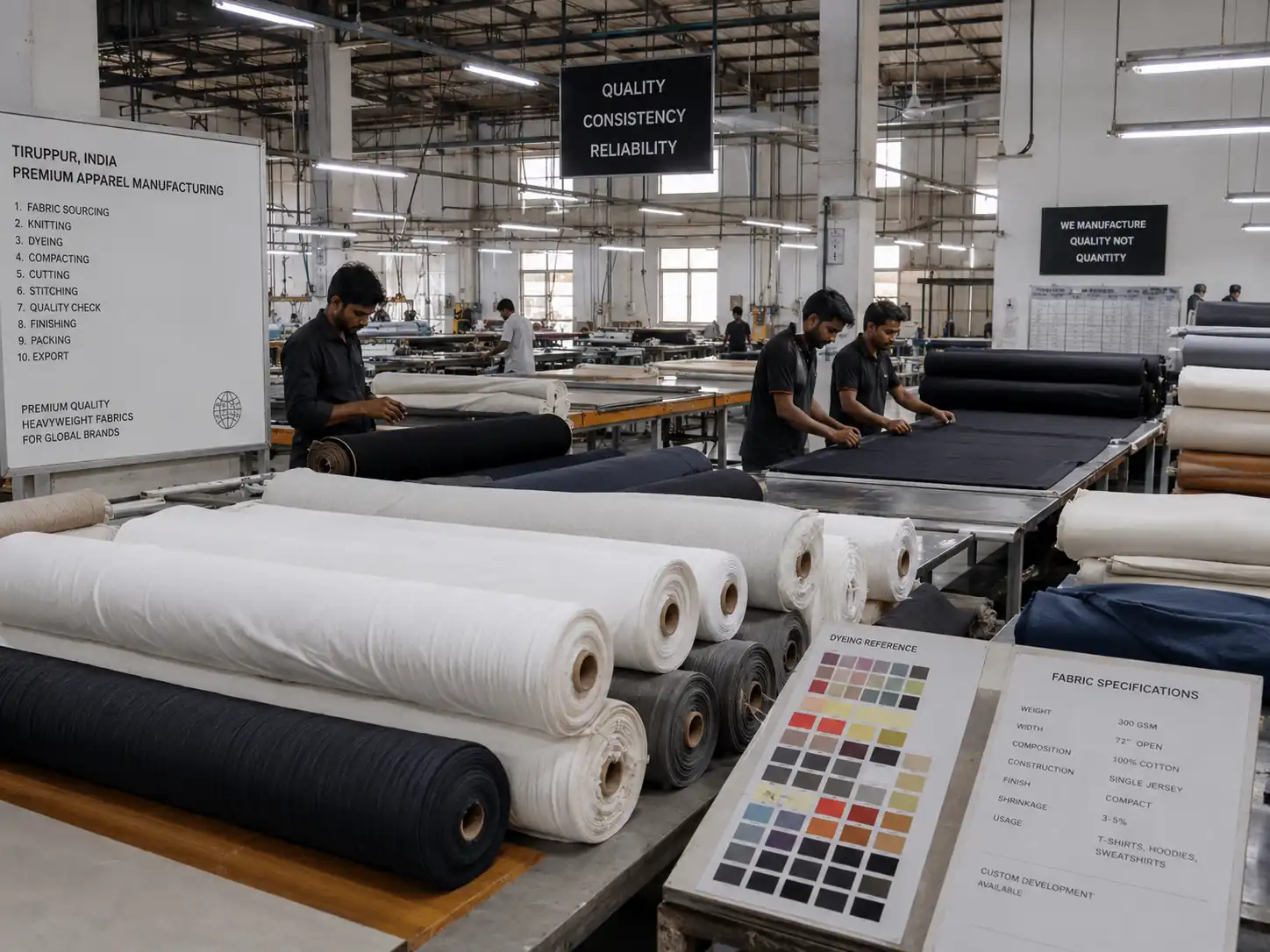
Table of Contents
Starting a clothing brand has never been easier. Building a successful one has never been harder.
Social media has lowered the barrier to entry for fashion startups. A founder can launch a brand with a Shopify store, a few strong designs, and a viral Instagram reel. But behind every successful apparel brand is something most consumers never see: manufacturing.
This is where many startups struggle.
A great design can fail because the fabric feels cheap. A promising launch can collapse because the garments shrink after washing. A brand can lose repeat customers because sizing becomes inconsistent between production runs. Most startup founders realize very quickly that manufacturing is not simply about finding someone who can sew garments. It is about building a reliable production system.
That is why choosing the best clothing manufacturer for startups in India matters far more than most founders initially expect.
India has become one of the strongest global sourcing destinations for startup apparel brands because it offers something few manufacturing regions can balance effectively: quality, flexibility, fabric diversity, and scalable pricing. Within India, Tiruppur has emerged as one of the most important knitwear manufacturing hubs for modern startup brands, particularly in categories like oversized t-shirts, heavyweight cotton apparel, hoodies, streetwear, and premium basics.
For startups entering apparel manufacturing for the first time, understanding how production actually works can save enormous amounts of time, money, and frustration. The most successful brands are usually not the ones with the cheapest garments. They are the ones that understand product quality, fabric selection, manufacturing timelines, and customer expectations better than competitors.
This guide breaks down what startup brands need to know before choosing a clothing manufacturer in India, how low MOQ manufacturing actually works, why Tiruppur has become a major sourcing hub, and what separates premium production from average garment manufacturing.
Why Manufacturing Decisions Shape the Future of a Startup Brand
Many startup founders focus heavily on branding, packaging, social media, and influencer marketing. Those things matter. But apparel brands live or die based on product experience.
If a customer receives a t-shirt that twists after washing, fades too quickly, or loses its shape after a few wears, marketing stops working. The second order never happens.
The manufacturing partner behind a brand directly influences:
- Product consistency
- Customer retention
- Perceived brand value
- Return rates
- Profit margins
- Long term scalability
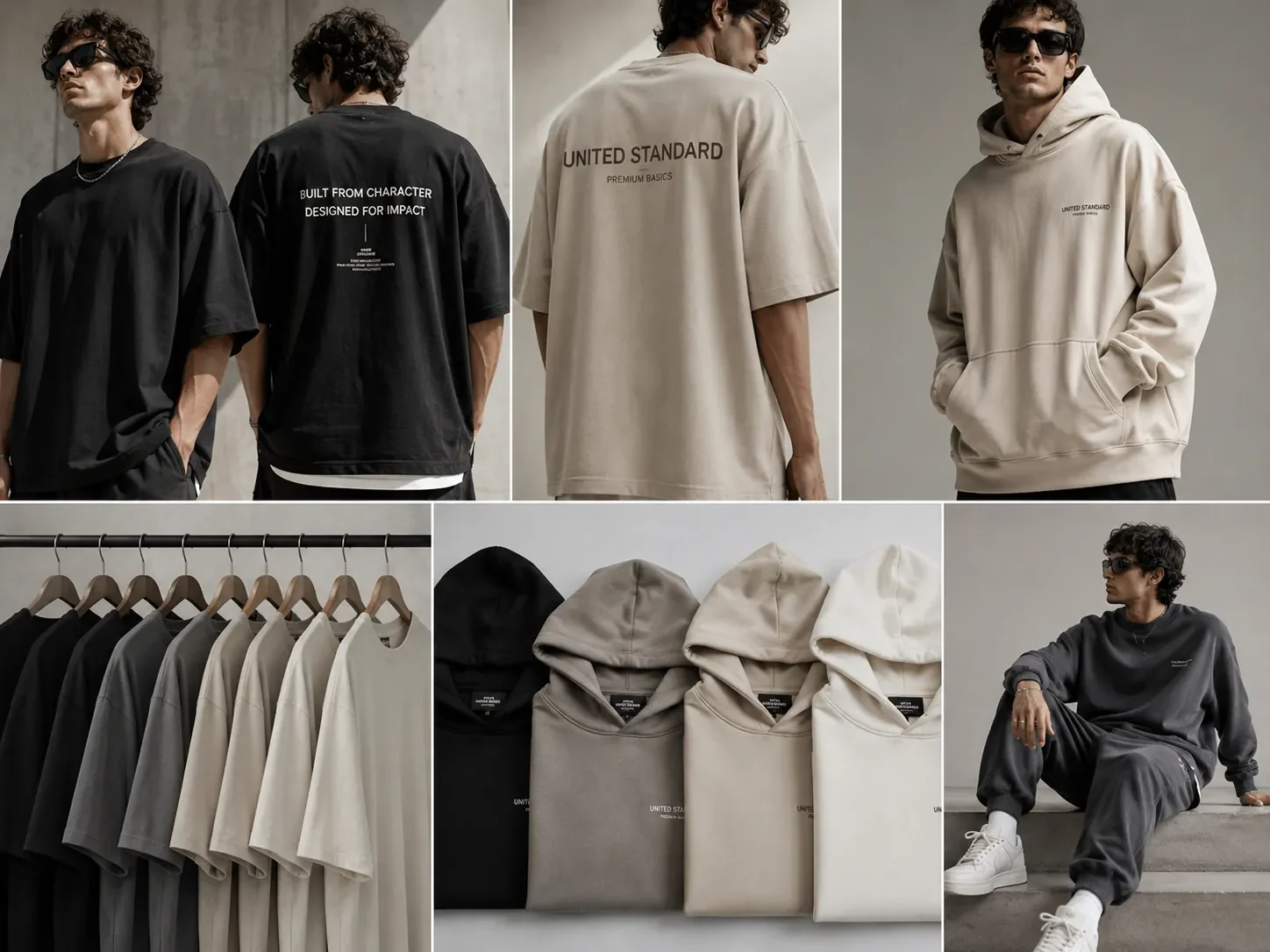
This becomes even more important in today’s premium streetwear and oversized apparel market, where consumers are more educated about fabric quality than ever before. Customers now actively look for heavyweight cotton, bio washed fabrics, French terry hoodies, drop shoulder fits, and premium GSM ranges.
Modern consumers can immediately recognize the difference between a lightweight promotional t-shirt and a properly structured heavyweight oversized garment.
For startup brands, this creates both an opportunity and a challenge.
The opportunity is that premium products create stronger brand loyalty and higher perceived value. The challenge is that premium manufacturing requires better sourcing decisions, stronger quality control, and deeper technical understanding.
This is why experienced startup clothing manufacturers provide far more value than factories that simply offer low prices.
Understanding the Reality of Low MOQ Clothing Manufacturing
One of the first things startup founders search online is:
“Low MOQ clothing manufacturer.”
This usually comes from a very understandable concern. Most startups want to test products without investing huge amounts of capital into inventory.
However, the way MOQ works in apparel manufacturing is widely misunderstood.
Many founders assume factories create high MOQs simply to maximize profits. In reality, the biggest limitation often comes from fabric production rather than sewing itself.
Sewing a garment does not require massive quantities. Fabric dyeing does.
When a startup requests a custom Pantone color for heavyweight cotton fabric, the dyeing unit usually requires a minimum batch size to make the process economically viable. In many cases, this means around 200 to 250 kilograms of fabric per color.
Once fabric consumption is calculated, the MOQ becomes much more realistic.
For example, an oversized 240 GSM t-shirt may consume approximately 0.7 to 0.8 kilograms of fabric depending on sizing and fit. Once dyeing minimums are considered, production naturally lands around 300 to 500 garments per color.
This is why many experienced manufacturers guide startups toward:
- Stock black fabrics
- Stock white fabrics
- Existing dyed colors
- Limited initial colorways
Using stock fabrics allows startups to significantly reduce minimum order quantities while maintaining quality.
The biggest mistake startups make is trying to launch with too many colors, too many designs, and unrealistic production quantities. The most successful startup brands often begin with a highly focused product range.
A single premium oversized t-shirt in two strong colors usually performs better than ten poorly developed designs.
Why Tiruppur Became India’s Startup Apparel Manufacturing Hub
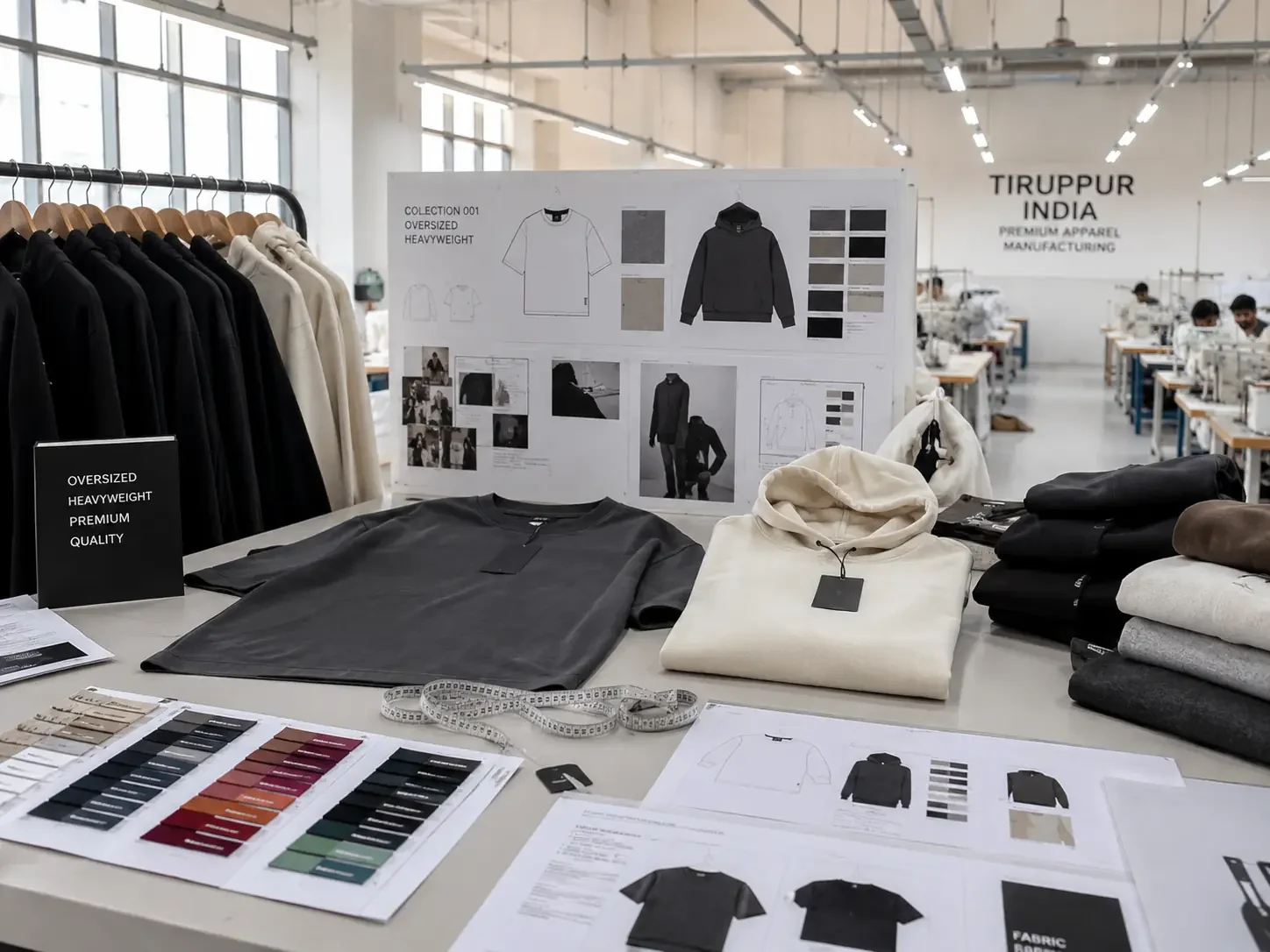
Tiruppur is often called the knitwear capital of India, but most people outside the industry do not fully understand why the city became so important globally.
The biggest advantage is ecosystem density.
In Tiruppur, nearly every stage of knitwear manufacturing exists within the same region:
- Yarn spinning
- Knitting
- Dyeing
- Compacting
- Printing
- Embroidery
- Washing
- Stitching
- Finishing
- Packing
- Export logistics
This creates enormous efficiency for startup brands.
Instead of sourcing fabrics from one city, dyeing from another, and production from a third region, everything happens inside a connected textile ecosystem. This reduces lead times, simplifies communication, and improves production flexibility.
For startups, this matters because speed and adaptability are critical.
If a sample requires fabric changes, adjustments can happen quickly. If a production issue appears, corrections are easier to manage because suppliers and factories operate within the same manufacturing network.
Tiruppur also developed deep expertise specifically in cotton knitwear manufacturing. This includes:
- Oversized t-shirts
- Heavyweight cotton garments
- Hoodies
- French terry apparel
- Joggers
- Streetwear
- Private label basics
This specialization gives the region a major advantage over general garment manufacturing hubs.
Another major strength is fabric accessibility.
Tiruppur’s network of knitting mills allows manufacturers to source a wide range of fabrics rapidly, including:
- Single jersey
- Interlock
- Rib knit
- French terry
- Fleece
- Organic cotton blends
- Stretch fabrics
For startup brands, faster fabric sourcing means faster sampling and shorter development cycles.
The Shift Toward Premium Heavyweight Apparel
The global apparel market has changed significantly over the last few years.
Consumers increasingly associate heavier fabrics with higher quality. This is one reason oversized streetwear and heavyweight basics continue to dominate modern fashion.
Brands targeting Gen Z and premium direct-to-consumer audiences now prioritize:
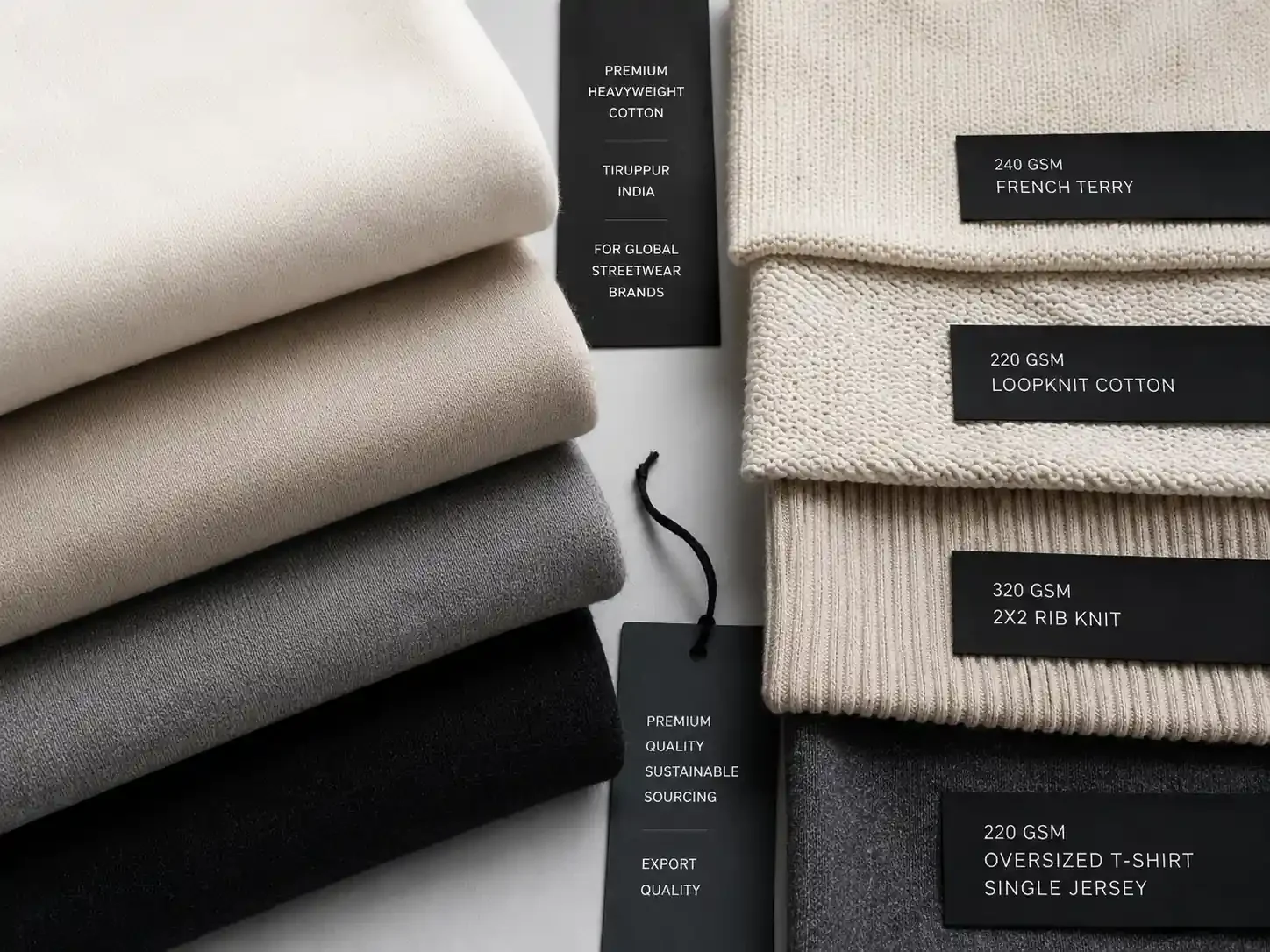
- 220 GSM t-shirts
- 240 GSM oversized fits
- Heavyweight hoodies
- Loopknit French terry
- Bio washed cotton
- Relaxed silhouettes
This shift has also changed how manufacturers approach startup production.
Previously, many brands focused only on keeping costs low. Today, startups are realizing that premium fabric quality often improves customer retention and average order value.
A properly developed 240 GSM oversized t-shirt feels completely different from a basic 160 GSM garment. The drape is better. The structure holds longer. The fabric feels more substantial in hand.
But heavyweight manufacturing also requires more technical control.
Heavier fabrics behave differently during:
- Cutting
- Stitching
- Washing
- Compacting
- Finishing
Shrinkage management becomes more important. Pattern balancing matters more. Shoulder drop positioning affects how the oversized silhouette looks after washing.
This is where experienced manufacturers create major advantages for startup brands.
A factory familiar with oversized streetwear production understands how to maintain fit consistency while managing heavyweight fabrics correctly.
Fabric Selection Is One of the Most Important Startup Decisions
Many startup founders underestimate how much fabric influences brand perception.
Consumers may not understand technical textile terminology, but they immediately recognize:
- Softness
- Thickness
- Durability
- Opacity
- Drape
- Shape retention
Choosing the right fabric is not simply about selecting a GSM number. It involves understanding the relationship between:
- Fabric construction
- Yarn quality
- Wash treatment
- Intended fit
- Brand positioning
Combed cotton, for example, creates a softer and cleaner surface because shorter fibers are removed during processing. Ring-spun cotton improves softness and durability further because of how the yarn is twisted during spinning.
These details matter enormously in premium apparel manufacturing.
For startup brands targeting higher-end consumers, combed ring-spun cotton is usually the preferred choice because it creates:
- Better hand feel
- Reduced pilling
- Improved longevity
- Stronger premium perception
French terry has also become increasingly popular for startup streetwear brands.
Unlike fleece, French terry uses loopback construction on the inside of the fabric, which creates better breathability while still maintaining structure and warmth. This makes it highly versatile for hoodies and premium casualwear.
The best startup brands usually focus on mastering fabric quality early rather than trying to compete purely on pricing.
The Real Clothing Manufacturing Process for Startups
One reason many startups struggle with manufacturing is because they underestimate how many stages exist between design and final production.
A professional apparel production workflow usually begins with product development.
This includes:
- Measurement planning
- Fabric selection
- GSM finalization
- Trim sourcing
- Construction details
- Print specifications
- Label placements
Once this information is prepared, sampling begins.
Most professional manufacturers go through multiple sample stages before bulk production:
- Proto sample
- Fit sample
- Pre-production sample
- Top of production approval
Sampling is where startup brands should invest the most attention.
Rushed sampling often creates larger production problems later.
For example, many startups approve a sample without performing wash tests. Once bulk garments are washed after production, shrinkage problems appear unexpectedly.
Experienced manufacturers usually conduct:
- Shrinkage testing
- GSM verification
- Stitch quality checks
- Measurement inspections
- Fabric defect analysis
This is especially important for heavyweight cotton and oversized garments because fit consistency becomes more noticeable.
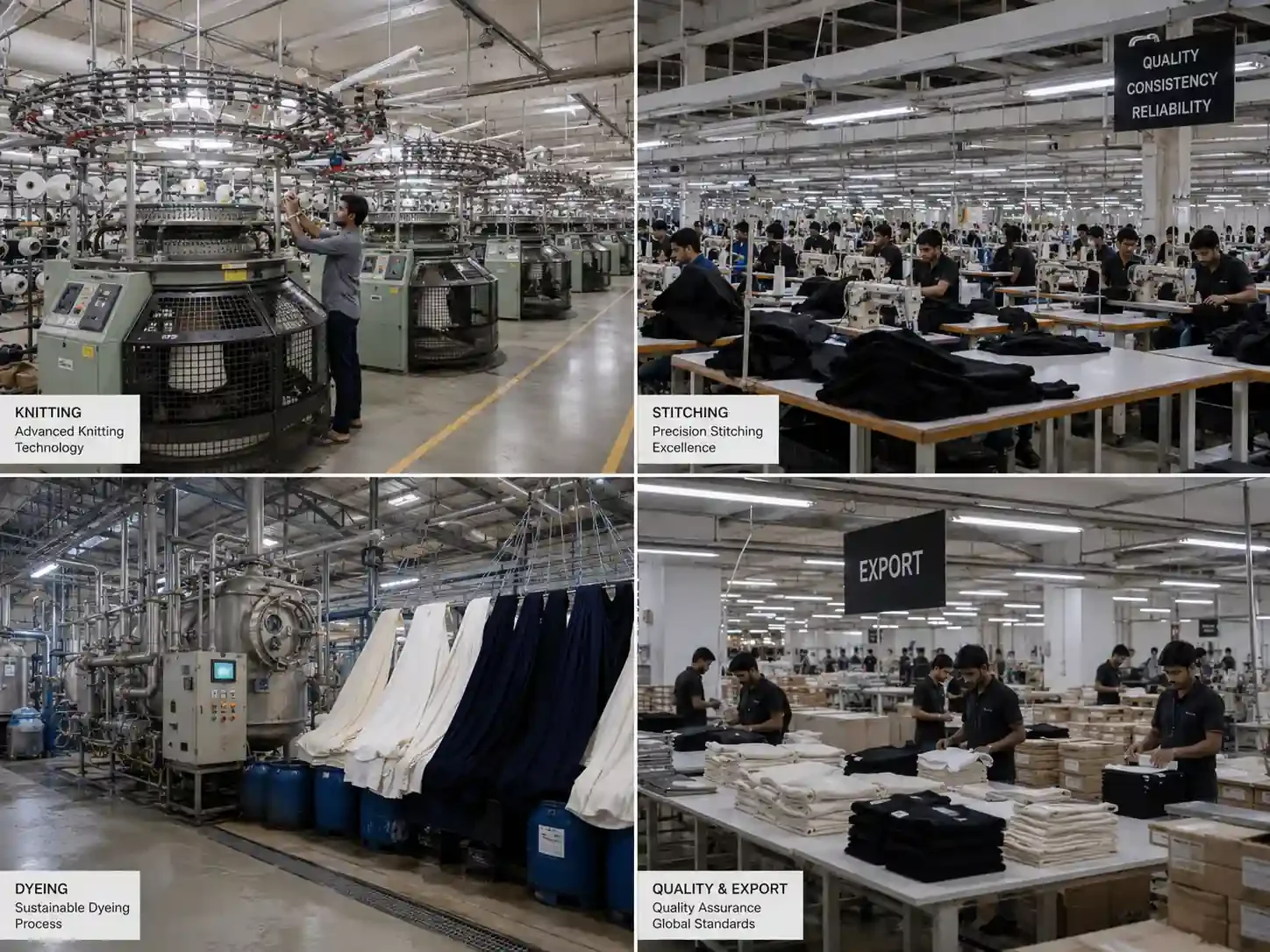
Bulk production itself involves multiple departments working together:
- Fabric inspection
- Marker making
- Cutting
- Printing
- Embroidery
- Sewing
- Washing
- Finishing
- Packing
Strong quality control systems are essential because consistency is what transforms a startup into a scalable brand.
Private Label vs Cut and Sew Manufacturing
One of the most important strategic decisions startup brands make is whether to use private label manufacturing or cut and sew production.
Private label manufacturing usually works best for startups that want:
- Faster launch timelines
- Lower complexity
- Simpler development
- Proven product structures
In private label production, manufacturers often work with existing garment blocks and sourcing systems while applying the startup’s branding elements.
Cut and sew manufacturing offers far more customization.
This approach allows brands to create:
- Unique fits
- Custom patterns
- Specialized silhouettes
- Distinct construction details
Most premium streetwear brands eventually move toward cut and sew manufacturing because it creates stronger product differentiation.
However, cut and sew production also requires:
- More development time
- Better technical communication
- Stronger sampling processes
For startups entering apparel manufacturing for the first time, many manufacturers recommend starting with simplified private label development before scaling into more advanced custom production.
Common Mistakes Startup Clothing Brands Make
One of the most common startup mistakes is prioritizing low pricing above everything else.
Extremely low garment pricing usually comes with compromises somewhere in the production chain:
- Lower quality fabric
- Poor stitching
- Weak finishing
- Inconsistent measurements
- Minimal quality control
Another major issue is unrealistic timeline expectations.
Many startups expect full product development, sampling, and production to happen within a few weeks. In reality, proper apparel manufacturing requires careful iteration.
The brands that succeed long term are usually the ones that treat sampling seriously and refine products before rushing to market.
Another common problem is weak fabric understanding.
A lightweight fabric may reduce production cost slightly, but if the garment feels cheap, customer retention suffers. In premium apparel, product experience matters more than saving a few rupees during manufacturing.
Finally, many startups fail because they launch too many products initially.
The strongest startup brands often begin with:
- One hero product
- Strong fit development
- Excellent fabric quality
- Limited colorways
- Consistent branding
This creates a more focused and scalable foundation.
How Texora Supports Startup Clothing Brands
Texora works with startup brands looking for premium apparel manufacturing solutions in India, particularly within categories like oversized t-shirts, hoodies, heavyweight cotton garments, and modern streetwear.
Instead of focusing only on production, the approach centers around helping startups navigate the complete sourcing and development process.
This includes:
- Fabric sourcing support
- GSM recommendations
- Sampling coordination
- Vendor management
- Production planning
- Quality monitoring
- Export coordination
By leveraging Tiruppur’s integrated textile ecosystem, startups gain access to manufacturing systems built for scalability while maintaining strong product quality standards.
For startup brands, having sourcing support during the early stages can significantly reduce costly mistakes and production delays.

Final Thoughts
Finding the best clothing manufacturer for startups in India is not about finding the cheapest factory online.
It is about finding a manufacturing partner that understands:
- Product quality
- Fabric behavior
- Startup limitations
- Sampling importance
- Production scalability
- Modern consumer expectations
Today’s apparel market rewards brands that focus on premium product experience, especially within oversized streetwear and heavyweight basics.
Consumers are becoming more quality conscious. They notice fabric weight, stitching quality, shrinkage behavior, and fit consistency more than ever before.
This creates a huge opportunity for startup brands willing to invest in strong manufacturing foundations from the beginning.
India, and particularly Tiruppur, offers one of the strongest ecosystems globally for startup apparel manufacturing because of its deep knitwear expertise, integrated sourcing infrastructure, and production flexibility.
For brands serious about building long term apparel businesses, manufacturing should never be treated as an afterthought. It is the foundation that determines whether a startup becomes a scalable brand or disappears after its first collection.
Frequently Asked Questions
Most professional clothing manufacturers in India work with a realistic MOQ of around 300 to 500 pieces per color or style. This is mainly due to fabric dyeing minimums and production setup requirements. However, startups can often reduce MOQ by using stock fabrics and limited color options.
Yes, but production costs are usually much higher for very small quantities. Most factories can support 100-piece orders only when using existing stock fabrics, standard colors, or simplified production methods. Custom dyeing and trims become expensive at lower volumes.
MOQ exists because of fabric economics rather than sewing limitations. Dyeing units require minimum fabric quantities to operate efficiently, especially for custom Pantone shades and heavyweight fabrics. Production planning, marker making, and quality control also become more cost-effective at larger quantities.
For premium oversized t-shirts, 220 GSM to 240 GSM combed cotton is commonly preferred. This fabric range provides better drape, durability, structure, and premium feel compared to lightweight fabrics.
180 GSM fabric feels lighter and softer, making it suitable for basic retail t-shirts. 240 GSM fabric feels heavier, more structured, and more premium, which is why it is widely used in oversized streetwear and luxury basics.
Startup apparel manufacturing usually takes around 6 to 12 weeks depending on:
- Sampling revisions
- Fabric sourcing
- Printing requirements
- Production quantity
- Washing and finishing processes
Bulk production alone often requires 4 to 8 weeks after sample approval.
A tech pack is a detailed blueprint used during garment production. It includes:
- Measurements
- Fabric specifications
- GSM
- Stitch details
- Label placements
- Print dimensions
- Packaging instructions
A strong tech pack helps reduce production errors and improves communication with manufacturers.
Private label manufacturing uses existing production structures with customized branding elements. Cut and sew manufacturing develops garments completely from scratch using custom patterns, measurements, and construction details.
Private label is usually faster and simpler for startups, while cut and sew offers greater customization and brand differentiation.
Startup brands should evaluate:
- Sample quality
- Stitch consistency
- Fabric feel
- Shrinkage performance
- Communication responsiveness
- Quality control process
- Production experience
- Export capabilities
Wash testing and measurement verification are especially important before approving bulk production.
Some of the most common mistakes include:
- Choosing manufacturers only based on price
- Ignoring fabric quality
- Rushing the sampling process
- Using the wrong GSM
- Launching too many products initially
- Failing to test shrinkage and fit properly
Successful startup brands usually focus heavily on product quality and fit consistency during early production stages.