What Is Sublimation Printing?
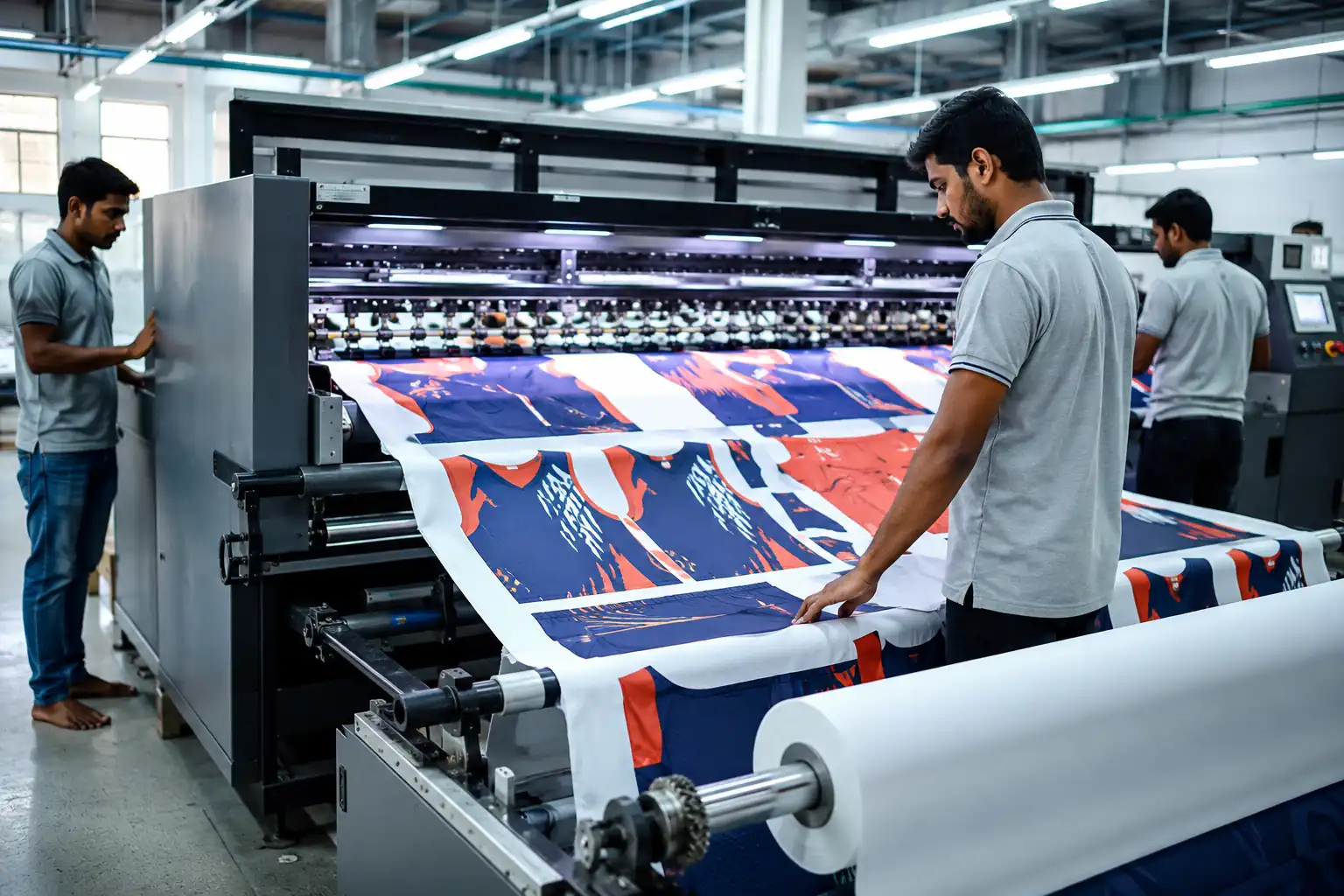
Sublimation printing is a digital printing process where special sublimation inks are transferred onto polyester fabric using high heat and pressure. During heating, the ink changes directly from a solid into a gas and permanently bonds with the polyester fibers instead of sitting on the surface.
Unlike screen printing, heat transfer vinyl, or DTF printing, sublimation becomes part of the fabric itself. This produces vibrant, lightweight, breathable prints that won’t crack, peel, or fade under normal use.
Because of its durability and unlimited color capability, sublimation printing is widely used for sports jerseys, cycling apparel, esports jerseys, running shirts, gym wear, corporate event T-shirts, and other performance garments.
Why Do Garment Factories Use Sublimation Printing?
For apparel manufacturers, sublimation offers advantages beyond appearance.
It enables factories to produce fully customized garments without adding extra layers of ink or film. Since the design is embedded into the fabric, garments retain their natural stretch, softness, and moisture-wicking performance.
This makes sublimation ideal for:
- Sports jerseys
- Football and cricket uniforms
- Cycling apparel
- Running shirts
- Gym wear
- Esports jerseys
- Promotional apparel
- Corporate teamwear
For brands, it also allows complete customization, including player names, numbers, sponsor logos, gradients, and all-over prints in a single production process.
Step 1: Creating the Artwork
Every sublimation garment starts with digital artwork.
Designers prepare vector files using software such as Adobe Illustrator or CorelDRAW. Logos, colors, player names, numbers, graphics, and branding elements are finalized before production begins.
Professional manufacturers also perform color calibration to improve consistency between digital artwork and printed fabric, especially for repeat orders or brand-specific color requirements.
A well-prepared design reduces production errors and ensures clean print alignment after stitching.
Step 2: Selecting the Right Polyester Fabric
Fabric selection plays a major role in print quality.
Sublimation works best on polyester because the dye permanently bonds with polyester molecules during heat transfer. Cotton and other natural fibers cannot achieve the same vibrant, long-lasting results using traditional sublimation.
Common fabrics include:
- Micro Polyester
- Interlock Fabric
- Bird Eye Mesh
- Dry-Fit Polyester
- Honeycomb Knit
- Jacquard Polyester
Each fabric offers different levels of breathability, texture, stretch, and durability depending on the garment’s intended use.
Why Doesn't Sublimation Work on Cotton?
Cotton fibers do not chemically bond with sublimation dyes. Instead of penetrating the fabric, the ink remains on the surface, resulting in faded colors and poor wash durability.
For this reason, professional sublimation apparel manufacturers primarily use 100% polyester or high-polyester performance fabrics.
Step 3: Printing onto Sublimation Transfer Paper
After artwork approval, the design is printed onto special sublimation transfer paper using digital sublimation printers and dedicated sublimation inks.
At this stage, the artwork may appear dull or reversed (mirror image), which is completely normal. The final vibrant colors develop only after heat transfer onto the fabric.
Every print roll is inspected before moving to the next production stage.
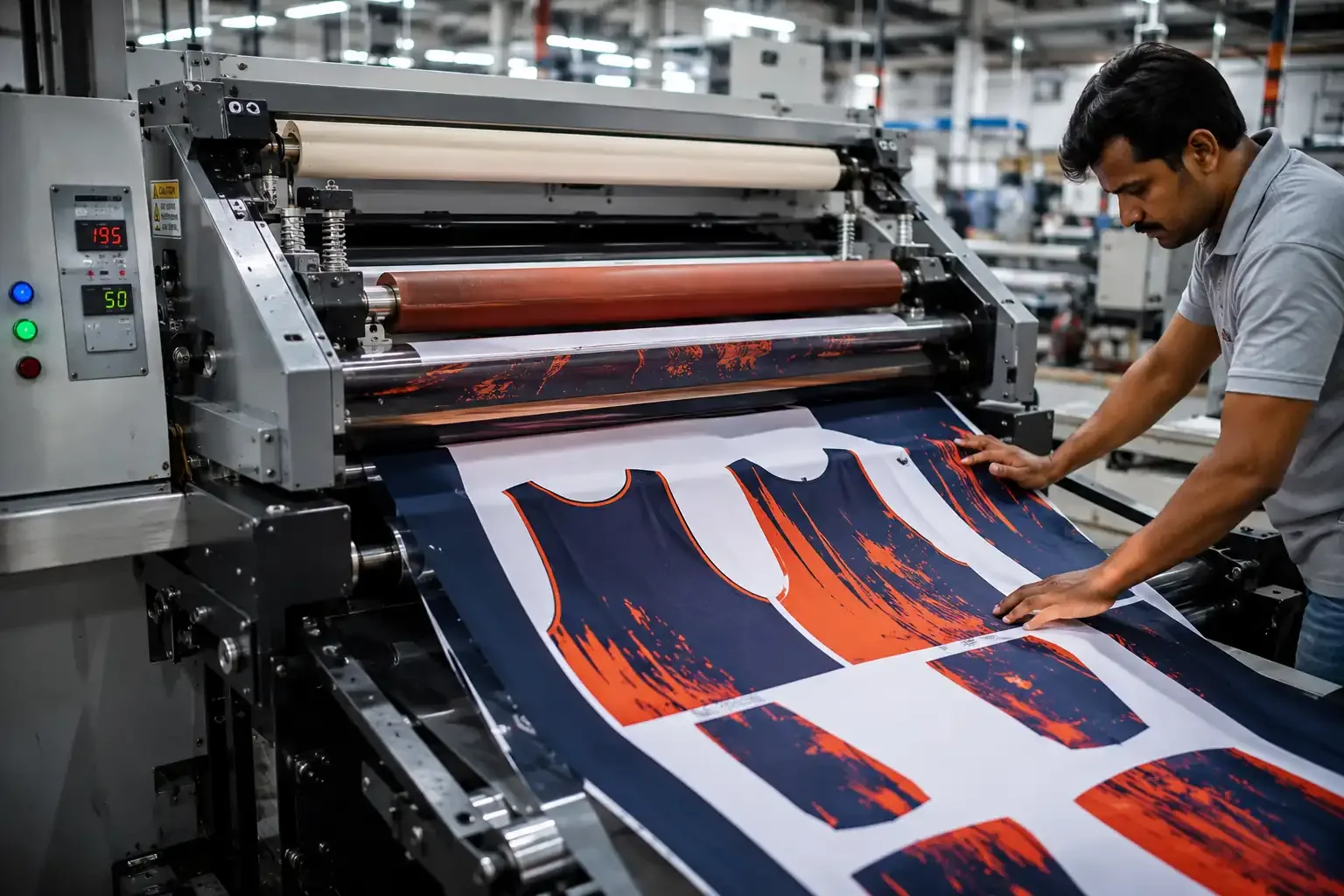
Step 4: Heat Transfer onto Fabric
This is where sublimation truly happens.
The printed transfer paper and polyester fabric pass through a heat press or calendar heat press at approximately 190-210°C under controlled pressure and timing.
During this process:
- Sublimation ink converts into gas.
- The gas penetrates polyester fibers.
- The dye permanently bonds with the fabric.
- The paper is removed.
- The design becomes part of the garment.
Unlike surface printing methods, no additional coating or film remains on the fabric.
Does Sublimation Printing Peel or Crack?
No.
Because the dye becomes part of the polyester fibers, properly manufactured sublimation prints do not peel, crack, or flake. With quality fabric, correct production settings, and proper garment care, sublimated apparel maintains its appearance through repeated washing and regular use.
Step 5: Fabric Relaxation Before Cutting
One manufacturing step that is often overlooked is fabric relaxation.
After heat transfer, factories allow the printed fabric to stabilize before cutting. This helps minimize dimensional changes, improves measurement accuracy, and supports better panel alignment during sewing.
Skipping this step can lead to sizing variations and inconsistent garment construction.
Step 6: Cutting the Garment Panels
Once the printed fabric has stabilized, it is cut according to approved patterns.
The garment is separated into individual components such as:
- Front panel
- Back panel
- Sleeves
- Collar
- Side panels
Because the artwork has already been printed, accurate cutting is essential to ensure graphics align correctly when the garment is assembled.
Step 7: Stitching and Garment Assembly
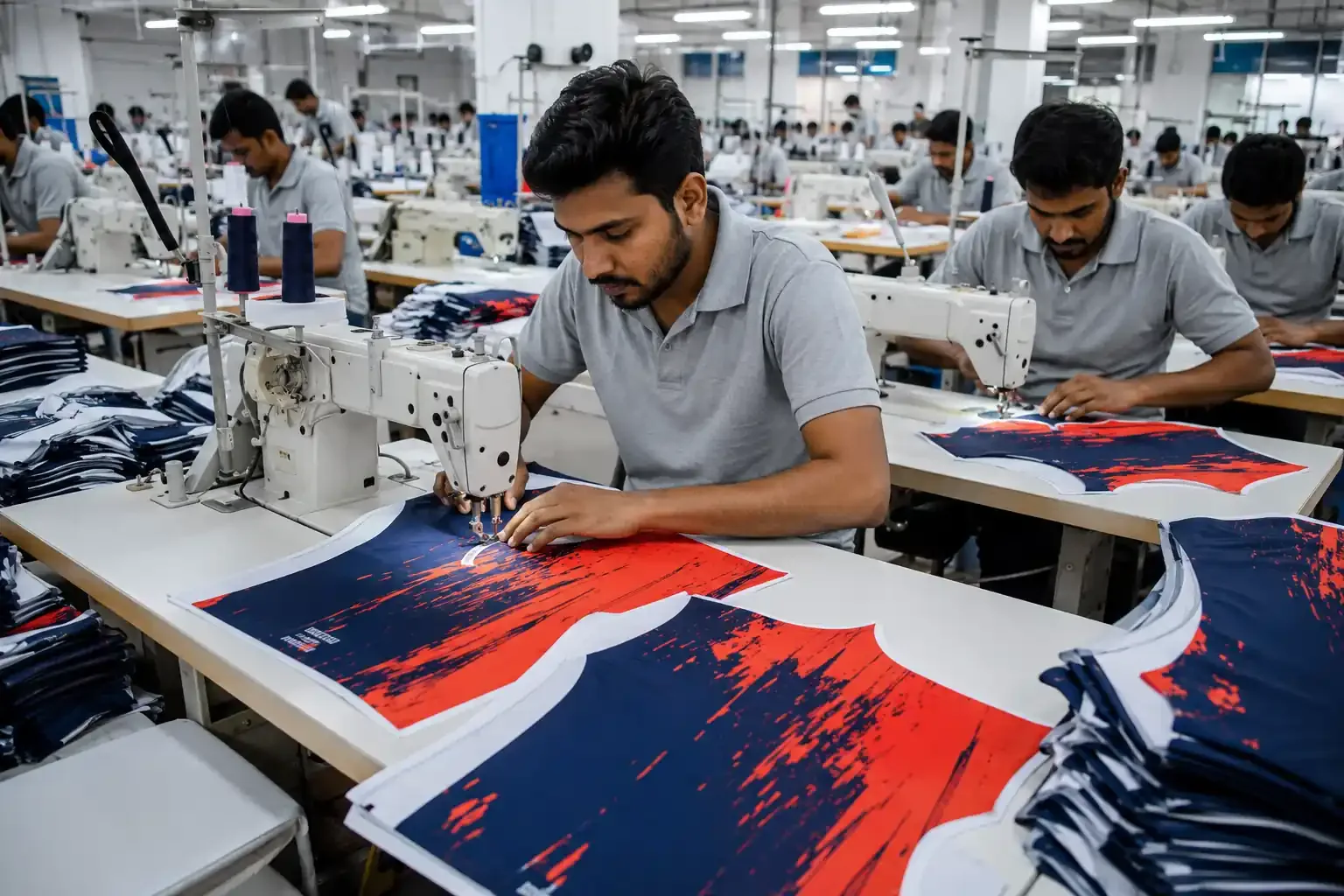
The cut panels move to the sewing department where experienced operators assemble the garment.
Factories use different stitch types depending on the product, including:
- Overlock stitching
- Flatlock stitching
- Cover stitching
Labels, neck tapes, size labels, and other trims are attached during this stage.
Proper stitching not only improves durability but also ensures printed graphics continue smoothly across seams whenever required.
Step 8: Quality Inspection
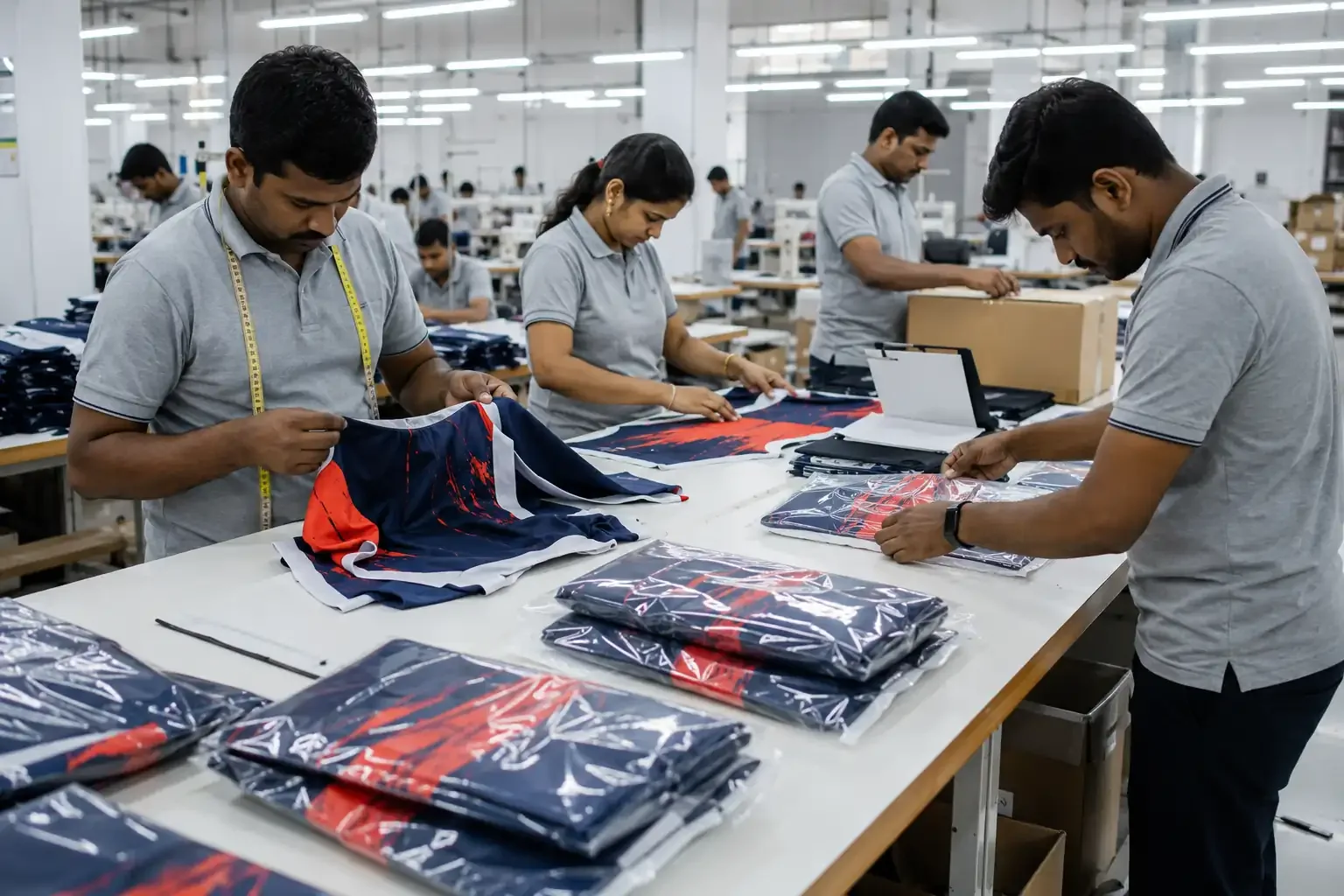
Quality control is one of the most important stages in sublimation apparel manufacturing.
Professional garment factories inspect every production batch for:
- Color consistency
- Print sharpness
- Measurement accuracy
- Stitch quality
- Panel alignment
- Fabric defects
- Loose threads
- Overall garment appearance
Many export manufacturers also conduct random inspections following AQL (Acceptable Quality Limit) standards before packing.
Consistent quality inspection helps reduce customer complaints and improves repeat business for clothing brands.
Step 9: Packing and Export
After final approval, garments are prepared for shipment.
Depending on customer requirements, products may include:
- Custom neck labels
- Private-label branding
- Hang tags
- Individual polybags
- Barcode stickers
- Carton packing
- Export documentation
The garments are then consolidated for domestic delivery or international export.
Why Is Sublimation the Preferred Choice for Sportswear?
Sportswear requires garments that are lightweight, breathable, durable, and capable of handling continuous movement.
Since sublimation does not create an extra layer on the fabric, it preserves the garment’s flexibility and moisture management properties.
This makes it one of the most widely used printing methods for:
- Cricket jerseys
- Football jerseys
- Basketball uniforms
- Cycling apparel
- Running shirts
- Gym wear
- Esports jerseys
- School sports uniforms
The ability to print unlimited colors, gradients, and detailed graphics also makes sublimation ideal for fully customized teamwear.
Sublimation vs Screen Printing
Although both methods have their place, they serve different purposes.
| Sublimation Printing | Screen Printing |
|---|---|
| Best for polyester fabrics | Best for cotton and blends |
| Permanent dye bonding | Ink sits on fabric surface |
| Unlimited full-color designs | Better for simple solid-color prints |
| No cracking or peeling | May crack over time depending on ink and use |
| Ideal for sportswear and all-over prints | Common for fashion and promotional T-shirts |
The right choice depends on the garment, fabric, artwork, and intended application.
Frequently Asked Questions
When printed on quality polyester fabric using proper manufacturing processes, sublimation prints typically last for the life of the garment under normal use and care.
Yes. Player names, numbers, sponsor logos, and custom graphics are incorporated into the artwork before printing, allowing everything to be transferred in a single process.
Performance polyester fabrics such as interlock, bird-eye mesh, micro polyester, and dry-fit fabrics are among the most popular choices because they provide excellent print quality and moisture management.
Yes. While commonly associated with sportswear, sublimation is also used for fashion apparel, promotional clothing, event merchandise, and private-label collections that require vibrant, all-over designs.
Final Thoughts
Sublimation printing is far more than a decoration technique-it is a specialized apparel manufacturing process that combines digital design, polyester fabric technology, precision heat transfer, skilled garment construction, and strict quality control.
When every production stage is carefully managed-from artwork preparation and fabric selection to stitching, inspection, and export packing-the result is a durable, lightweight garment with vivid colors that remain part of the fabric.
For clothing brands, sportswear companies, and businesses developing custom performance apparel, understanding how sublimation printing works inside a garment factory makes it easier to choose the right manufacturing partner, select suitable fabrics, and achieve consistent production quality for every order.