When an apparel brand places an order for 5,000 or 50,000 garments, inspecting every single piece before shipment isn’t practical. Instead, manufacturers and buyers rely on Acceptable Quality Level (AQL)-a globally recognized statistical sampling method that evaluates whether a production lot meets the agreed quality standard.
However, one common misconception is that AQL is the quality control process itself. In reality, AQL is only the final verification step after multiple quality checks have already taken place throughout production.
Understanding how AQL fits into the apparel manufacturing process helps brands reduce shipment risks, improve consistency, and build long-term relationships with reliable suppliers.
What Is AQL Inspection?
AQL (Acceptable Quality Level) is a statistical inspection method used to determine whether a batch of garments meets predefined quality requirements by inspecting a randomly selected sample instead of every individual piece.
Rather than examining an entire shipment, inspectors select a sample size based on the total order quantity. The inspected garments are evaluated for workmanship, measurements, labeling, packaging, and appearance. If the number of defects remains within the agreed acceptance limit, the shipment passes inspection.
The objective is not to achieve perfection but to ensure the shipment maintains a consistent and commercially acceptable quality standard.
Where AQL Fits in the Apparel Manufacturing Process
One of the biggest misconceptions is that AQL inspection is performed only at the end of production. In reality, quality is built into every stage of manufacturing.
A typical apparel production workflow looks like this:
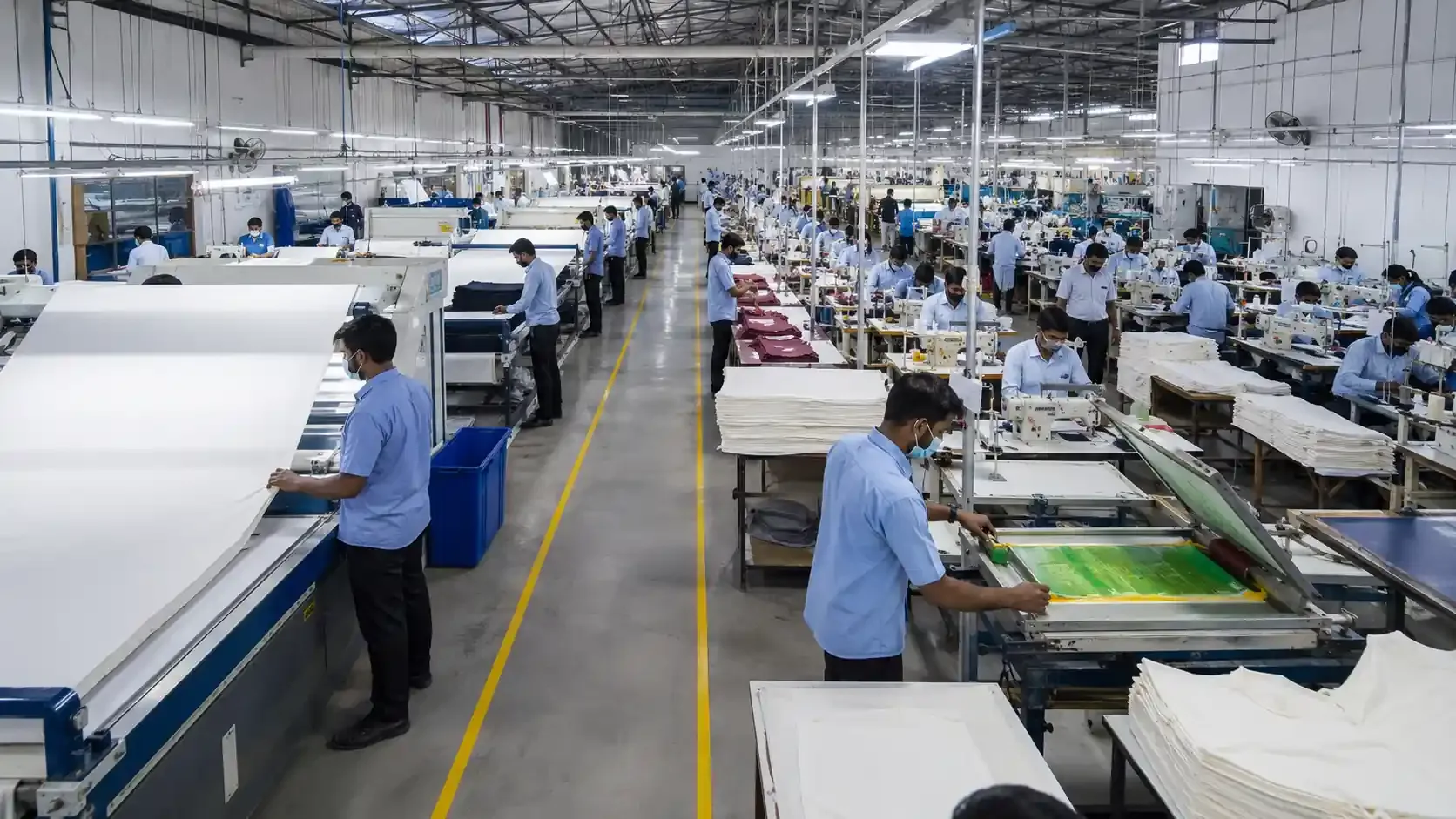
Yarn Procurement → Knitting → Fabric Inspection → Dyeing & Finishing → Fabric Relaxation → Cutting → Printing or Embroidery → Stitching → Inline Quality Checks → Finishing → Packing → Final AQL Inspection → Shipment
By the time a shipment reaches the AQL stage, most defects should already have been identified and corrected through internal quality control processes.
If a factory relies solely on the final AQL inspection to detect problems, production quality is already at risk.
Why Apparel Manufacturers Use AQL Instead of 100% Inspection
Imagine manually inspecting every garment in an order of 30,000 pieces. Besides requiring significant manpower and time, inspecting every item would increase production costs without guaranteeing zero defects.
AQL provides a practical balance between efficiency and quality assurance.
The system allows buyers and manufacturers to evaluate a representative sample that accurately reflects the overall production lot. When applied correctly, statistical sampling provides a high level of confidence while keeping inspections cost-effective and consistent.
Step-by-Step: How AQL Inspection Works
Although inspection procedures may vary slightly between buyers, the overall process generally follows these steps.
1. Production Completion
Inspection is scheduled only after production is complete and at least 80–100% of the order is packed.
This ensures the sample represents the actual shipment.
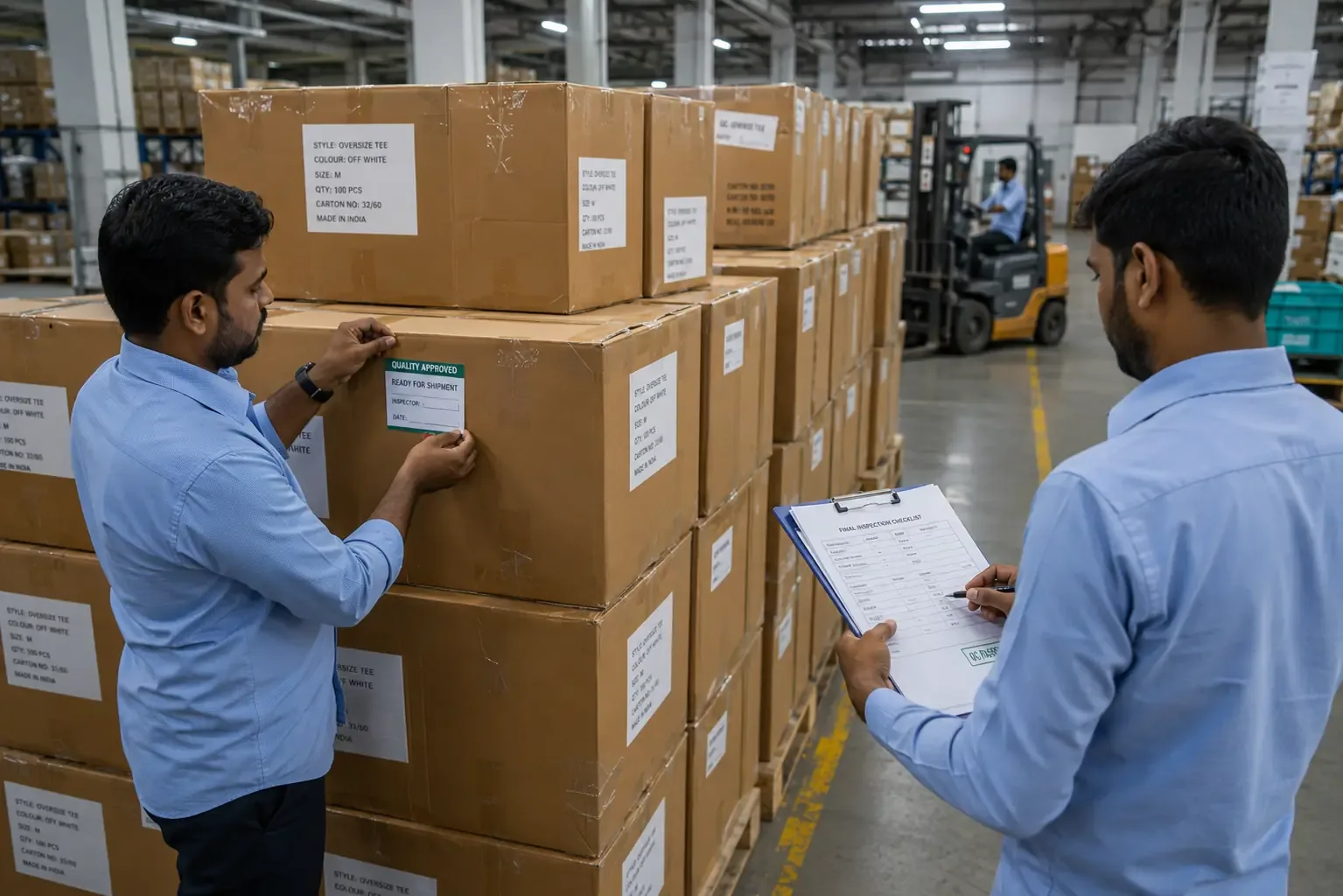
2. Random Carton Selection
Inspectors randomly select shipping cartons from different areas of the warehouse rather than choosing cartons prepared by factory staff.
Random selection eliminates sampling bias.
3. Sample Selection
Garments are randomly picked from the selected cartons according to the required sample size.
The number of inspected garments depends on the order quantity and agreed inspection level.
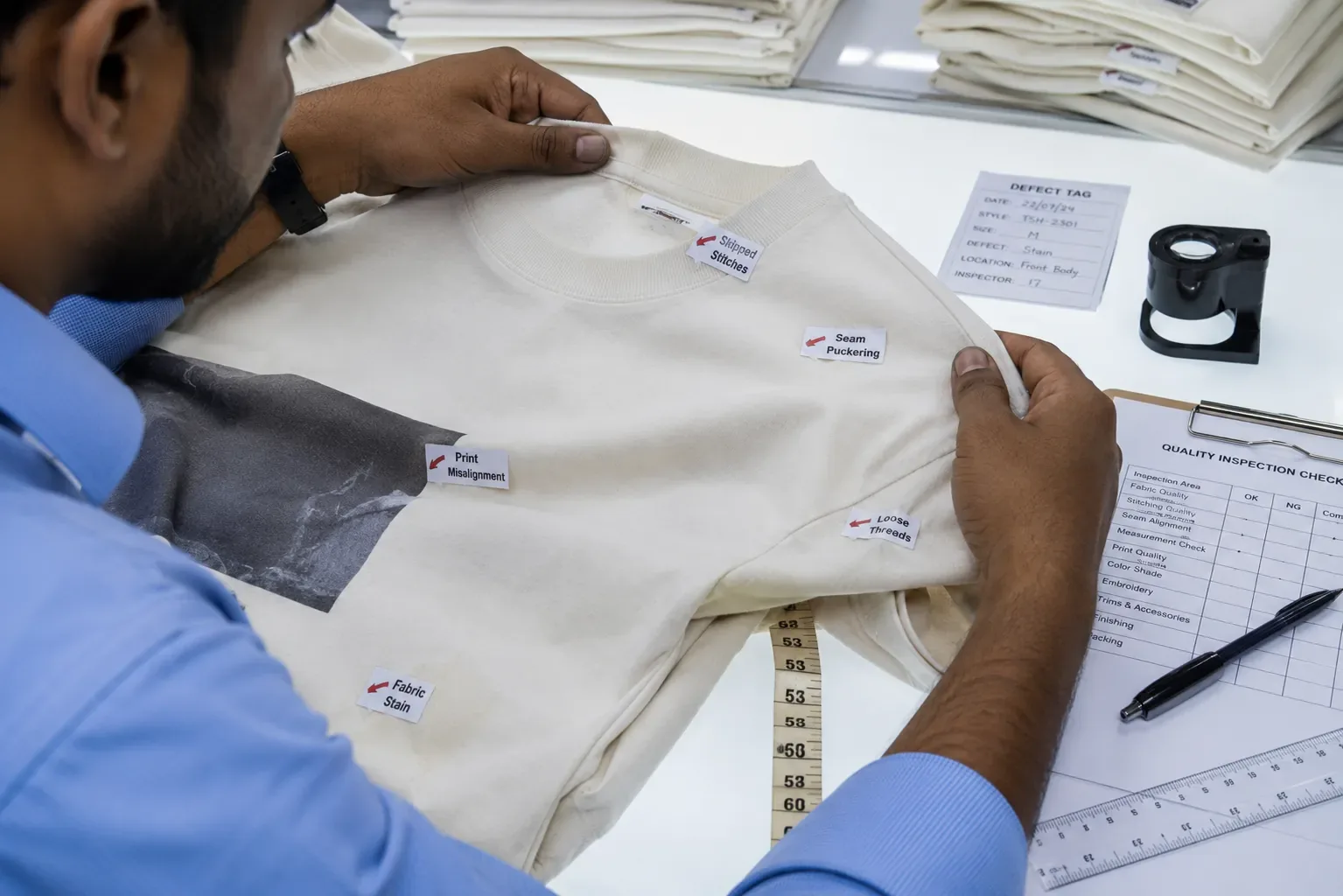
4. Visual Inspection
Each selected garment is examined for visible workmanship issues, including:
- Open seams
- Skip stitches
- Fabric stains
- Needle damage
- Shade variation
- Loose threads
- Printing defects
- Embroidery defects
- Incorrect trims
Every garment is evaluated against approved production standards.
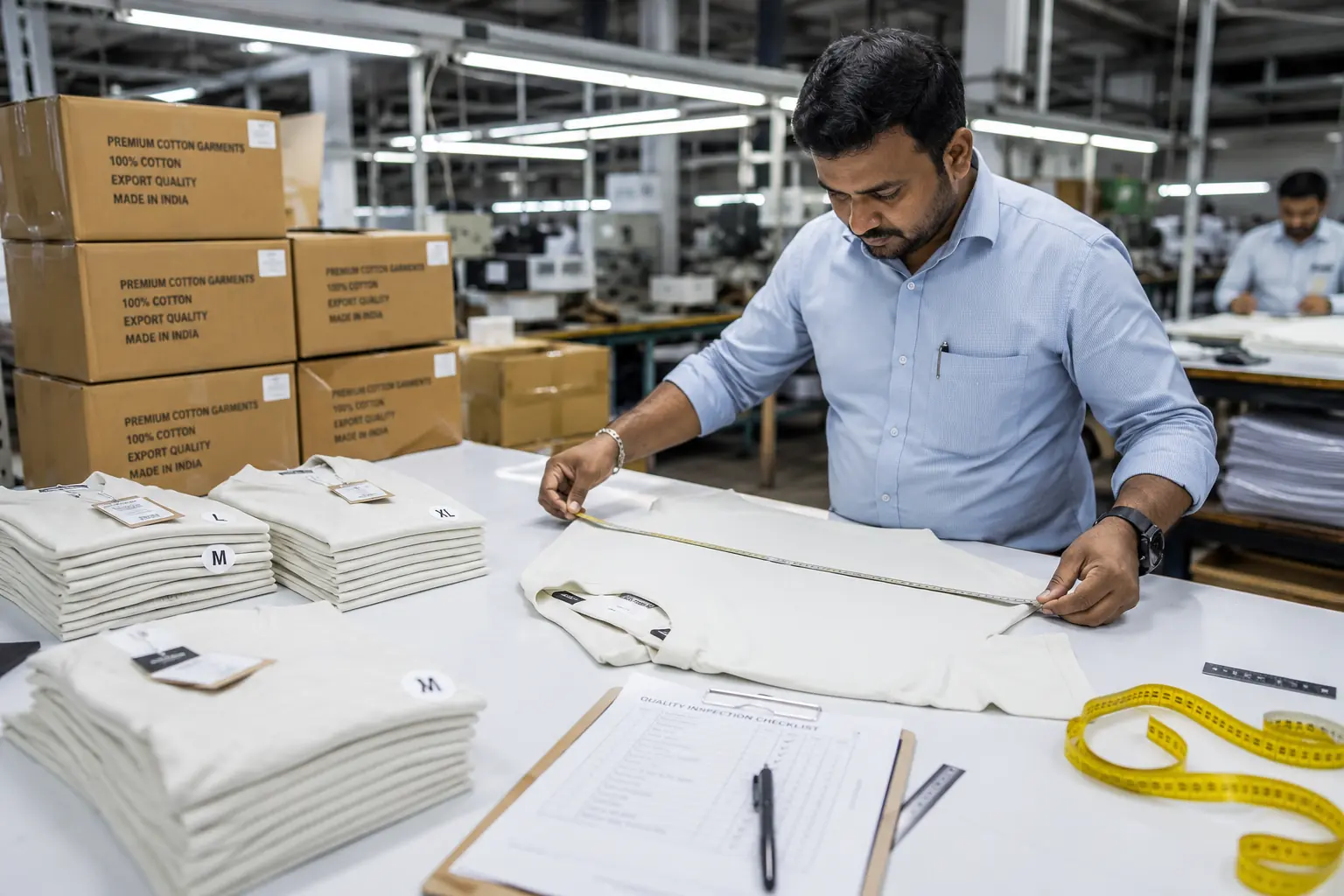
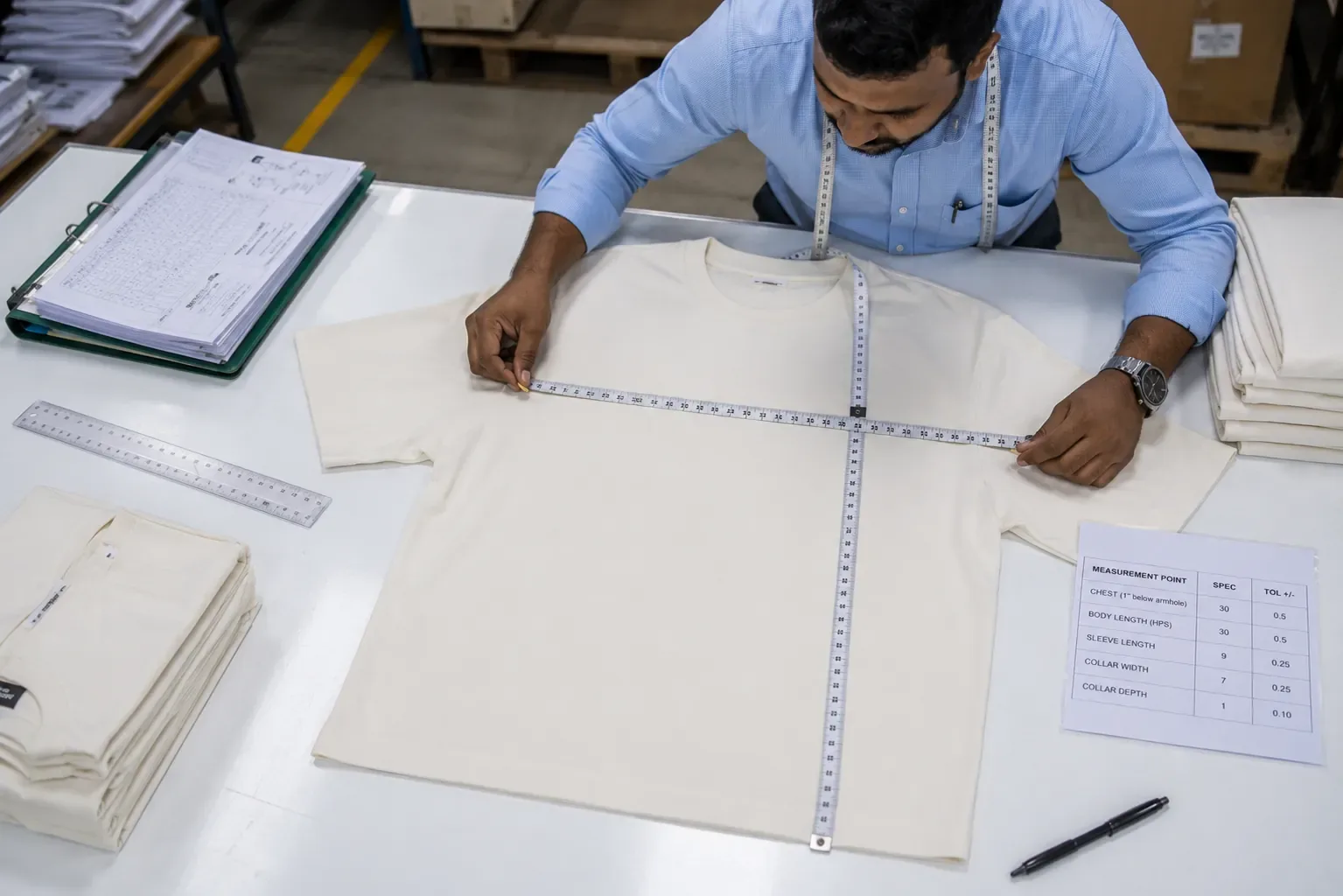
5. Measurement Verification
Critical measurements are checked against the approved size specification.
Inspectors typically verify:
- Chest
- Body length
- Sleeve length
- Shoulder width
- Neck opening
- Bottom opening
Measurements must remain within the agreed tolerance.
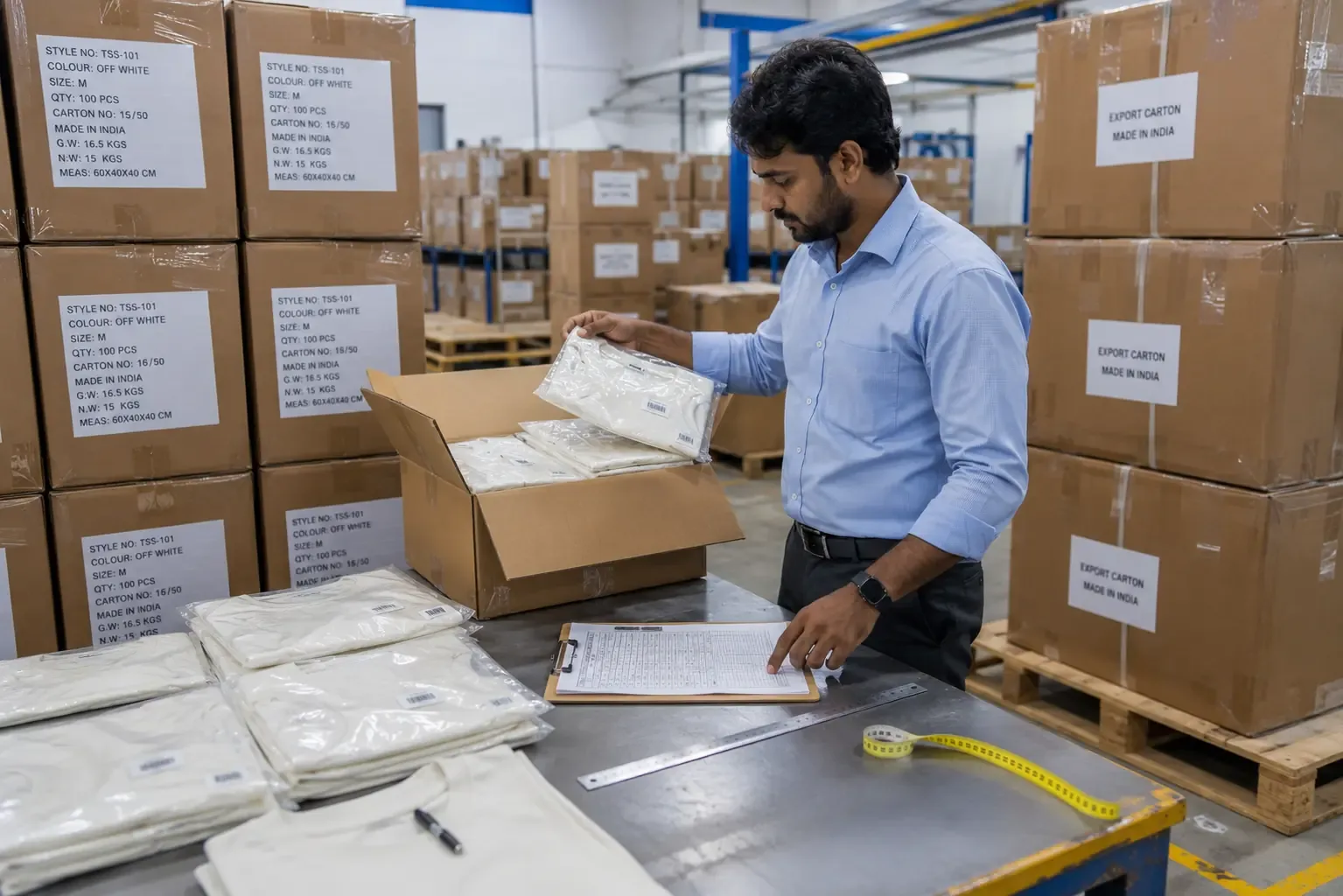
6. Label and Packaging Inspection
Inspection extends beyond the garment itself.
Inspectors verify:
- Size labels
- Care labels
- Brand labels
- Hang tags
- Polybags
- Barcode stickers
- Carton markings
Packaging errors can cause shipments to fail even when garment quality is acceptable.
7. Defect Classification
Every defect is classified according to its severity.
Critical defects affect consumer safety or legal compliance.
Major defects significantly reduce product usability or customer satisfaction.
Minor defects have little impact on function but affect overall appearance or finishing quality.
The total number of recorded defects determines whether the shipment passes or requires corrective action.
Common Garment Defects Found During AQL Inspection
Unlike generic manufacturing inspections, apparel inspections focus heavily on workmanship and appearance.
Common issues include:
- Seam puckering
- Broken or skipped stitches
- Fabric holes
- Oil stains
- Shade inconsistency
- Print misalignment
- Embroidery distortion
- Collar twisting
- Rib mismatch
- Incorrect measurements
- Missing labels
- Wrong size stickers
- Damaged polybags
- Loose threads
- Button attachment issues
Many of these defects originate much earlier in production, which highlights the importance of continuous quality monitoring rather than relying only on the final inspection.
Why Good Factories Rarely Depend on Final AQL Alone
High-performing apparel manufacturers treat AQL as a confirmation-not as their primary quality control method.
Instead, quality is monitored continuously through:
- Fabric inspection before cutting
- Shade approval after dyeing
- Inline sewing inspections
- Measurement audits during production
- Finishing quality checks
- Packing verification
This layered quality control approach significantly reduces the likelihood of shipment failures and costly rework.
When defects are identified during production, they are corrected immediately instead of accumulating until the final inspection.
What Happens If a Shipment Fails AQL?
Failing an AQL inspection does not necessarily mean the entire order is rejected.
The outcome depends on the buyer’s quality agreement.
Most failed inspections require the manufacturer to:
- Identify root causes
- Repair defective garments
- Re-inspect corrected pieces
- Replace unacceptable products
- Repeat the final inspection before shipment approval
This process can delay deliveries and increase manufacturing costs, making preventive quality control far more valuable than corrective action.
Best Practices for Clothing Brands
Brands can improve shipment quality by viewing AQL as one component of a broader quality management system.
Before approving production, ensure that your manufacturer follows:
- Approved production samples
- Clearly defined measurement tolerances
- Fabric testing before cutting
- Inline quality inspections
- Final finishing inspections
- Accurate packing verification
- Independent or third-party AQL inspection before shipment
Combining these practices provides greater confidence than relying on statistical sampling alone.
Final Thoughts
AQL inspection remains one of the most effective methods for verifying apparel quality before shipment. However, its success depends on the quality systems that precede it.
Factories that integrate fabric inspections, inline quality control, measurement verification, and finishing checks throughout production are far more likely to achieve consistent AQL results than those relying solely on end-of-line inspections.
For clothing brands, AQL should be viewed as the final checkpoint in a comprehensive quality assurance process-not the only one. By working with manufacturers who emphasize preventive quality control at every production stage, buyers can reduce defects, avoid costly shipment delays, and deliver garments that consistently meet customer expectations.
Frequently Asked Questions
The purpose of AQL (Acceptable Quality Level) inspection is to determine whether a batch of garments meets the agreed quality standard by inspecting a statistically selected sample instead of every piece. It helps buyers and manufacturers make consistent shipment decisions while reducing inspection time and costs.
AQL inspection is typically conducted after production is complete and at least 80-100% of the order has been packed. It serves as the final quality verification before shipment, following earlier inspections such as fabric checks, inline sewing inspections, measurement verification, and finishing quality control.
Inspectors evaluate garments for critical, major, and minor defects. Common issues include open seams, skipped stitches, fabric stains, shade variation, print or embroidery defects, incorrect measurements, loose threads, labeling mistakes, and packaging errors.
If a shipment fails AQL inspection, the manufacturer usually investigates the root cause, repairs or replaces defective garments, and conducts a re-inspection before shipment approval. The exact corrective action depends on the buyer's quality requirements and purchase agreement.
No. AQL inspection is only the final verification step. Consistent garment quality depends on a complete quality control system that includes raw material inspection, fabric testing, inline production inspections, measurement audits, finishing checks, and proper packaging verification throughout the manufacturing process.