When ordering custom garments, manufacturers and buyers often discuss garment measurement tolerance before production begins. Understanding measurement tolerance helps prevent misunderstandings during quality inspections and ensures both parties have realistic expectations.
No garment can be produced with identical measurements on every single piece. Variations naturally occur during fabric knitting, cutting, sewing, washing, finishing, and packing. For this reason, the apparel industry follows acceptable tolerance limits rather than expecting every garment to match the specification sheet exactly.
This guide explains what garment measurement tolerance means, why it exists, common industry standards, and how manufacturers check finished garments before shipment.
What Is Garment Measurement Tolerance?
Garment measurement tolerance refers to the acceptable variation between the specified garment measurement and the actual measurement of the finished product.
For example, if the chest width specified in a tech pack is 60 cm, a tolerance of ±1 cm means the acceptable finished measurement falls between 59 cm and 61 cm.
Measurements outside the agreed tolerance may require inspection, sorting, alteration, or replacement depending on the buyer’s quality requirements.
Tolerance is an internationally accepted practice in garment manufacturing because textile production involves multiple processes that naturally create slight dimensional differences.
Why Do Measurement Variations Happen?
Several manufacturing processes contribute to small measurement differences.
Fabric Relaxation
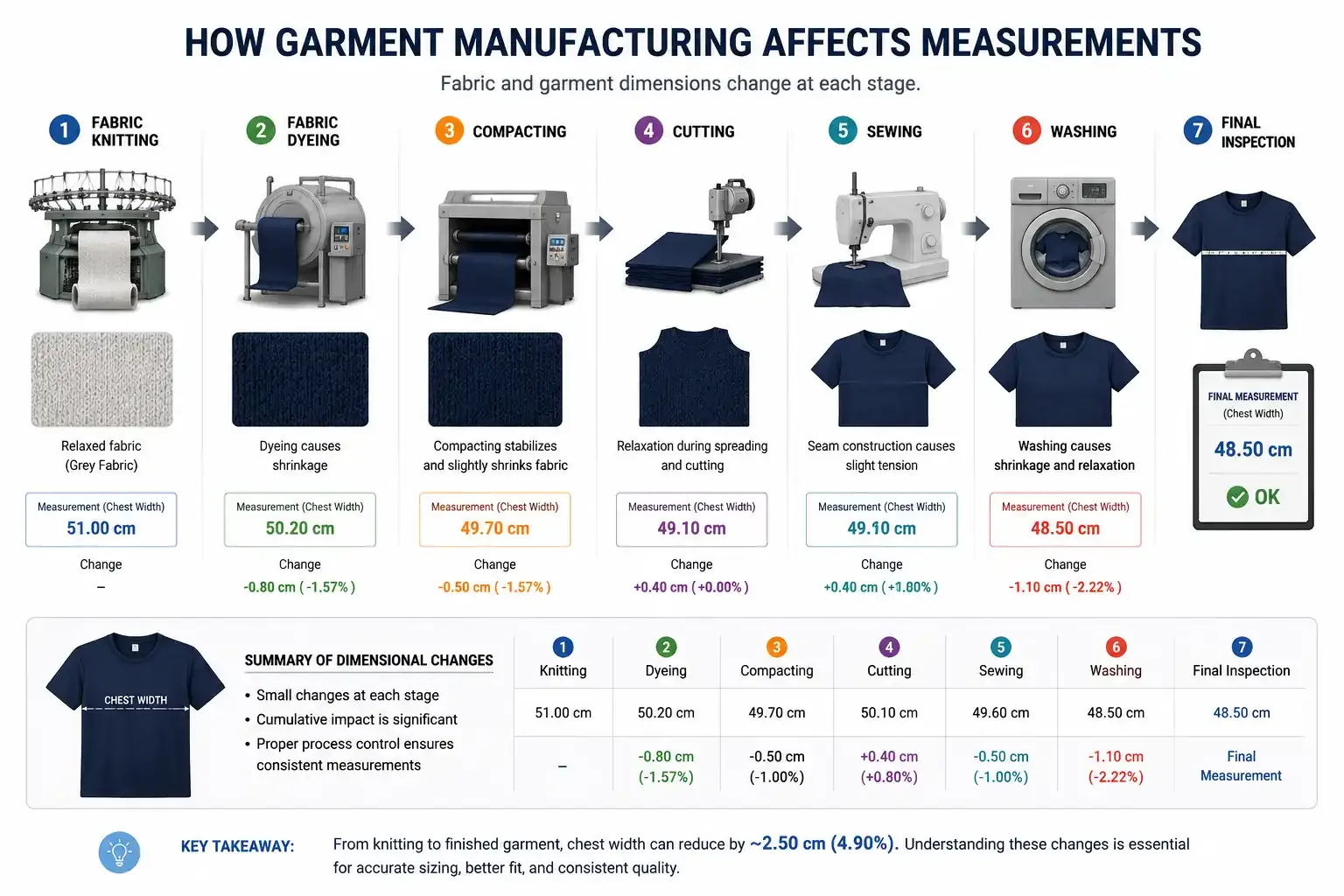
Knitted fabrics naturally stretch during knitting and relax after dyeing or finishing. Even after compacting, slight dimensional changes can occur.
Cutting Process
Multiple fabric layers are cut together to improve production efficiency. Small variations in fabric alignment or blade movement can result in minor measurement differences.
Sewing Operations
Different sewing operators maintain slightly different seam allowances. Even with standardized guides, tiny differences accumulate throughout garment construction.
Washing and Finishing
Processes such as enzyme washing, silicone washing, and garment washing may slightly alter garment dimensions.
Fabric Shrinkage
Cotton fabrics generally shrink after washing. Manufacturers compensate during production, but complete elimination of shrinkage is not possible.
Standard Garment Measurement Tolerances
Although every buyer may specify different tolerances, the apparel industry commonly follows these ranges.
| Measurement | Typical Tolerance |
|---|---|
| Chest Width | ±1 cm |
| Body Length | ±1 cm |
| Shoulder Width | ±0.5–1 cm |
| Sleeve Length | ±1 cm |
| Neck Width | ±0.5 cm |
| Bottom Opening | ±1 cm |
For children’s garments or highly fitted apparel, buyers may require tighter tolerances.
Oversized garments generally allow slightly more flexibility because the fit is intentionally relaxed.
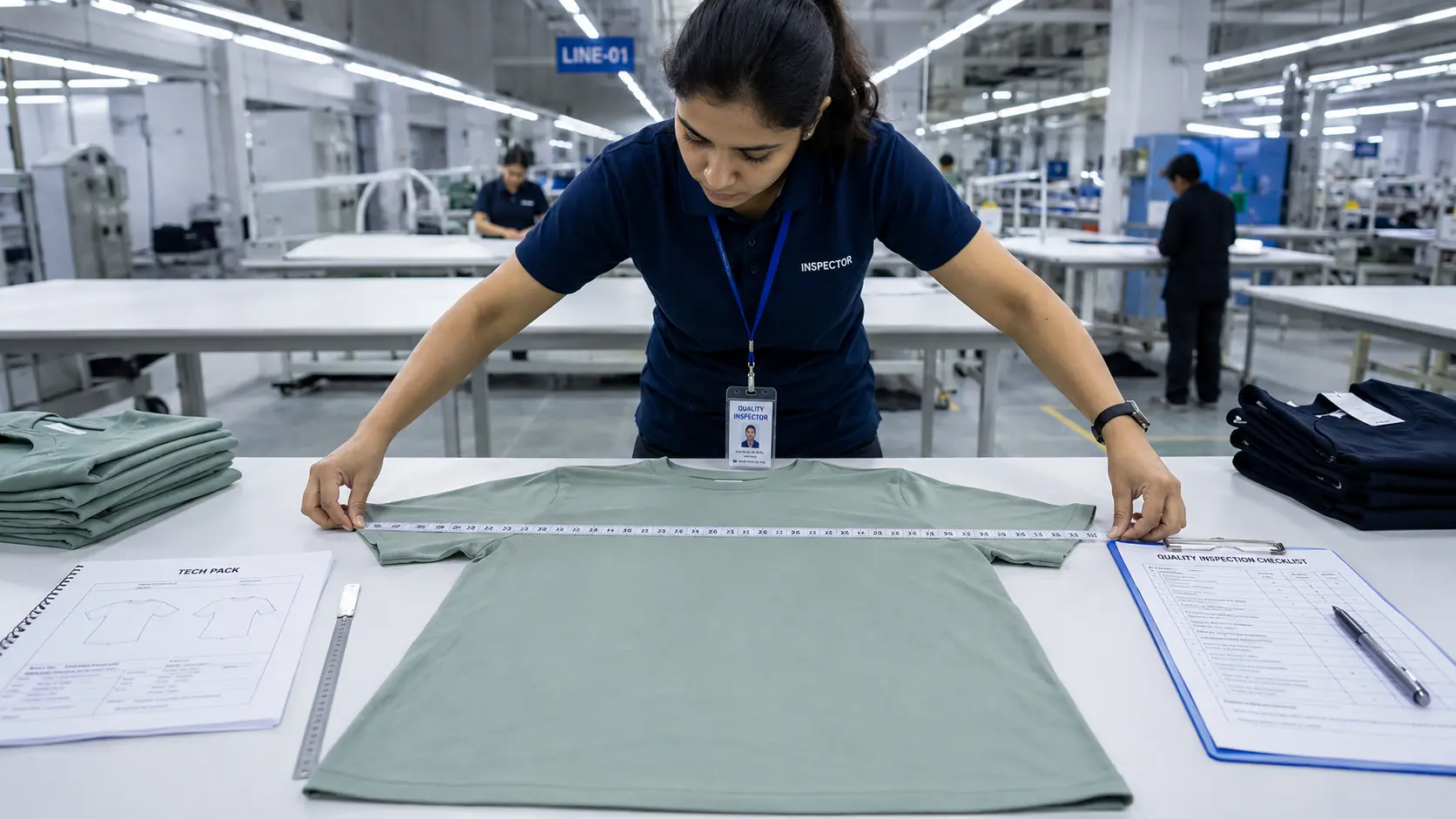
How Garment Measurements Are Checked
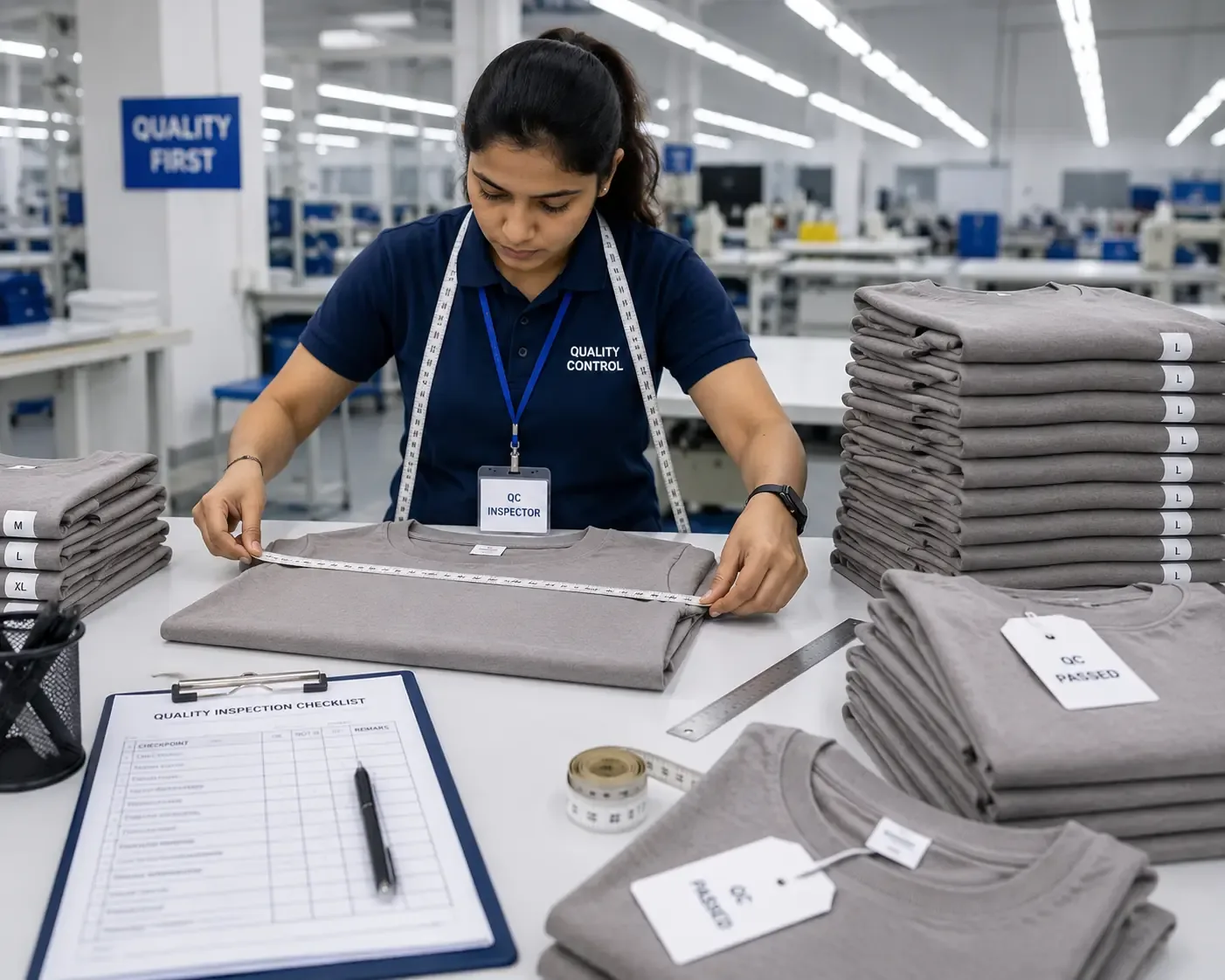
Measurement inspections usually follow a standard procedure.
- Place the garment on a flat inspection table.
- Smooth the fabric without stretching it.
- Measure according to the approved measurement guide.
- Compare each measurement with the approved specification sheet.
- Record any deviations from the allowed tolerance.
Using consistent measuring techniques is just as important as the tolerance itself. Different measurement methods can easily create differences of several millimeters.
Common Measurement Points
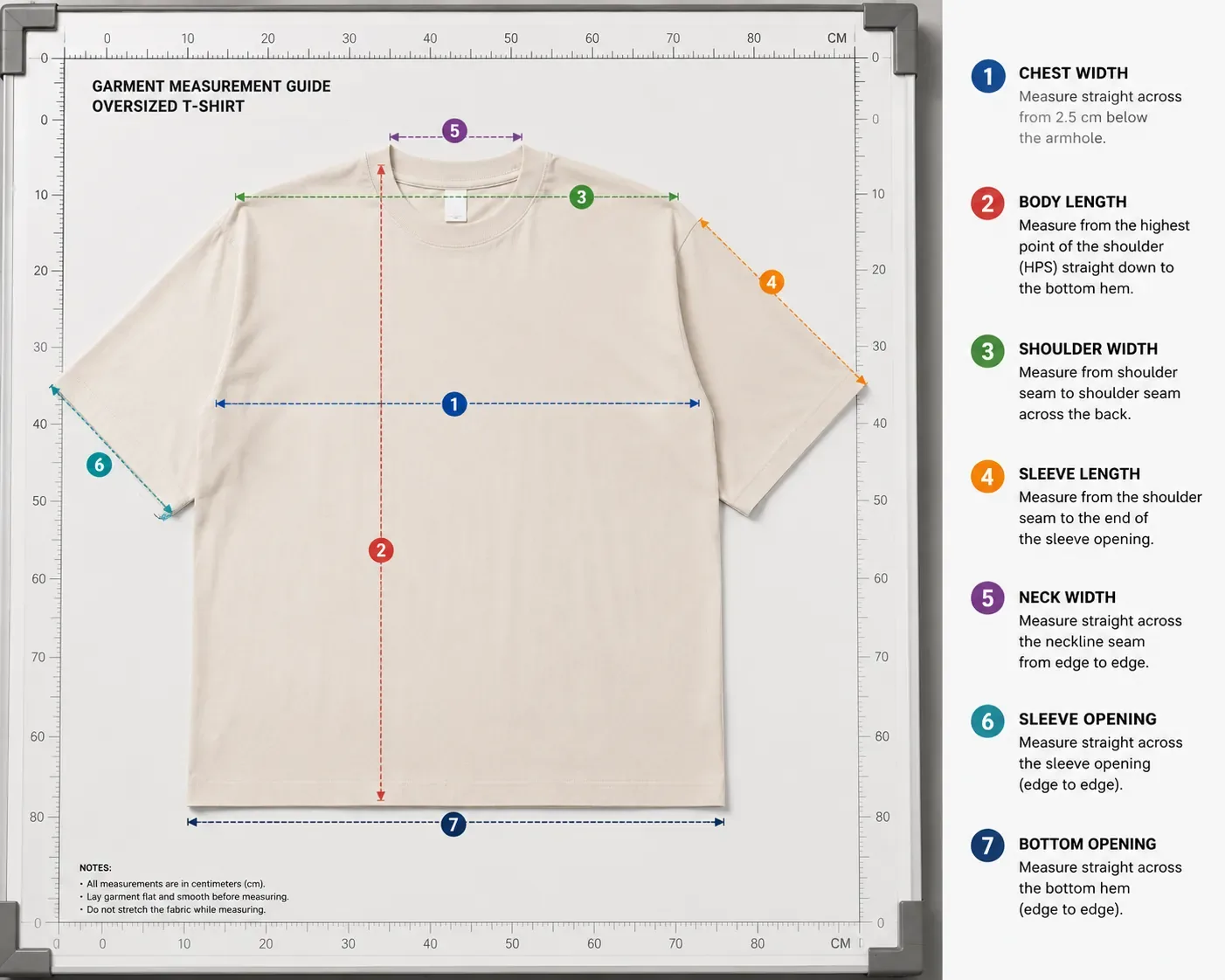
Quality inspectors typically check several critical measurement points.
- Chest Width
- Body Length
- Shoulder Width
- Sleeve Length
- Sleeve Opening
- Neck Width
- Neck Depth
- Bottom Width
- Armhole
- Cuff Width (for hoodies and sweatshirts)
These measurements are usually defined in the garment tech pack before production begins.
Why Buyers Specify Tolerances
Measurement tolerance helps establish clear quality expectations between buyers and manufacturers.
Without agreed tolerances, even minor variations could lead to shipment disputes despite garments being commercially acceptable.
Tolerance standards also help quality control teams determine whether a production batch meets the buyer’s requirements.
Rather than inspecting every garment, inspectors usually follow statistical sampling methods and verify whether sampled garments remain within the approved tolerance limits.
Tolerance vs Defect
A garment exceeding the specified measurement tolerance is not always considered defective.
For example:
- Chest specification: 60 cm
- Allowed tolerance: ±1 cm
| Actual Measurement | Status |
|---|---|
| 59.3 cm | Acceptable |
| 60.5 cm | Acceptable |
| 61 cm | Acceptable |
| 61.8 cm | Outside tolerance |
Garments outside tolerance may still be wearable, but they no longer comply with the agreed specification.
Factors That Influence Measurement Accuracy
Several production variables affect final garment measurements.
Fabric Type
Single jersey, interlock, French terry, and fleece fabrics all behave differently during manufacturing.
GSM
Heavier fabrics often react differently during washing and compacting than lightweight fabrics.
Sewing Method
Overlock, flatlock, and cover stitch constructions can slightly influence finished dimensions.
Finishing Process
Compacting, steaming, pressing, and washing all affect garment measurements before packing.
Measurement Tolerance in Bulk Production
Most apparel orders are produced in large quantities rather than individually.
Even with automated cutting machines and standardized sewing processes, every garment cannot be completely identical.
Instead, manufacturers focus on producing garments that consistently remain within the agreed tolerance range.
This approach balances manufacturing efficiency with product quality while maintaining commercially acceptable standards.
Best Practices for Buyers
To reduce quality issues, buyers should provide complete measurement specifications before production begins.
A well-prepared tech pack generally includes:
- Measurement chart
- Size grading
- Measurement method
- Tolerance values
- Fabric details
- Washing instructions
Clear documentation minimizes production errors and simplifies final inspections.
Best Practices for Manufacturers
Manufacturers can improve measurement consistency by:
- Conducting fabric shrinkage tests before cutting
- Using calibrated measuring tools
- Training quality inspectors
- Following standardized measurement methods
- Performing inline quality inspections
- Checking garments after finishing
- Maintaining accurate production records
Consistent quality control throughout production is generally more effective than relying solely on final inspection.
Frequently Asked Questions
Most apparel manufacturers commonly use ±1 cm for major garment measurements, although buyer specifications may differ depending on the product.
Fabric properties, sewing operations, washing, finishing, and handling naturally create small dimensional variations during production.
Not necessarily. Garments within the agreed tolerance range are generally considered acceptable and meet normal manufacturing standards.
Tolerance values are usually agreed upon between the buyer and manufacturer before bulk production begins and are documented in the approved tech pack.
Conclusion
Garment measurement tolerance is a fundamental part of apparel manufacturing and quality control. Because textiles naturally change during production, slight measurement variations are expected and accepted across the industry.
By defining clear tolerance values before production, buyers and manufacturers can reduce misunderstandings, improve inspection consistency, and ensure finished garments meet agreed quality standards. Whether producing T-shirts, hoodies, sweatshirts, or other knitwear, understanding measurement tolerance is essential for achieving reliable and consistent garment quality.