Launching a successful clothing collection is about much more than creating great designs. One of the biggest factors behind a successful apparel brand is timing. Whether you’re launching your first private label or managing multiple seasonal collections, placing your manufacturing order at the right time ensures your products reach customers when demand is highest.
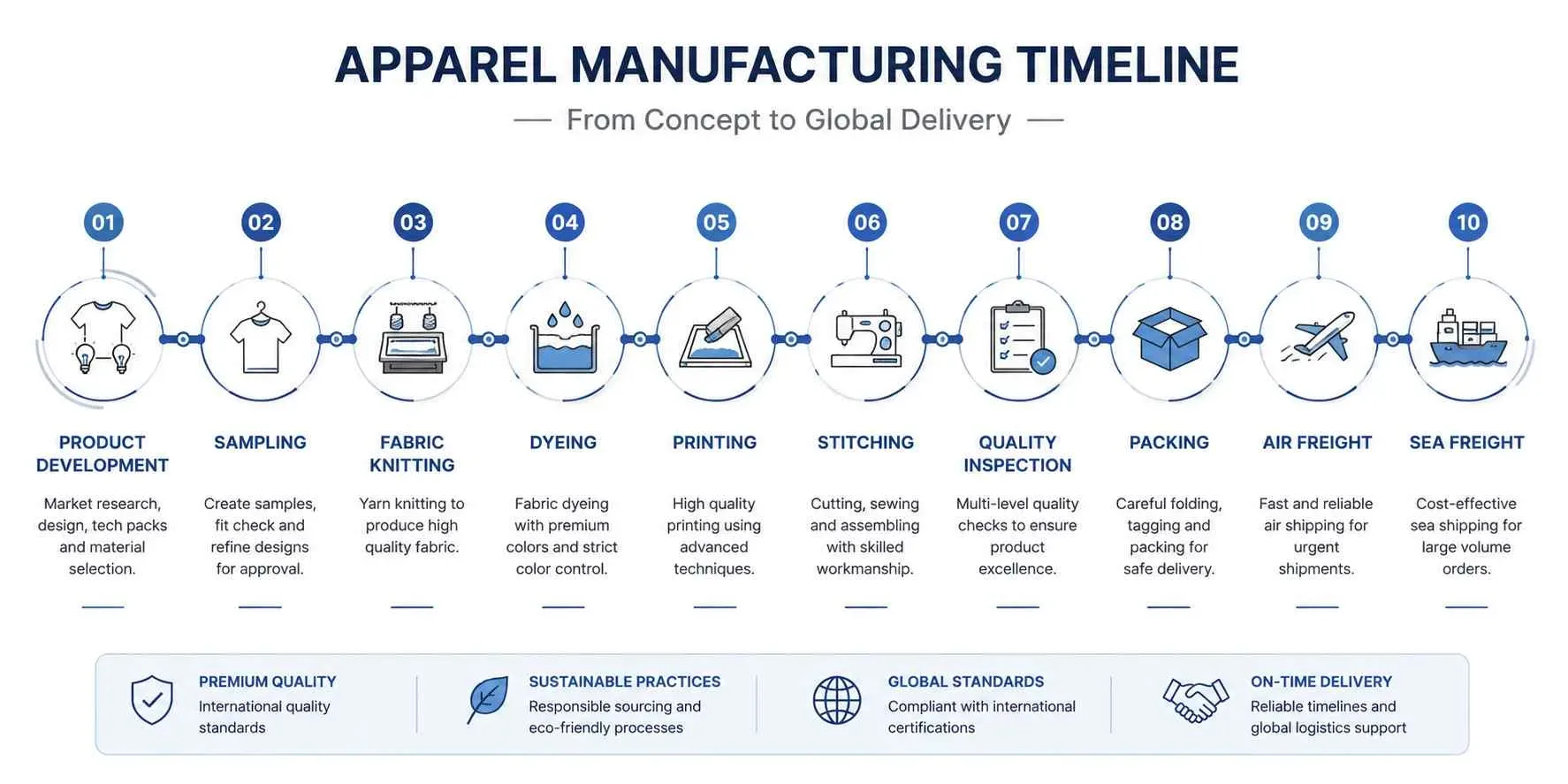
Many first-time buyers believe production begins immediately after confirming an order. In reality, garment manufacturing is a carefully coordinated process involving product development, sampling, fabric sourcing, knitting, dyeing, printing, stitching, quality inspections, packing, and shipping. Every stage requires time, and delays at any point can affect your planned launch.
Understanding the apparel production calendar allows brands to plan more effectively, avoid unnecessary costs, and reduce the risk of missing important selling seasons.
Why Production Planning Is Important
Fashion is built around seasonal demand. Summer collections need to be available before temperatures rise, while winter apparel should arrive well before customers start shopping for colder weather. Missing these windows often means slower sales, deeper discounts, and higher inventory costs.
Proper production planning offers several advantages:
- Launch collections on schedule.
- Avoid expensive last-minute air freight.
- Reserve factory capacity during busy seasons.
- Allow sufficient time for quality inspections.
- Reduce production risks caused by rushed manufacturing.
- Improve inventory planning and cash flow.
Instead of planning around your desired shipping date, experienced brands work backward from their product launch date and allocate enough time for every production stage.
Understanding the Clothing Manufacturing Timeline
Every apparel order varies depending on garment complexity, order quantity, and customization requirements. However, most custom clothing orders follow a similar production schedule.
| Production Stage | Typical Duration |
|---|---|
| Product Development & Quotation | 3-7 Days |
| Sample Development | 2-3 Weeks |
| Sample Review & Approval | 3-7 Days |
| Fabric Knitting & Dyeing | 2-4 Weeks |
| Printing or Embroidery Preparation | 5-7 Days |
| Bulk Stitching | 1-2 Weeks |
| Quality Inspection | 2-4 Days |
| Packing & Export Documentation | 2-5 Days |
| Air Freight | 3-8 Days |
| Sea Freight | 25-45 Days |
These timelines assume prompt approvals from both the buyer and manufacturer. Delays in approving samples, artwork, fabric colors, or packaging can extend the overall production schedule.
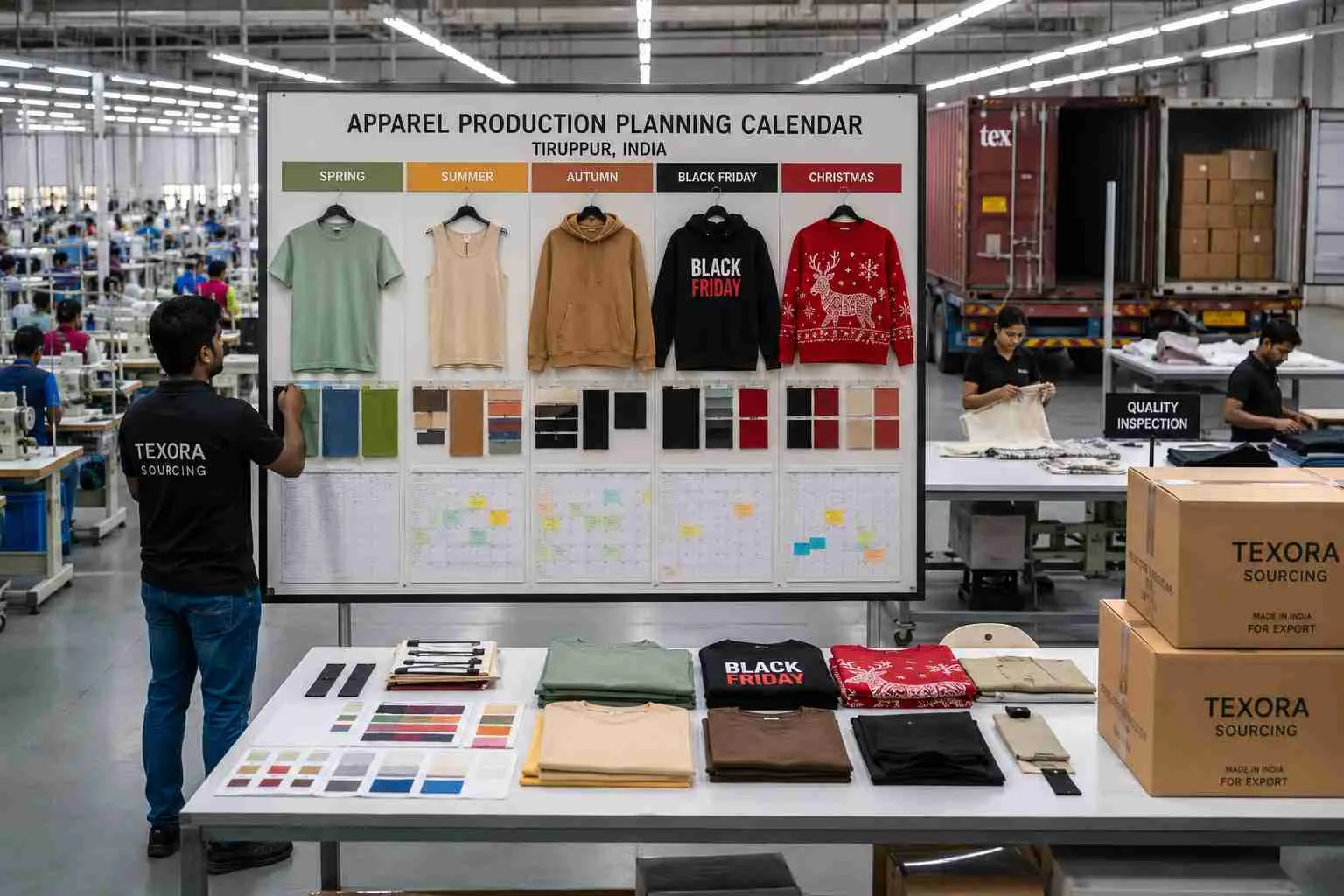
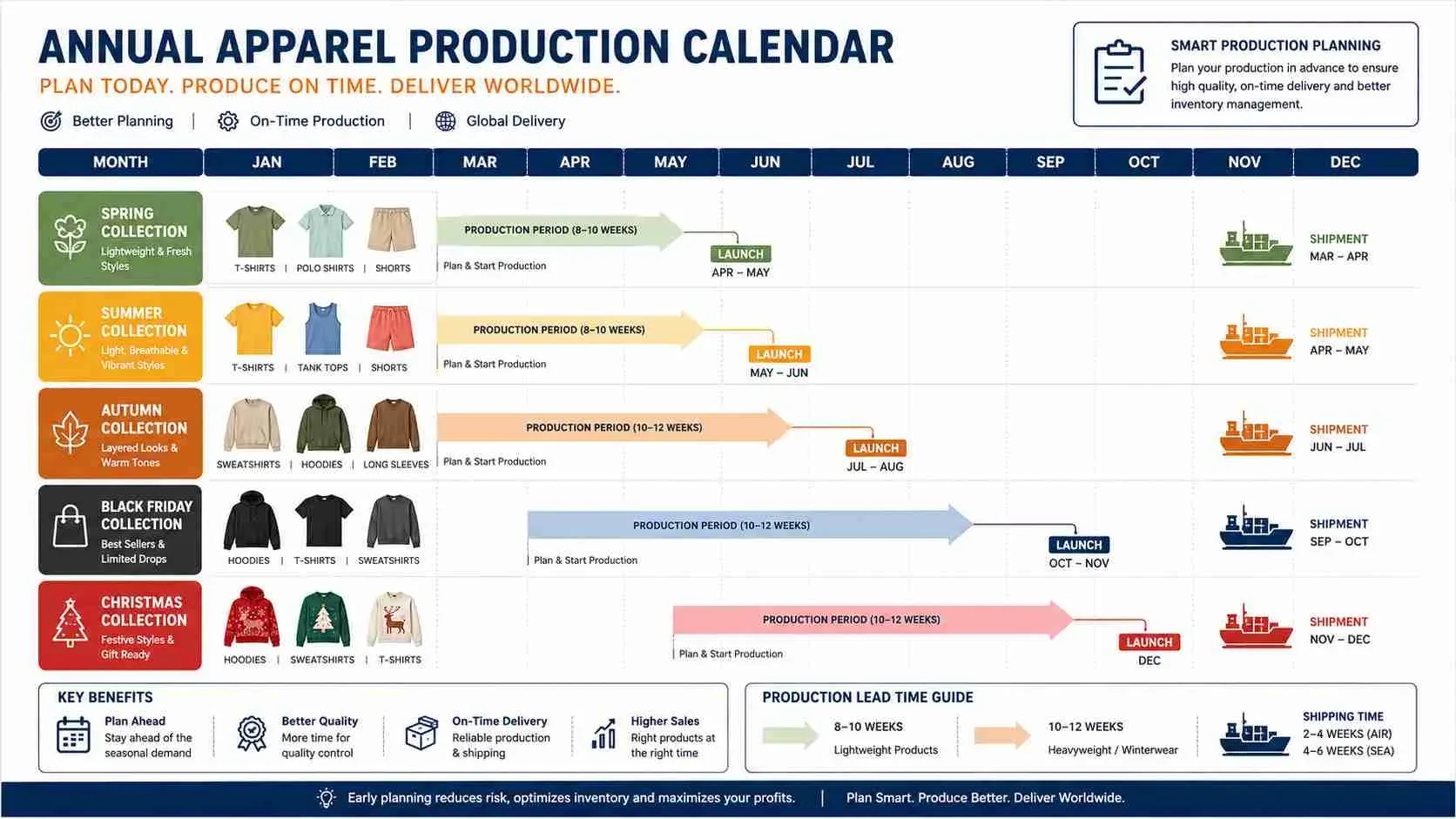
Apparel Production Calendar by Selling Season
Planning production around your target selling season is one of the most effective ways to keep your business running smoothly.
Spring Collection (March-April)
For spring collections, manufacturing should ideally begin between November and January.
This schedule provides enough time for sampling, production, quality inspections, and international shipping.
Typical spring products include:
- Lightweight sweatshirts
- Long sleeve T-shirts
- Joggers
- Transitional outerwear
Summer Collection (May-June)
Summer collections should generally enter production between January and March.
Popular summer products include:
- Cotton T-shirts
- Tank tops
- Polo shirts
- Shorts
- Lightweight activewear
Starting production early also helps avoid factory congestion as demand increases closer to summer.
Back-to-School Collection (July-August)
Brands manufacturing school uniforms, casual basics, or youth apparel should begin production between March and May.
If your products require custom embroidery, woven labels, or branded packaging, additional lead time is recommended.
Autumn Collection (September-October)
Manufacturing for autumn collections should usually start between May and July.
Common autumn products include:
- Heavyweight T-shirts
- Hoodies
- Sweatshirts
- French Terry garments
- Long sleeve apparel
Since heavier fabrics often require additional processing, early planning helps maintain delivery schedules.
Black Friday Collections
Black Friday has become one of the most significant shopping events worldwide.
To ensure inventory arrives before promotional campaigns begin, production should ideally start between July and September.
Waiting until October leaves very little flexibility if fabric sourcing or production encounters unexpected delays.
Hoodies
Christmas & Holiday Collections
Holiday collections require the most careful planning of the entire year.
Bulk production should begin between August and October, particularly for shipments traveling by sea.
During the final quarter of the year, factories, freight carriers, and customs authorities all experience significantly higher workloads. Adding extra buffer time helps reduce the risk of delayed deliveries.
Don't Forget Shipping Time
Many clothing brands assume production is complete once garments leave the factory. In reality, your products aren’t ready for sale until they arrive at your warehouse.
Air Freight
- Transit time: Approximately 3-8 days
- Higher transportation costs
- Best suited for urgent launches or inventory replenishment
Sea Freight
- Transit time: Approximately 25-45 days
- More economical for large orders
- Ideal for brands planning seasonal collections well in advance
When creating your production calendar, remember to include customs clearance and local transportation after shipment arrives.
Common Reasons Clothing Production Gets Delayed
Even well-organized production schedules can experience unexpected delays. Understanding these factors allows brands to build realistic timelines.
Fabric Availability
Specialty fabrics, custom Pantone colors, organic cotton, recycled fibers, and unique GSM requirements often require additional development time before production can begin.
Booking fabric early improves material availability.
Sample Revisions
Very few first samples receive immediate approval.
Changes to measurements, garment fit, printing, stitching details, or trims are common during product development. Every revision extends the production timeline.
Printing & Embroidery
Advanced decoration techniques often require additional preparation.
Processes such as:
- Puff printing
- High-density printing
- Silicone printing
- Embroidery
- Appliqué
generally take longer to prepare than standard screen printing.
Custom Trims & Accessories
Many brands customize:
- Woven neck labels
- Hangtags
- Polybags
- Zippers
- Buttons
- Drawcords
Since these components are often manufactured separately, ordering them early helps avoid production interruptions.
Peak Factory Seasons
Factories receive their highest order volumes before major retail seasons.
Booking production capacity early gives manufacturers greater flexibility and helps avoid scheduling delays.
How Early Should Startups Begin?
New clothing brands often underestimate the amount of preparation required before bulk production begins.
A typical development process includes:
- Finalize garment designs.
- Create a detailed tech pack.
- Develop samples.
- Review fit and construction.
- Approve artwork and colors.
- Approve the pre-production sample.
- Begin bulk manufacturing.
If your goal is to launch in September, product development should ideally begin around April or May rather than waiting until the middle of summer.
Planning ahead also gives your marketing team enough time for product photography, website updates, social media campaigns, and retailer outreach before inventory arrives.
Tips for Keeping Production on Schedule
A well-prepared buyer can significantly reduce production delays.
Some practical recommendations include:
- Provide complete tech packs with accurate measurements.
- Finalize artwork before manufacturing starts.
- Approve samples as quickly as possible.
- Confirm Pantone colors early.
- Consolidate trims whenever practical.
- Share packaging requirements before bulk production.
- Decide on your shipping method before garments are completed.
- Build additional buffer time for international freight.
These simple steps often save weeks throughout the manufacturing process.
Frequently Asked Questions
Most custom apparel orders require approximately 45-60 days, depending on garment complexity, order quantity, fabric availability, and buyer approvals.
Ideally, begin planning three to six months before your intended launch date, especially for seasonal collections.
Air freight is significantly faster but more expensive. Sea freight is the preferred option for planned inventory because it offers lower transportation costs.
Approved samples establish the production standard for measurements, colors, construction, and print quality. Skipping this stage increases the risk of expensive production errors.
Rush production is sometimes possible for repeat orders using existing fabrics and trims. However, new product developments generally require the standard production timeline to maintain consistent quality.
Final Thoughts
Successful apparel brands don’t rely on fast production-they rely on smart planning.
By working backward from your intended launch date and allocating enough time for product development, sampling, manufacturing, quality inspections, and shipping, you can significantly reduce delays and avoid costly last-minute decisions.
A well-structured apparel production calendar not only improves delivery reliability but also helps brands manage inventory more efficiently, control logistics costs, and build stronger relationships with manufacturing partners.
Whether you’re launching your first clothing collection or managing multiple seasonal releases each year, planning your production schedule early is one of the smartest investments you can make for long-term success.