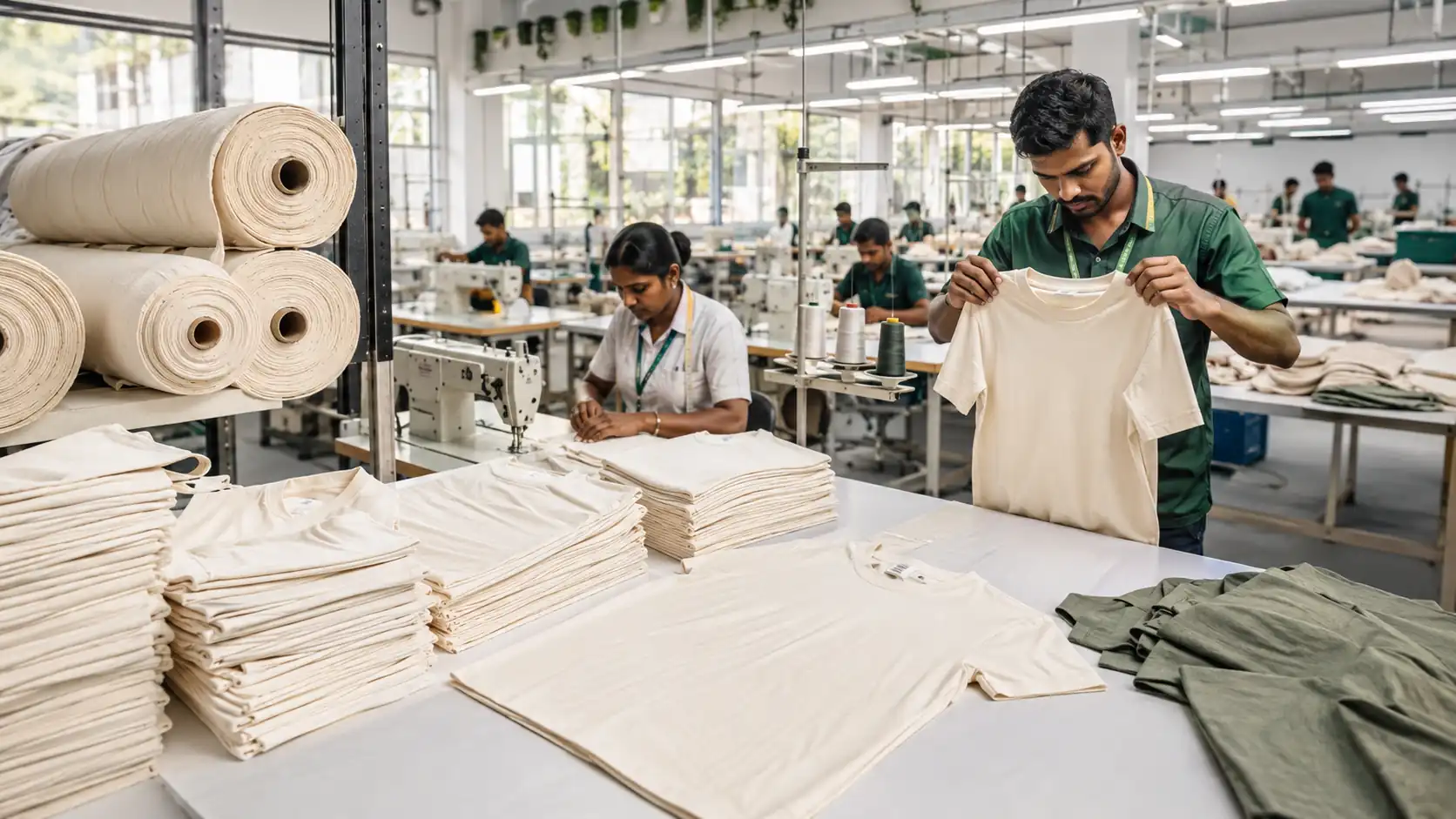
As sustainability becomes a core part of the global fashion industry, brands are increasingly choosing organic cotton T-shirts to reduce their environmental impact while meeting growing consumer demand for ethical apparel. Whether you are launching a new clothing brand or expanding an existing collection, selecting the right organic cotton T-shirt manufacturer in India is essential for maintaining product quality, supply chain transparency, and long-term brand credibility.
At Texora Sourcing, we help fashion brands, retailers, wholesalers, and private label businesses source premium-quality organic cotton T-shirts from Tiruppur, India’s leading knitwear manufacturing hub. We work closely with certified mills and manufacturing partners to deliver high-quality garments that meet international standards.
In this guide, we’ll explain everything you need to know about organic cotton T-shirt manufacturing, certifications such as GOTS, OCS, NPOP, and NOP, how the production process works, and how to choose the right manufacturing partner for your brand.
What Is Organic Cotton?
Organic cotton is cotton grown using natural farming methods without genetically modified (GMO) seeds, synthetic pesticides, herbicides, or chemical fertilizers. Instead, farmers use environmentally responsible cultivation practices that improve soil health, preserve biodiversity, and reduce water pollution.
Unlike conventional cotton farming, organic cotton production focuses on long-term sustainability while protecting both farmers and the environment.
Organic cotton offers several advantages:
- Reduced environmental impact
- Healthier soil and biodiversity
- Lower chemical exposure for farmers
- Comfortable and breathable fabric
- Excellent softness and durability
- Better brand positioning in sustainable fashion
However, simply using organic cotton does not automatically make a garment certified organic. Certification depends on maintaining traceability and compliance throughout the entire manufacturing process.
Why Global Brands Choose Organic Cotton T-Shirts
Consumers today expect greater transparency about how their clothing is made. Many retailers and fashion brands are adopting sustainable sourcing practices to meet both customer expectations and regulatory requirements.
Organic cotton T-shirts help brands:
- Build a sustainable product range
- Improve brand reputation
- Reduce environmental impact
- Meet retailer sustainability requirements
- Appeal to eco-conscious consumers
- Differentiate from competitors
- Support responsible farming practices
As a result, demand for organic cotton clothing manufacturers continues to grow across Europe, the United Kingdom, Australia, the United States, and other international markets.
Understanding Organic Textile Certifications
One of the biggest misconceptions is that every organic cotton garment is automatically GOTS certified. In reality, different certifications serve different purposes.
Understanding these standards helps buyers make informed sourcing decisions.
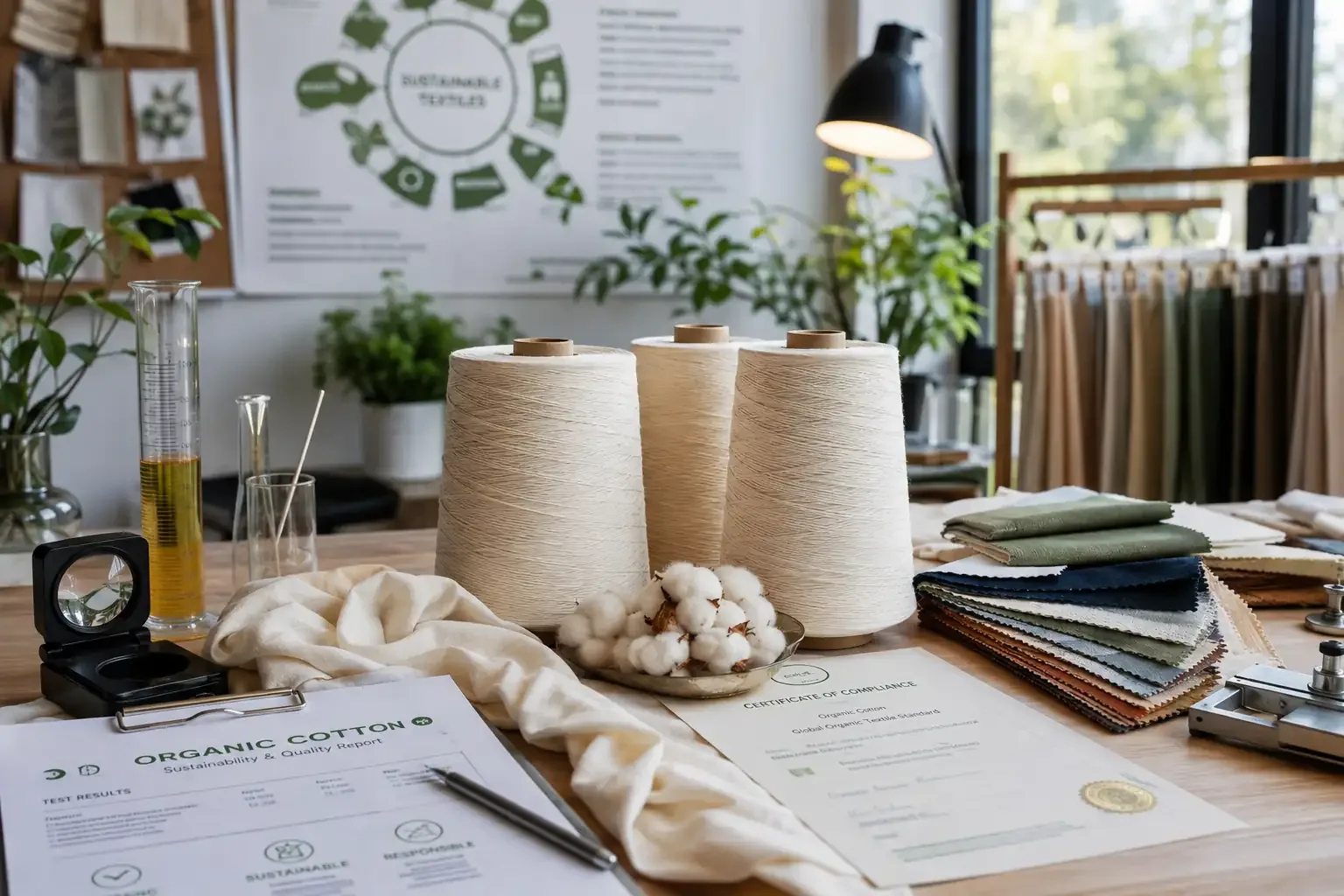
GOTS (Global Organic Textile Standard)
The Global Organic Textile Standard (GOTS) is the world’s most recognized certification for organic textiles.
GOTS covers far more than the organic fibre itself. It verifies environmental and social responsibility throughout the certified supply chain.
A GOTS-certified supply chain includes requirements for:
- Certified organic raw materials
- Traceability from fibre to finished product
- Approved dyes and chemicals
- Wastewater treatment
- Environmental management
- Worker welfare and social compliance
- Annual third-party audits
A fully GOTS-certified garment requires every applicable stage of production to be carried out by GOTS-certified facilities while maintaining complete chain-of-custody documentation.
OCS (Organic Content Standard)
The Organic Content Standard (OCS) verifies the presence and percentage of certified organic fibres within a product.
Unlike GOTS, OCS focuses on material traceability and does not evaluate:
- Chemical management
- Dyeing standards
- Social compliance
- Environmental processing
OCS is commonly used by brands that want verified organic fibre content without requiring full GOTS certification.
NPOP (National Programme for Organic Production)
NPOP is India’s national organic certification system.
It establishes standards for organic farming and certification within India and is recognized by several international markets.
For cotton cultivation, NPOP helps ensure that organic farming practices comply with approved production methods before the fibre enters the textile supply chain.
NOP (National Organic Program)
The National Organic Program (NOP) is administered by the United States Department of Agriculture (USDA).
NOP primarily governs organic agricultural products entering the U.S. market and plays an important role in recognizing certified organic farming systems.
For textile products, NOP complements fibre certification, while standards such as GOTS focus on textile processing and manufacturing.
GOTS vs OCS vs NPOP vs NOP
| Certification | Main Purpose | Covers Farming | Traceability | Processing Standards | Social Compliance |
|---|---|---|---|---|---|
| GOTS | Complete organic textile certification | ✓ | ✓ | ✓ | ✓ |
| OCS | Organic fibre verification | ✓ | ✓ | ✗ | ✗ |
| NPOP | Indian organic farming certification | ✓ | Limited | ✗ | ✗ |
| NOP | US organic agriculture program | ✓ | Limited | ✗ | ✗ |
Each certification serves a different purpose, and the right choice depends on your brand’s sustainability goals and target market.
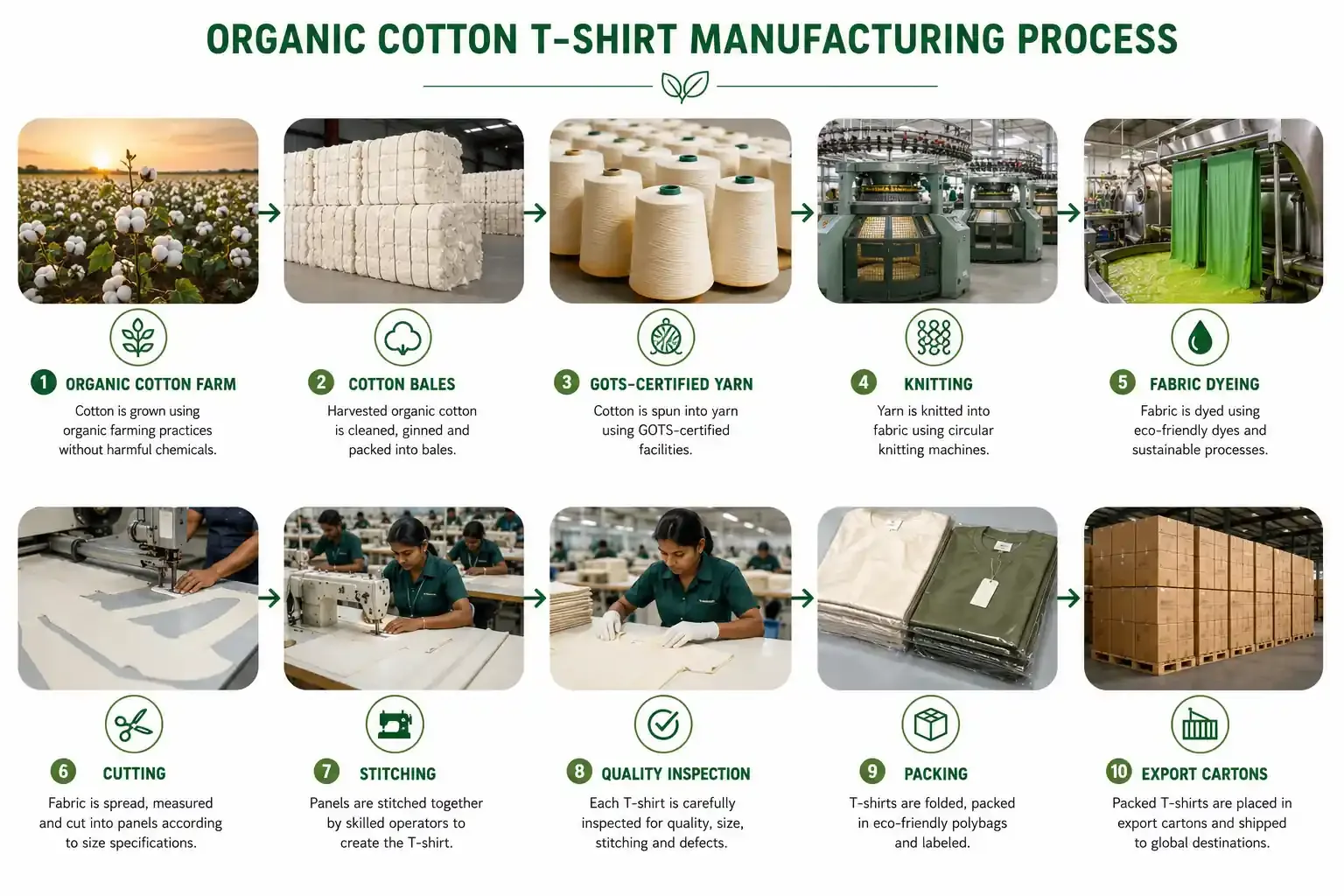
How Organic Cotton T-Shirts Are Manufactured
Manufacturing organic cotton garments involves much more than cutting and sewing fabric. Every stage must maintain product integrity and traceability.
Step 1 – Organic Cotton Farming
The journey begins with certified organic cotton farms where cotton is grown without synthetic chemicals.
After harvesting, the cotton is cleaned, ginned, and prepared for spinning.
Step 2 – Certified Organic Yarn
This is one of the most important stages.
For genuine organic cotton production, the manufacturing program must begin with certified organic cotton yarn (or certified organic fibre before spinning).
It is not possible to purchase conventional cotton fabric and later convert it into an organic certified product.
The chain of custody starts from the yarn stage and continues throughout manufacturing.
This is why selecting certified yarn suppliers is essential for any organic cotton program.
Step 3 – Knitting
The certified organic yarn is knitted into fabric according to your product specifications.
Common fabric constructions include:
- Single Jersey
- Interlock
- French Terry
- Pique
- Rib
- Fleece
The selected construction depends on your design, garment weight, and intended use.
Step 4 – Dyeing & Fabric Processing
After knitting, the fabric undergoes several processing stages.
These may include:
- Dyeing
- Compacting
- Bio Wash
- Silicone Wash
- Fabric Relaxation
- Quality Inspection
For certified production programs, only approved processing methods and chemicals may be used according to certification requirements.
Step 5 – Printing & Decoration
Organic cotton T-shirts can be customized using various decoration techniques, including:
- Screen Printing
- Water-Based Printing
- Puff Printing
- High Density Printing
- Embroidery
- Heat Transfer Applications
The suitability of each method depends on the certification requirements and approved materials used during production.
Step 6 – Garment Manufacturing
Once the fabric is approved, production moves to:
- Fabric inspection
- Cutting
- Sewing
- Thread trimming
- Ironing
- Quality control
- Measurement inspection
- Packing
Every garment undergoes multiple inspections before shipment.
Why Organic Programs Must Start from Certified Yarn
Many buyers ask whether they can supply normal cotton fabric and request organic certification later.
The answer is no.
The integrity of an organic garment depends on complete traceability throughout the production process.
The supply chain begins with certified organic fibre and continues through:
- Spinning
- Knitting
- Dyeing
- Cutting
- Sewing
- Packing
- Shipment
Breaking this chain means the finished product cannot be presented as a certified organic garment.
Maintaining documentation and traceability from the very beginning is essential for credible organic manufacturing.
Minimum Order Quantity (MOQ)
The required MOQ depends on the level of certification your brand requires.
Organic Cotton T-Shirts Using GOTS-Certified Yarn
If your requirement is to manufacture T-shirts using GOTS-certified organic cotton yarn, our recommended minimum order quantity starts from 500 pieces per colour.
This option is ideal for brands looking to produce premium organic cotton garments while maintaining practical production quantities.
Fully GOTS-Certified Finished Garments
If you require the finished garment itself to be GOTS certified, including certified processing and complete chain-of-custody documentation from spinning to finished apparel, the recommended MOQ is typically around 5,000 pieces.
This higher quantity helps accommodate certified sourcing, documentation, production planning, and specialized manufacturing requirements.
Organic Cotton Fabric Options
We support a wide range of knitted organic cotton fabrics, including:
- 160 GSM Single Jersey
- 180 GSM Single Jersey
- 200 GSM Single Jersey
- 220 GSM Premium Jersey
- 240 GSM French Terry
- 260 GSM French Terry
- 280 GSM Heavyweight Jersey
- Interlock
- Pique
- 1×1 Rib
- Fleece
Additional fabric developments can be discussed based on your collection requirements.
Customization Options
Our manufacturing partners support complete private label development, including:
- Custom fit development
- Oversized T-shirts
- Regular fit
- Relaxed fit
- Custom Pantone colours
- Screen printing
- Embroidery
- Neck labels
- Wash care labels
- Hang tags
- Barcode stickers
- Polybags
- Export cartons
Every program is developed according to your tech pack or reference samples.
Why Manufacture Organic Cotton T-Shirts in India?
India is one of the world’s largest producers of organic cotton and has a highly developed textile ecosystem.
Tiruppur, often called the knitwear capital of India, offers a vertically integrated manufacturing network that includes spinning, knitting, dyeing, garment production, printing, embroidery, and export logistics.
Choosing an experienced organic cotton T-shirt manufacturer in India offers several advantages:
- Access to certified organic cotton yarn
- Skilled garment manufacturing workforce
- Competitive production costs
- Advanced knitting and printing facilities
- Strong export infrastructure
- Flexible private label manufacturing
- Reliable global shipping
These advantages make India a preferred sourcing destination for sustainable apparel brands worldwide.
Why Choose Texora Sourcing?
Texora Sourcing acts as your dedicated sourcing and production partner in Tiruppur.
Instead of simply manufacturing garments, we help international brands manage every stage of the production process by coordinating with carefully selected manufacturing partners.
Our services include:
- Product development
- Fabric sourcing
- Organic cotton yarn sourcing
- Factory selection
- Sampling
- Printing and embroidery coordination
- Quality inspections
- Production follow-up
- Export documentation
- Global shipping support
Whether you are launching your first sustainable clothing collection or expanding an existing product line, our team helps simplify apparel sourcing while maintaining consistent quality and communication.
Frequently Asked Questions
No. GOTS-certified garments require a certified supply chain where applicable production stages are carried out by GOTS-certified facilities while maintaining complete traceability.
They serve different purposes. GOTS certifies both the textile processing and supply chain, while OCS verifies the organic fibre content and traceability.
No. Organic production must begin with certified organic fibre or certified organic yarn to maintain the chain of custody.
For T-shirts manufactured using GOTS-certified organic cotton yarn, our recommended MOQ starts from 500 pieces per colour.
For fully GOTS-certified finished garments, the recommended MOQ is typically around 5,000 pieces.
Yes. We support complete private label manufacturing, including labels, trims, packaging, printing, embroidery, and custom garment development.
Yes. We support clothing brands, importers, wholesalers, and retailers across Europe, the United Kingdom, North America, Australia, and many other international markets.

Partner with an Experienced Organic Cotton T-Shirt Manufacturer in India
Choosing the right manufacturing partner goes beyond price. It requires technical knowledge, transparent communication, reliable sourcing, and a clear understanding of organic textile standards.
At Texora Sourcing, we combine Tiruppur’s manufacturing expertise with dedicated sourcing support to help fashion brands develop high-quality organic cotton T-shirts for international markets. Whether you require garments made using GOTS-certified organic cotton yarn or are planning a fully GOTS-certified apparel program, our team can guide you through every stage of development-from sourcing and sampling to production and export.
If you’re planning your next sustainable apparel collection, we’d be happy to discuss your project and recommend the most suitable manufacturing approach for your requirements.