India has become one of the world’s leading destinations for cotton knitwear manufacturing, supplying garments to fashion brands, wholesalers, startups, and global retailers across the USA, Europe, and the Middle East. Manufacturing hubs like Tiruppur have built a strong textile ecosystem where every stage of T-shirt production – from yarn to export packing – can be managed efficiently under one network.
For buyers and clothing brands, one of the most searched questions today is:
How much does T-shirt manufacturing cost in India?
The cost of manufacturing a T-shirt in India depends on fabric quality, GSM, yarn count, dyeing process, stitching, printing or embroidery, trims, packing, and order quantity. For a basic 100% cotton single jersey T-shirt, the manufacturing cost usually starts from ₹200-₹220 per piece, depending on the specifications.
Approximately $2.10-$2.20 USD
This estimate is for a plain cotton T-shirt with basic accessories such as wash care labels, size labels, polybags, and export cartons included. Additional customization like printing, embroidery, special washing, hang tags, or premium branding will increase the final production cost.
Yarn Selection and Fabric Knitting
Every cotton T-shirt starts with yarn.
The quality of yarn plays a major role in determining the softness, durability, shrinkage control, and overall feel of the garment. For export-quality knitwear manufacturing, factories commonly use combed cotton yarn because it creates a cleaner and smoother fabric surface.
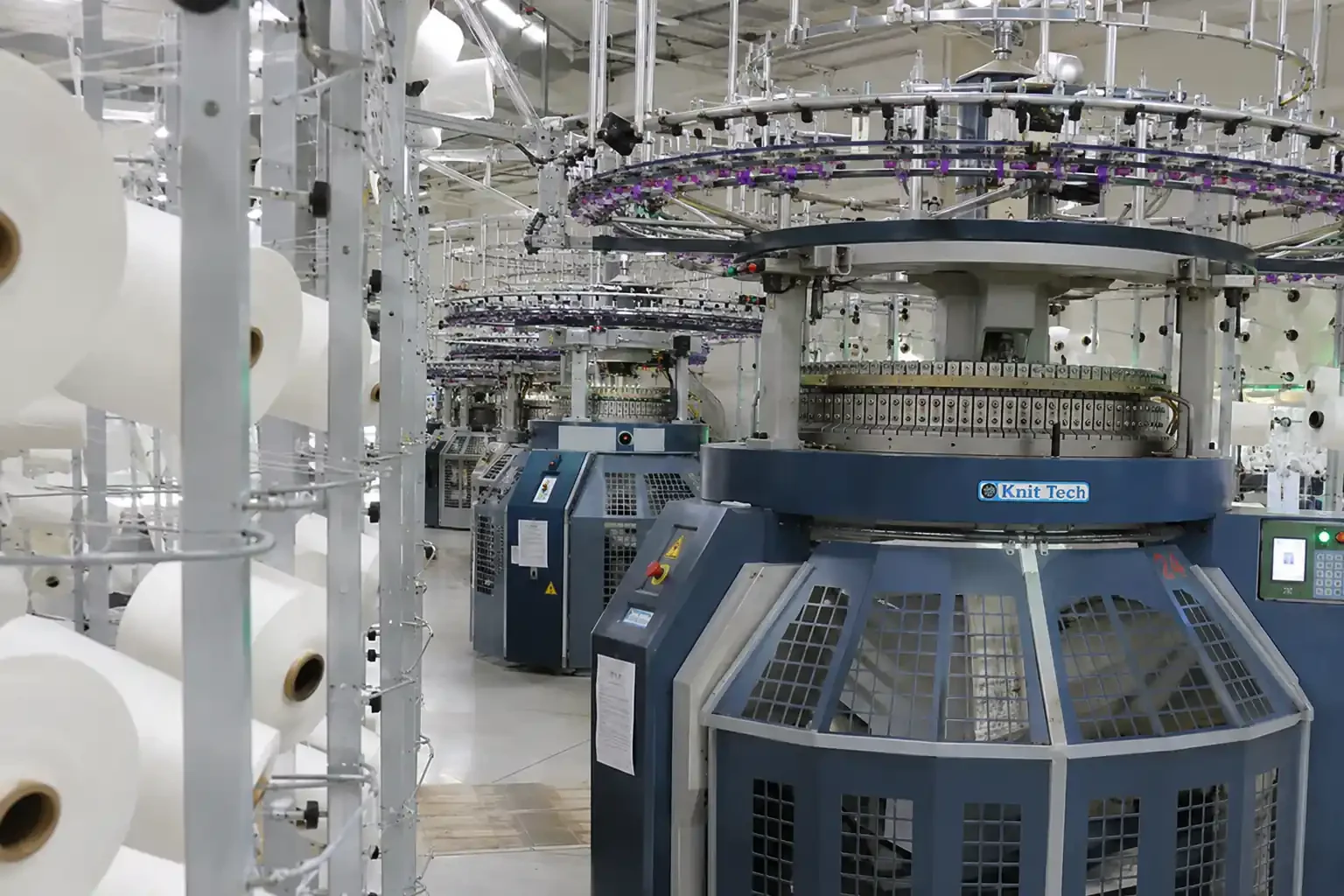
For a standard 180 GSM regular-fit T-shirt, 25s cotton yarn is widely used in the industry. Once the yarn is sourced, it moves into the knitting department where circular knitting machines convert the yarn into single jersey knitted fabric.
Single jersey is one of the most commonly used fabrics in T-shirt manufacturing because it offers:
- comfort
- breathability
- flexibility
- cost efficiency
At 180 GSM, the fabric provides a balanced structure that feels premium without becoming too heavy for everyday wear.
Dyeing and Pantone Color Development
After knitting, the greige fabric enters the dyeing process.
This stage significantly impacts both garment quality and manufacturing cost. Brands usually choose between two production approaches depending on their budget and color requirements.
Some brands develop custom fabric from the yarn stage to achieve exact Pantone shades. This process includes lab dip development, dyeing approvals, shrinkage testing, and color fastness testing to ensure consistency across bulk production.
Custom-developed fabric offers:
- better color accuracy
- consistent repeat production
- stronger brand identity
- improved quality control
However, it also requires:
- higher MOQ
- longer production time
- additional development cost
This method is commonly preferred by export buyers and established clothing brands.
On the other hand, many startup brands choose ready-stock dyed fabrics already available in the market. This option reduces development time and allows lower minimum order quantities.
Ready-stock fabric is often more cost-effective because the dyeing development stage is skipped entirely. However, brands may face limitations in exact shade matching and long-term color consistency.
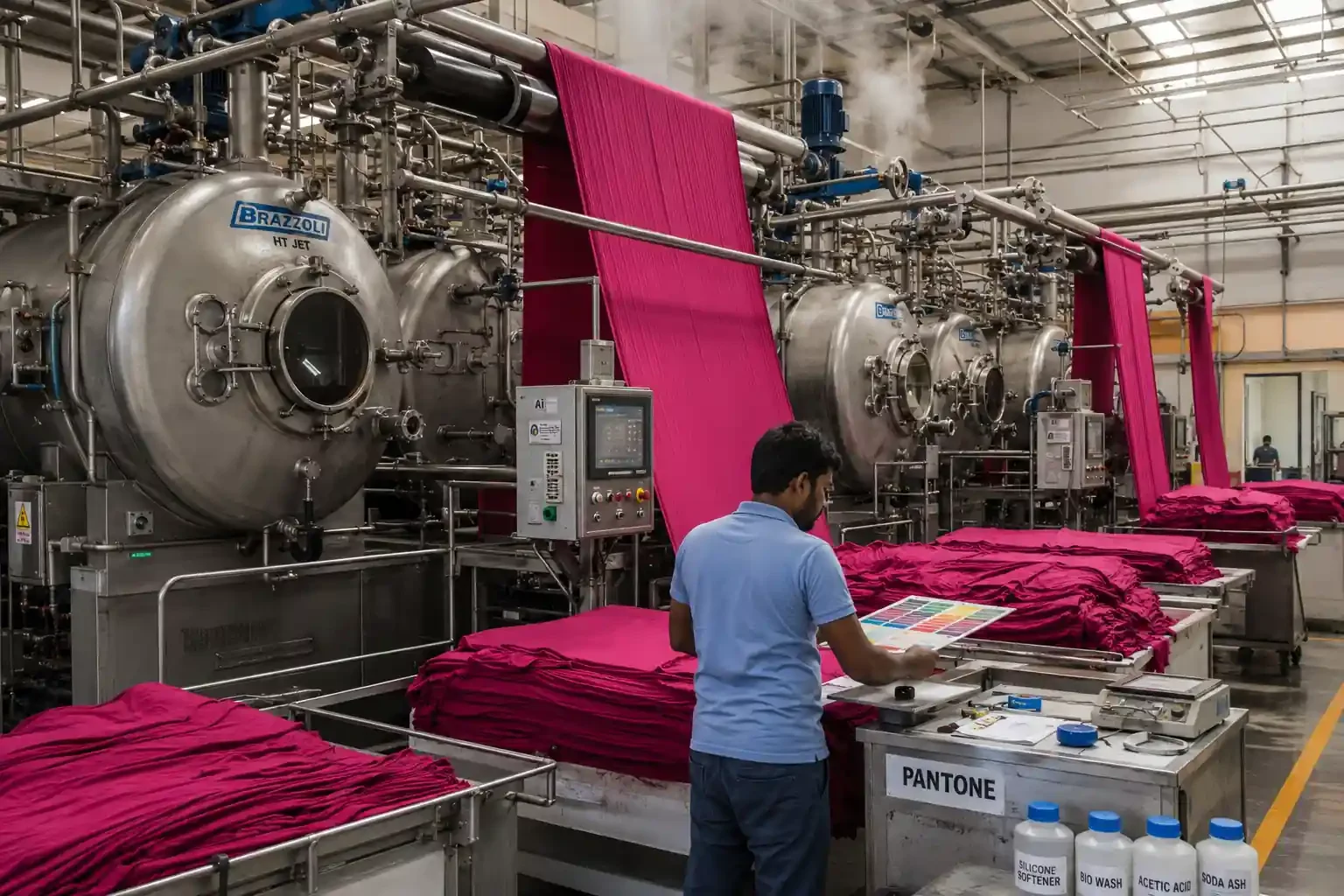
Fabric Washing, Softening, and Compacting
Once dyeing is completed, the fabric goes through finishing treatments before garment production begins.
These finishing processes improve the softness, appearance, and stability of the fabric. Common treatments used in cotton knitwear manufacturing include:
- silicone softener wash
- bio wash
- enzyme wash
- compacting
Silicone softener treatment gives the fabric a smoother hand feel, while bio wash helps reduce surface fibers for a cleaner appearance. Compacting is especially important because it helps control shrinkage and stabilizes the fabric before cutting.
After compacting, the finished fabric rolls are inspected and moved to the cutting department.
Fabric Relaxing Before Cutting
One important stage many people overlook is fabric relaxing.
Before cutting starts, the fabric is spread on the cutting table and allowed to rest for several hours. This process helps release tension created during knitting, dyeing, and compacting.
Without proper relaxation:
- garment measurements may become inconsistent
- shrinkage issues can occur
- fitting accuracy may change after washing
Professional T-shirt manufacturers always include this process to maintain size consistency across production.
Pattern Development and Fabric Consumption
Pattern development is where the garment structure is engineered according to measurements and fit requirements.
Factories calculate fabric consumption using:
- front body panel
- back body panel
- sleeve panels
- neck rib fabric
The chest width, body length, sleeve dimensions, and neck opening all influence the total fabric usage per garment.
Since the T-shirt consists of front and back body plates along with separate sleeves, manufacturers carefully calculate consumption for each component before production begins.
Factories also include approximately 5% fabric wastage per T-shirt during costing calculations. This allowance covers:
- cutting loss
- marker wastage
- shrinkage allowance
- minor fabric defects
Fabric consumption planning is extremely important because fabric contributes the largest percentage of overall T-shirt manufacturing cost.
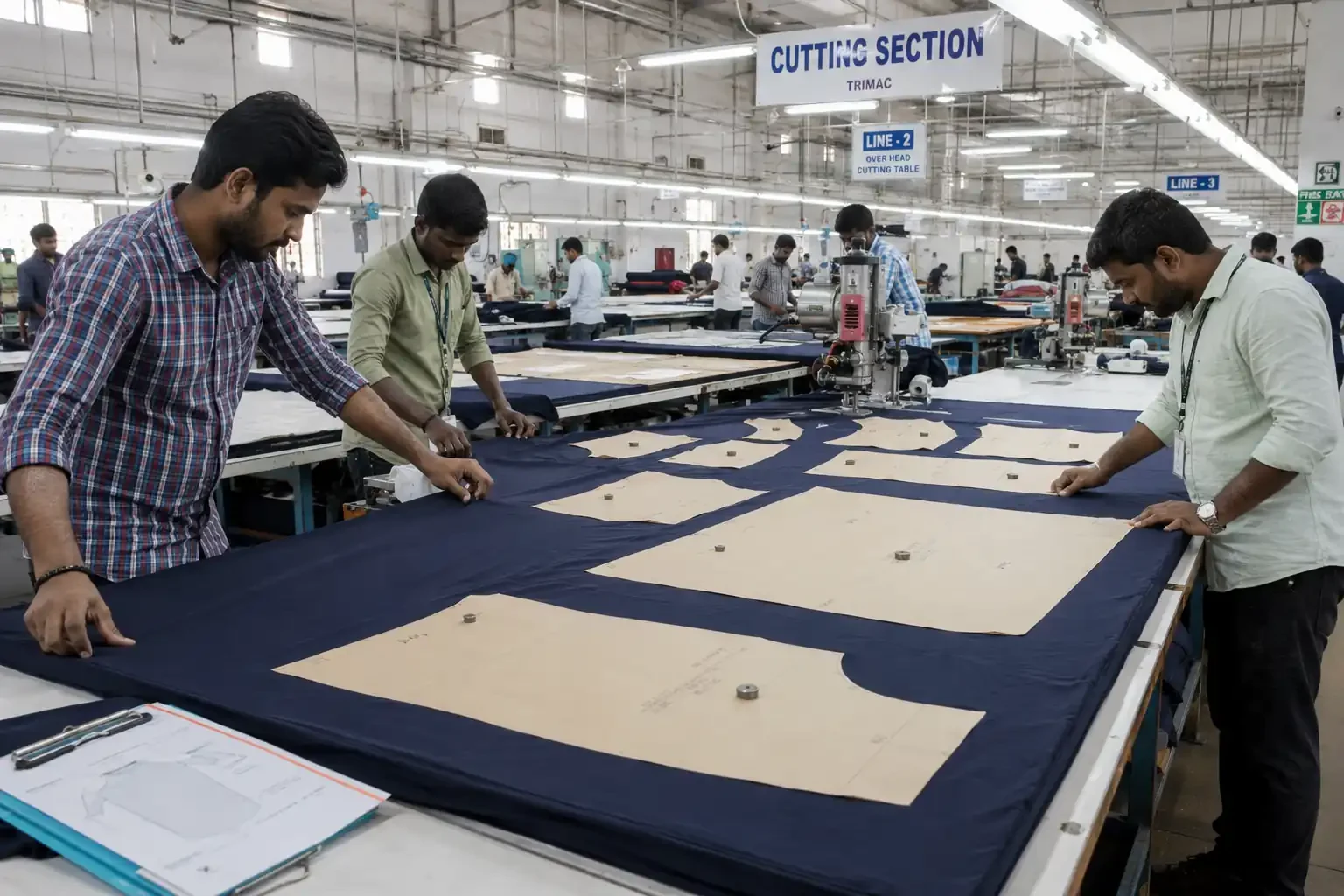
Cutting and Stitching Process
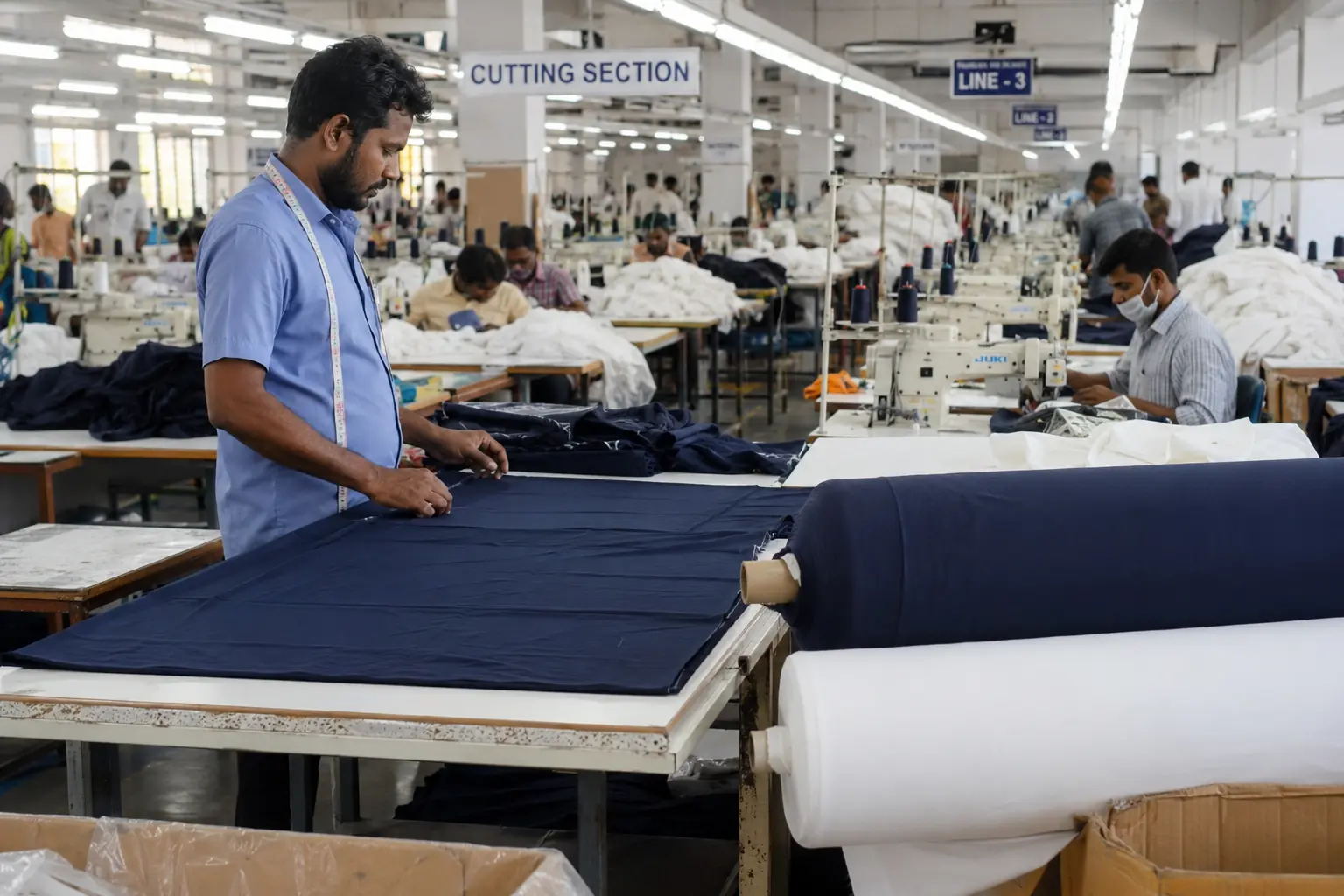
Once the markers are finalized, the fabric is spread layer by layer across large cutting tables before bulk cutting begins.
Accuracy during cutting is critical because even small measurement variations can affect garment fitting and sizing consistency.
After cutting, the panels move into the stitching department where the T-shirt starts taking shape.
The production process usually includes:
- shoulder joining
- neck rib attachment
- sleeve attachment
- side seam stitching
- sleeve hemming
- bottom hemming
Basic accessories such as wash care labels and size labels are also attached during this stage.
Since this example focuses on plain T-shirt manufacturing cost, printing and embroidery are not included in the estimate. However, additional customization methods such as screen printing, puff printing, silicone printing, embroidery, or garment washing can significantly increase the final garment price.
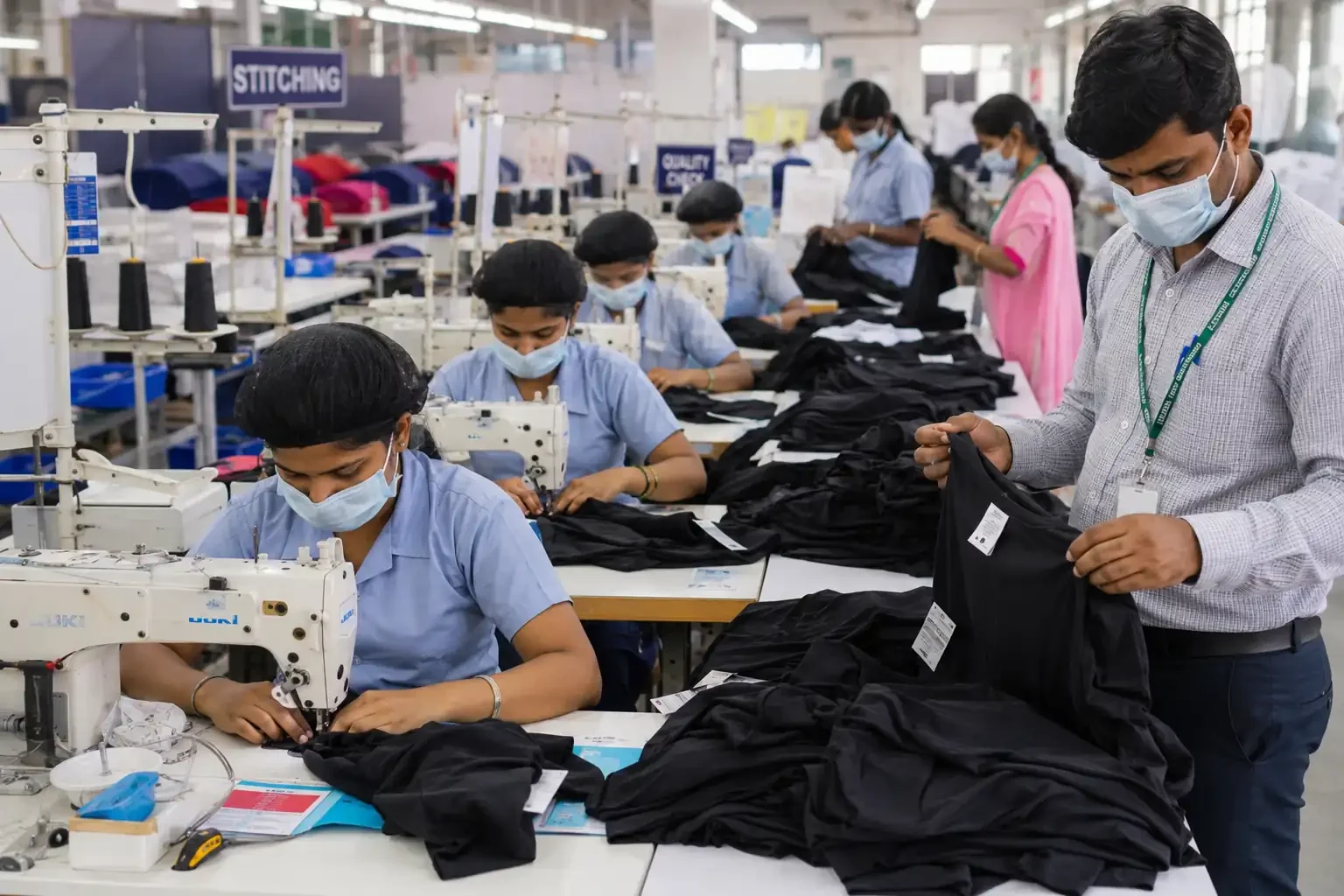
Checking, Quality Control, and Finishing
After stitching is completed, the garments move into checking and finishing.
Excess threads are trimmed manually, and quality inspectors check for:
- skipped stitches
- seam defects
- oil stains
- needle damage
- measurement variation
Export-quality garment manufacturing usually involves stricter inspection procedures because consistency is critical for international buyers.
Some factories also conduct:
- shrinkage testing
- GSM verification
- color fastness testing
- seam strength testing
before shipment approval.
Ironing, Packing, and Shipping
Once the garments pass quality control, they move into the final finishing department.
The T-shirts are:
- steam ironed
- folded
- packed into polybags
- size sticker applied
- packed into export cartons
After packing, export documentation and shipping preparation begin before dispatching the goods to buyers.
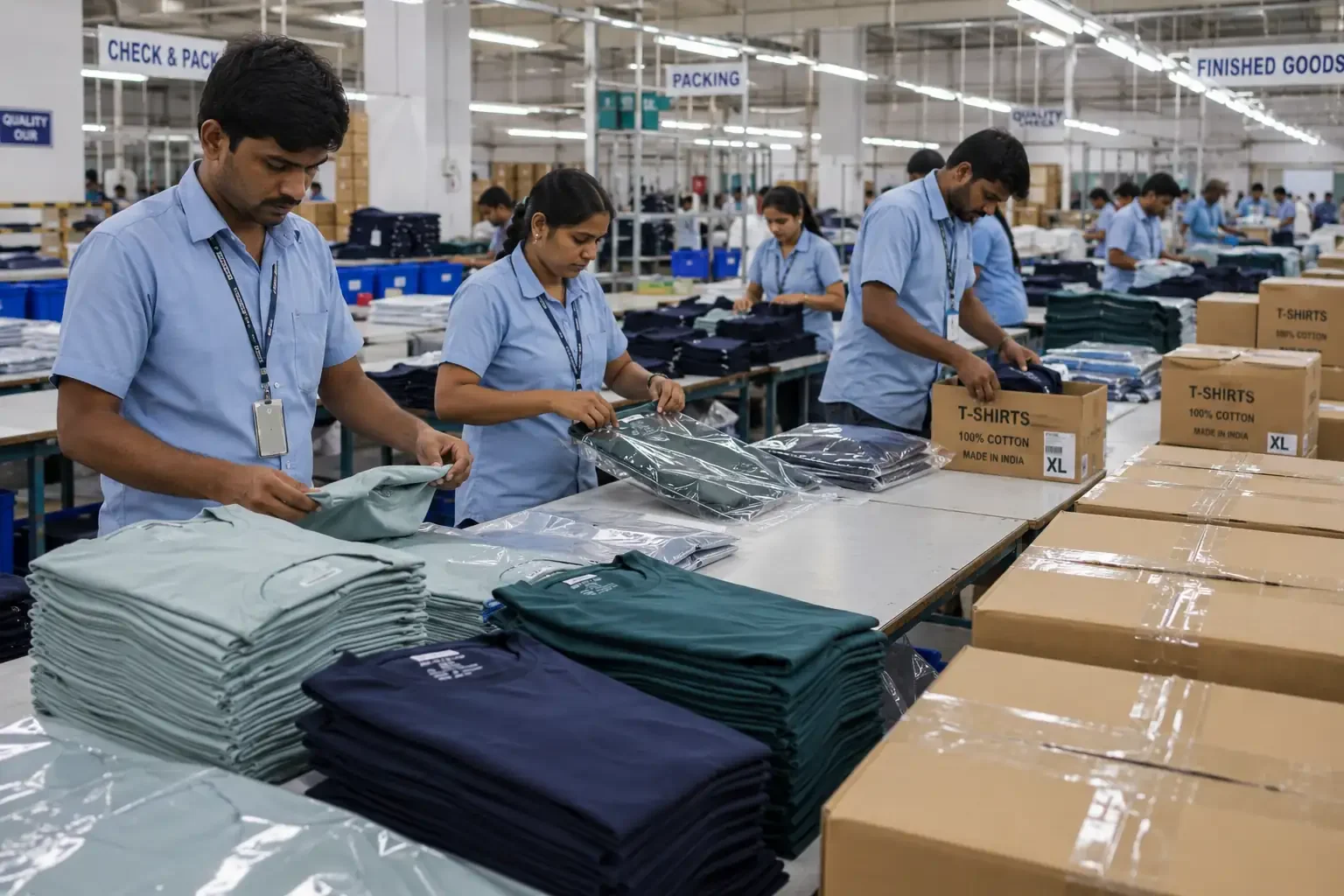
Average T-Shirt Manufacturing Cost in India
For a standard:
- 100% Cotton Single Jersey
- 180 GSM
- Regular Fit
- 25s Yarn
- MOQ of 500 Pieces
…the average T-shirt manufacturing cost in India is approximately:
₹200-₹220 Per Piece
Around $2.10-$2.20 USD
This estimate includes:
- fabric
- cutting
- stitching
- basic labels
- polybag packing
- export carton packing
Additional services such as custom Pantone dyeing, printing, embroidery, special washes, premium trims, or private label branding will increase the final production cost.
The average T-shirt manufacturing cost in India for a plain 180 GSM cotton single jersey regular-fit T-shirt is around ₹200-₹220 per piece ($2.10-$2.20 USD) for an MOQ of 500 pieces.
Several factors influence T-shirt manufacturing cost, including fabric GSM, yarn quality, dyeing method, garment fit, printing, embroidery, washing treatments, accessories, packaging, and production quantity.
Custom Pantone dyeing requires fabric development, lab dip approvals, color matching, testing, and higher minimum order quantities. This process improves color consistency but increases production cost and lead time.
100% cotton single jersey fabric is one of the most commonly used materials in T-shirt manufacturing because it offers softness, breathability, comfort, and cost efficiency.
Tiruppur is known as India’s knitwear hub because it has a complete textile ecosystem that supports knitting, dyeing, stitching, printing, packing, and garment exports under one network.
Usually, plain T-shirt manufacturing cost does not include printing or embroidery. Additional customization processes such as screen printing, puff print, embroidery, silicone print, or garment washing are charged separately based on design and quantity.
Final Thoughts
A T-shirt may appear simple, but manufacturing one involves a highly coordinated process that starts from yarn selection and continues through knitting, dyeing, compacting, relaxing, cutting, stitching, quality control, packing, and shipping.
Understanding the complete production workflow helps brands make better sourcing decisions while setting realistic expectations around pricing, MOQ, timelines, and garment quality.
For businesses looking to manufacture T-shirts in India, working with an experienced and transparent sourcing partner can help ensure smoother production, better consistency, and reliable export-quality results.