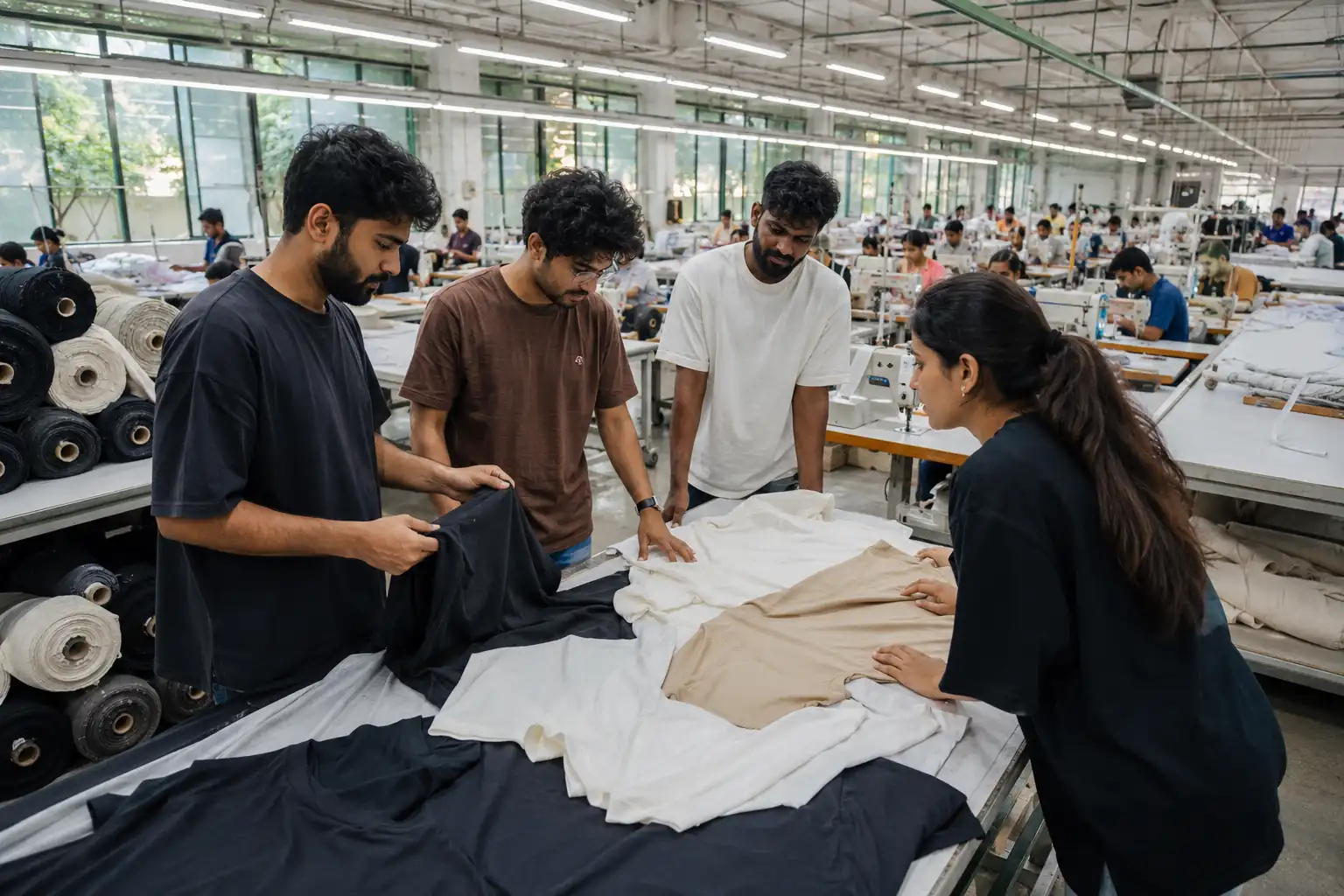
Bangalore has become one of India’s fastest-growing hubs for fashion startups, D2C clothing brands, fitness apparel, and streetwear labels. Every month, new entrepreneurs launch oversized T-shirts, gym wear, vintage collections, and premium basics through Instagram, Shopify, and marketplaces.
One of the first challenges every founder faces is finding a custom T-shirt manufacturer that understands startup requirements without demanding unrealistic production quantities.
If you’re looking for a custom T-shirt manufacturer for Bangalore startups, this guide explains how apparel manufacturing works, what minimum order quantities (MOQ) mean, why standalone samples are rarely possible, and how you can successfully develop your first collection.
Why Many Bangalore Clothing Brands Manufacture in Tiruppur
Although your brand may be based in Bangalore, many successful clothing startups choose Tiruppur for manufacturing.
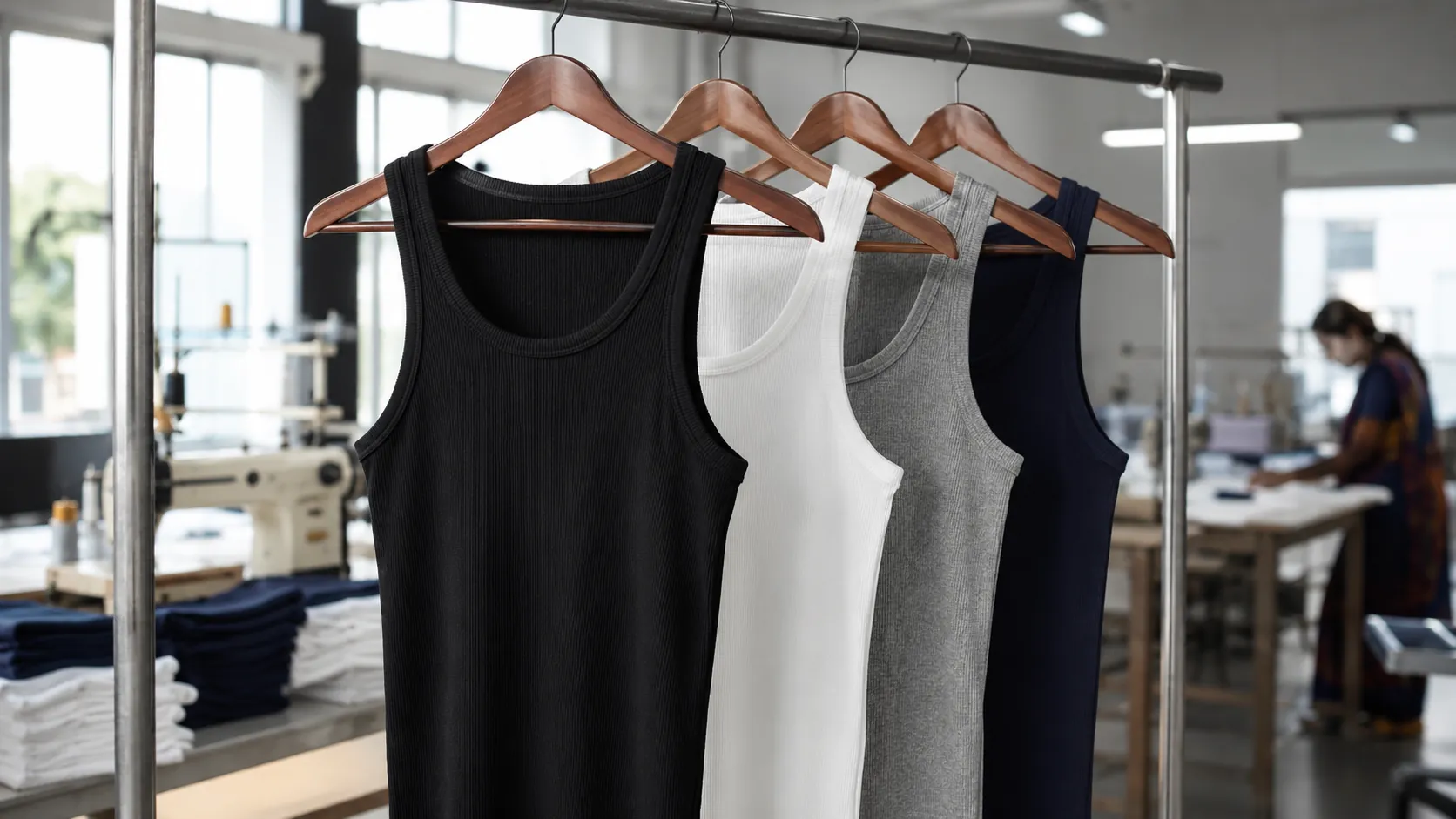
Tiruppur offers a complete knitwear ecosystem where fabric knitting, dyeing, compacting, printing, embroidery, washing, stitching, quality control, and export packing are all available within the same manufacturing cluster. This reduces production delays, improves consistency, and makes communication between different production stages much easier.
For startups launching custom clothing, this integrated supply chain often results in better quality and faster production than coordinating multiple vendors.
Types of Custom T-Shirts You Can Manufacture
A professional garment manufacturer can develop almost every style of knitted apparel, including:
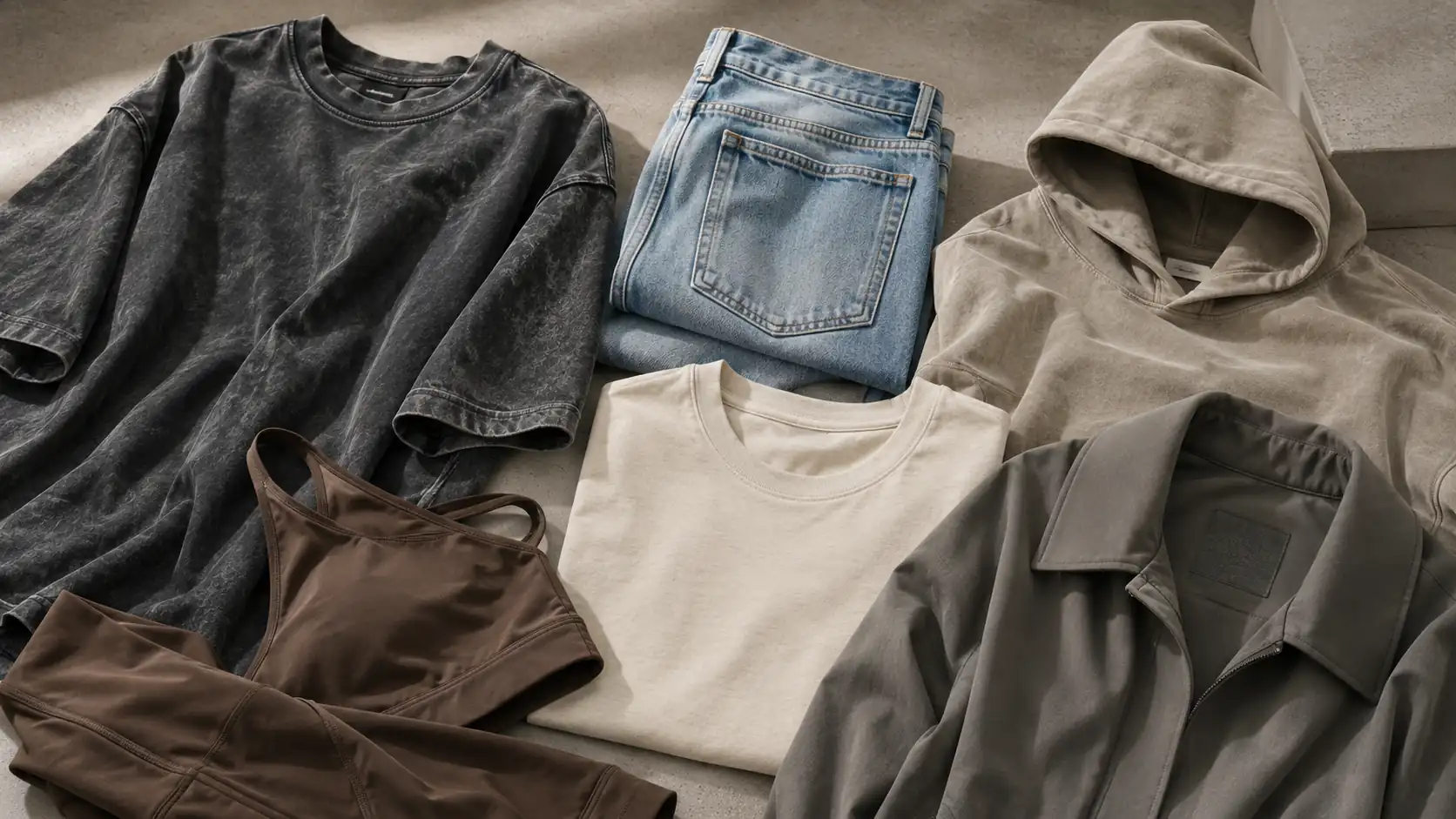
- Oversized T-Shirts
- Vintage Washed T-Shirts
- Heavyweight T-Shirts
- Drop Shoulder T-Shirts
- Gym & Fitness T-Shirts
- Streetwear Collections
- Corporate Merchandise
- Event & College T-Shirts
- Private Label Clothing
- Custom Fashion Basics
Depending on your brand, you can choose different fits, fabrics, garment washes, and printing techniques to create a unique product instead of purchasing ready-made blanks.
Fabric, GSM and Fit Matter More Than Most Startups Realize
A premium T-shirt isn’t defined only by its logo.
Fabric selection, yarn quality, GSM, finishing processes, and fit development determine how the final garment feels and performs.
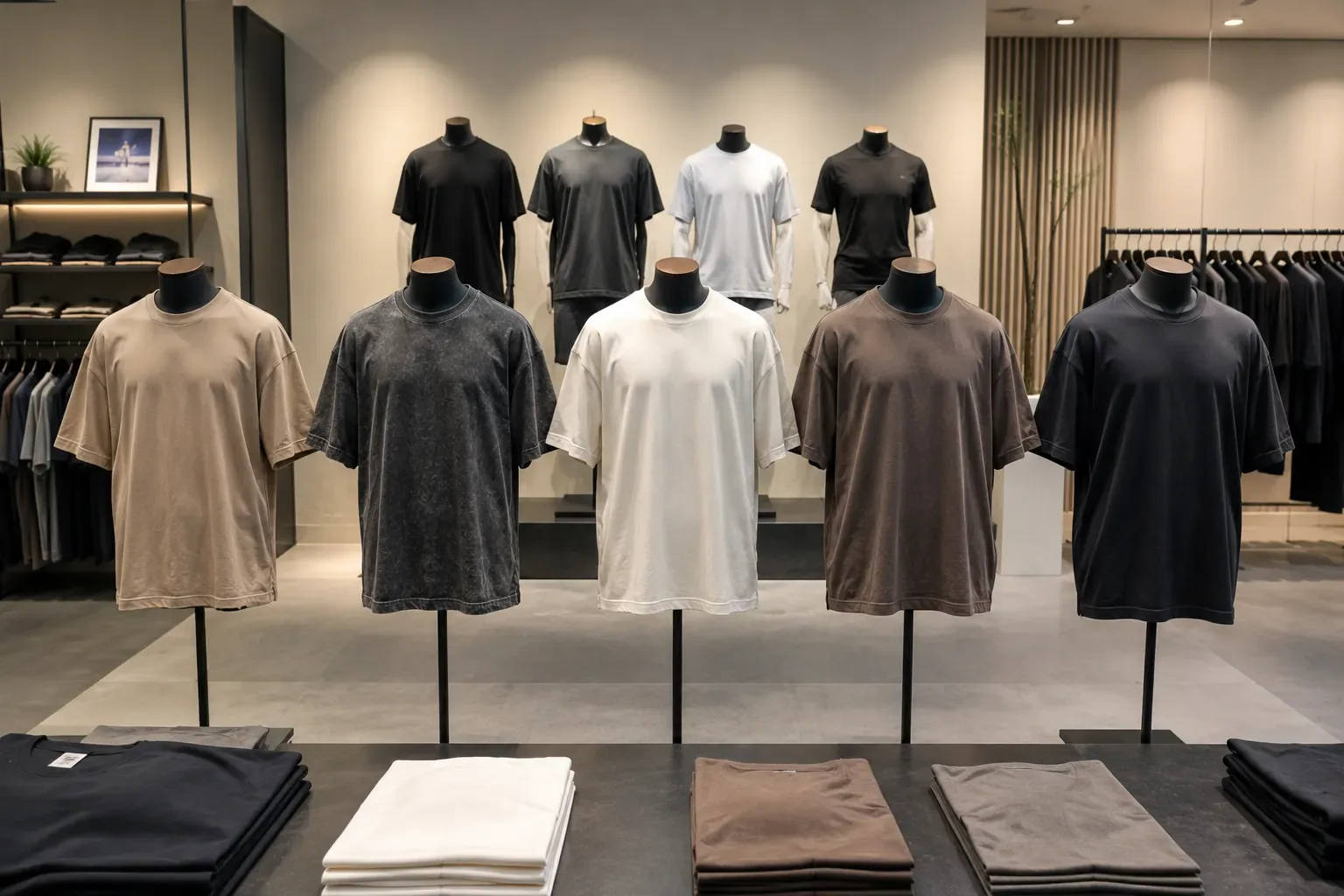
Many startup brands today prefer heavyweight fabrics between 220 GSM and 280 GSM for oversized and streetwear collections, while gym apparel often uses lightweight performance blends for better comfort and moisture management.
You can also customize features such as:
- Regular Fit
- Oversized Fit
- Box Fit
- Drop Shoulder Fit
- Heavyweight Cotton
- Bio Wash
- Silicone Wash
- Enzyme Wash
- Vintage Wash
- Acid Wash
Developing the correct fit is just as important as choosing the right fabric, especially for premium fashion brands.
Complete Branding and Packaging Options
Custom clothing is more than printing a logo.
Professional apparel manufacturing allows you to personalize nearly every component of the garment.
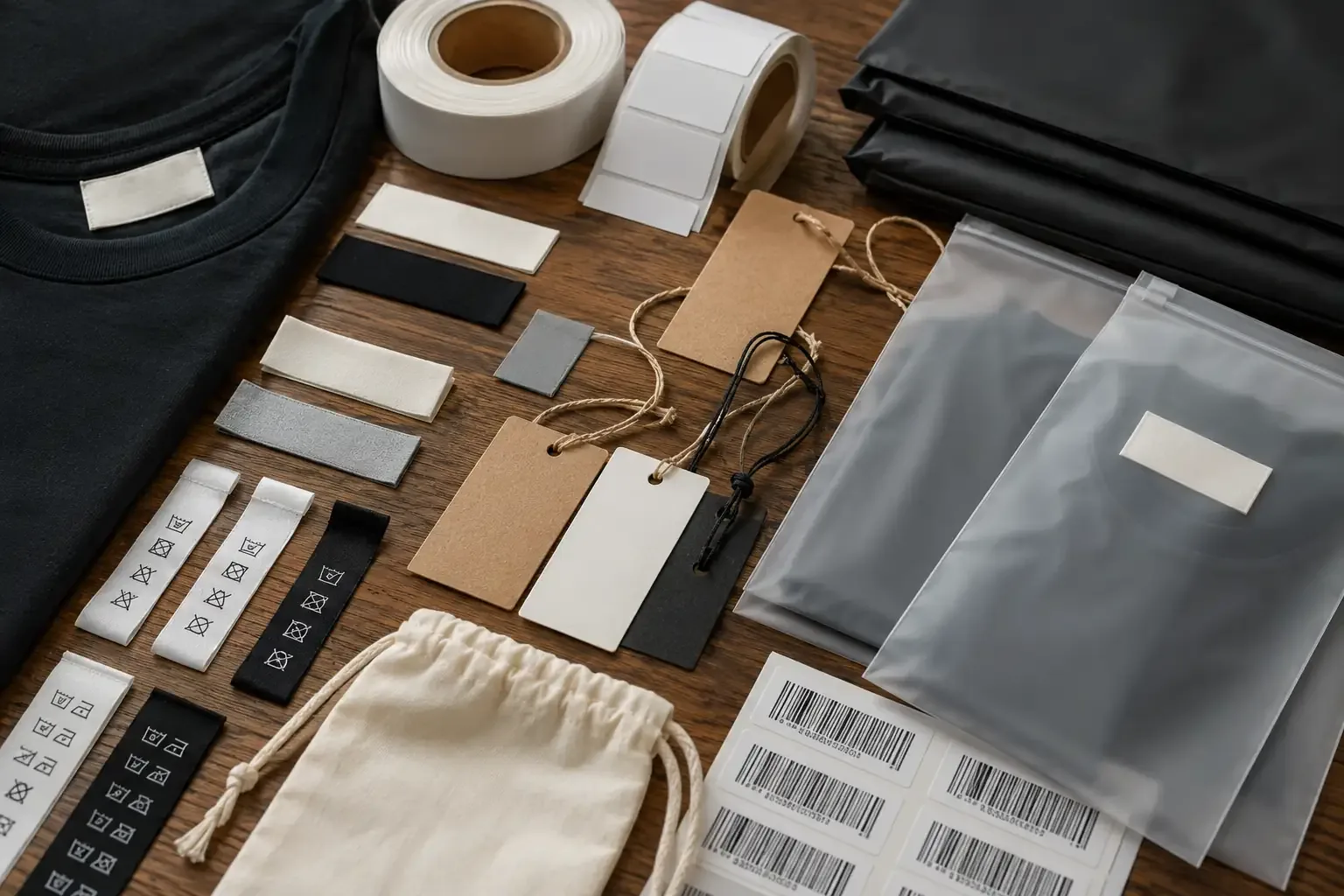
Branding options include:
- Custom woven neck labels
- Printed neck labels
- Wash care labels
- Size labels
- Premium hang tags
- Brand stickers
- Barcode labels
- Individual matte polybags
- Frosted zip-lock bags
- Custom export cartons
These finishing details create a stronger customer experience and help position your clothing brand as a premium product.
Choosing the Right Printing Technique
Different artwork requires different printing methods.
Popular options include:
- Screen Printing
- Puff Print
- High Density (HD) Print
- DTF Printing
- DTG Printing
- Silicone Print
- Water-Based Print
- Plastisol Print
- Reflective Print
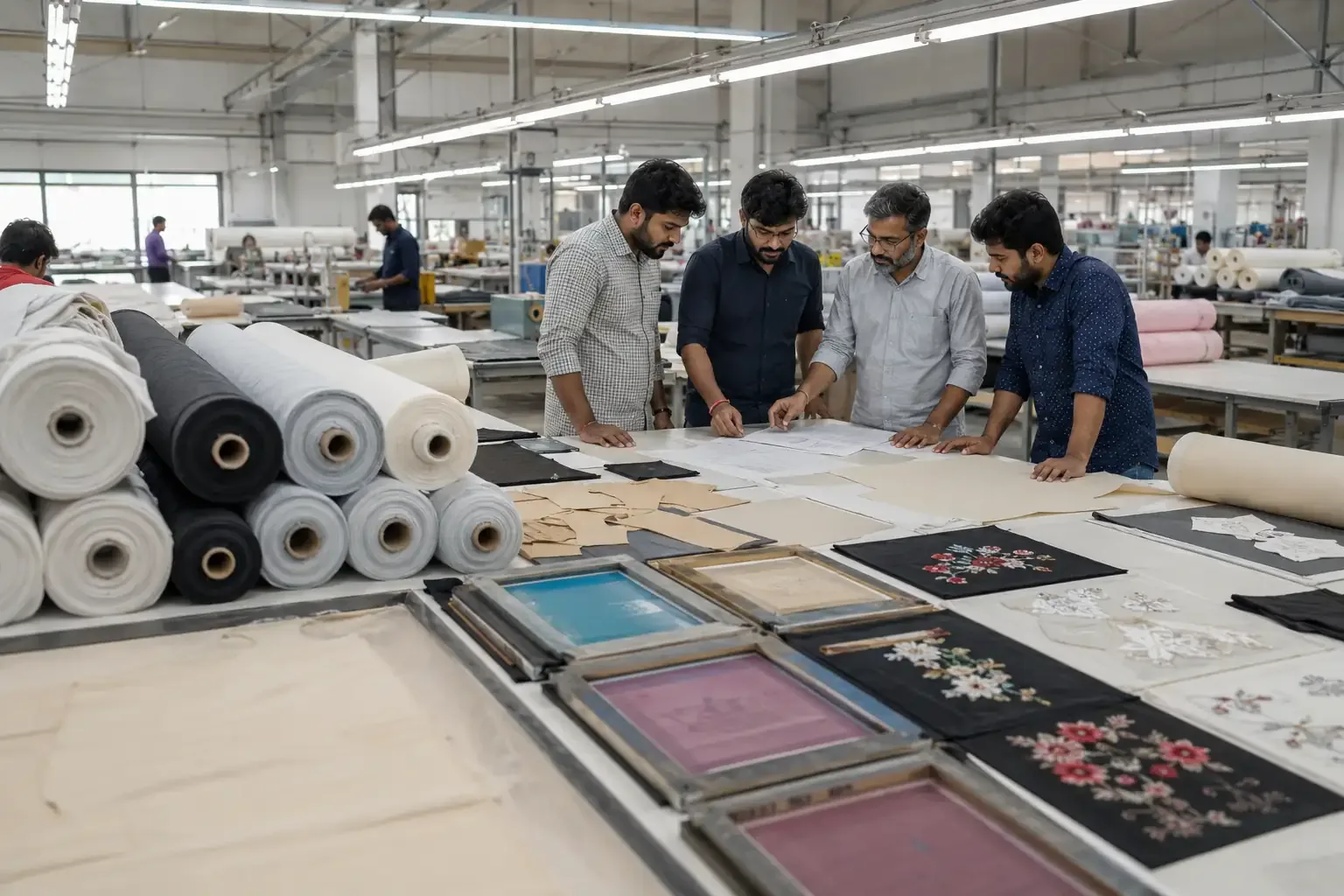
For large production runs, screen printing remains one of the most durable and cost-effective methods. Puff print continues to be a popular choice for oversized streetwear, while DTF and DTG printing are suitable for specific artwork and production requirements.
The best printing method depends on your design, fabric, quantity, and desired finish rather than a single technique being universally better.
Understanding Minimum Order Quantity (MOQ)
One of the most common questions startup founders ask is:
“Can I manufacture just 100 custom T-shirts?”
The answer depends on the entire production plan.
Unlike buying ready-made garments, custom apparel manufacturing requires development before production begins.
For every new style, manufacturers typically need to:
- Source fabric
- Develop patterns
- Prepare size grading
- Source custom labels
- Produce hang tags
- Arrange packaging
- Prepare print screens or embroidery files
- Plan cutting and stitching operations
- Conduct quality inspections
Whether the order is one garment or ten thousand garments, much of this preparation remains the same.
This is why garment factories work with minimum order quantities.
At Texora Sourcing, we support startup brands with 100 pieces per colour, provided the total purchase order is at least 500 pieces. This allows brands to launch multiple colourways while keeping production commercially practical.
Why Standalone Samples Are Usually Not Available
Many first-time founders request a single production sample before placing an order.
While this sounds reasonable, it doesn’t reflect how commercial garment manufacturing works.
Custom production involves fabric booking, pattern making, accessories sourcing, print preparation, sewing line planning, and quality planning. These development activities require almost the same effort regardless of whether one garment or thousands are produced.
Instead of creating standalone production samples, most manufacturers follow the industry’s standard development process.
Once a purchase order is confirmed, the required materials are sourced and a Pre-Production Sample (PPS) is developed using the actual production fabric, trims, labels, and construction methods planned for bulk manufacturing.
The customer reviews the PPS, provides comments if necessary, and any approved corrections are incorporated before bulk production begins.
This process significantly reduces production errors and ensures the final garments meet the approved standard.
Accessories Also Have Their Own MOQ
Many startups are surprised to learn that accessories often have separate minimum order quantities.
Items such as woven labels, printed hang tags, custom matte polybags, barcode stickers, and branded cartons are manufactured by specialized suppliers who produce them in batches.
For this reason, accessory quantities may differ from garment quantities depending on the product and printing requirements.
Planning your branding materials together with your garment order helps reduce unnecessary costs and production delays.
Preparing for Your First Production Order
Before contacting a clothing manufacturer, prepare the following information:
- Your T-shirt design or reference images
- Preferred fit
- Fabric type and GSM
- Artwork or logo files
- Size breakdown
- Colour options
- Printing requirements
- Label and packaging requirements
- Target quantity
- Delivery timeline
The more information you provide, the faster your manufacturer can prepare accurate production planning and pricing.
Final Thoughts
Launching a clothing brand is about much more than finding someone who can stitch T-shirts.
Choosing the right manufacturing partner means understanding fabrics, fits, branding, printing, packaging, quality control, and realistic production planning.
If you’re building an oversized streetwear label, a gym clothing brand, or a premium private-label collection, working with an experienced manufacturing network helps simplify the entire process-from product development and pre-production sampling to bulk manufacturing and final packing.
For Bangalore startups looking to build a long-term clothing brand, understanding how professional apparel manufacturing works is the first step toward producing garments that customers will be proud to wear.